USAID DEC
Job Aid on diarrhoea in A4
The management of diarrhea in children is a critical public health concern, particularly in developing countries where access to healthcare services may be limited.
2012 · 2 pages
Sign in to readA free account is required to download.
Abstract
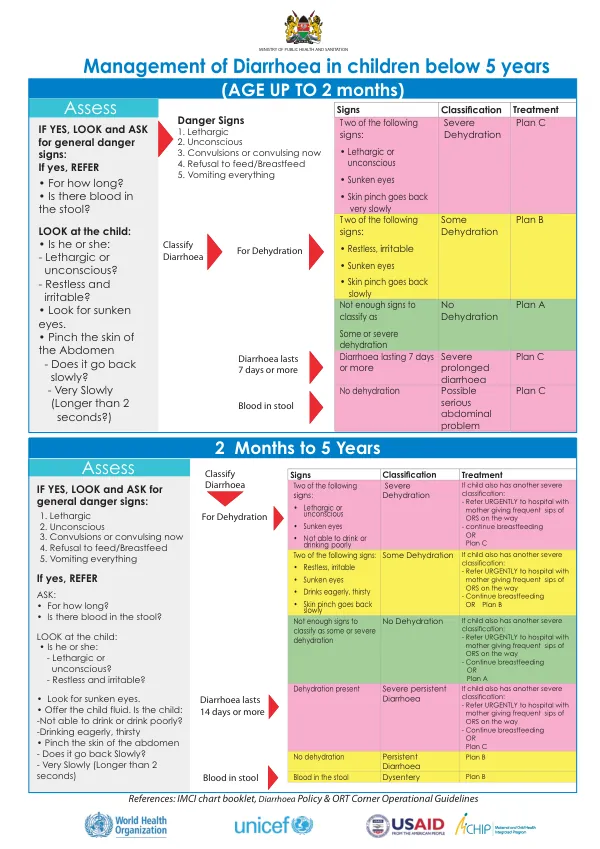
The Ministry of Public Health and Sanitation has developed guidelines for the treatment of diarrhea in children, which are based on the Integrated Management of Childhood Illness (IMCI) chart booklet and the Diarrhea Policy & ORT Corner Operational Guidelines. The guidelines categorize diarrhea into three levels of severity: no dehydration, some dehydration, and severe dehydration. The classification is based on the presence of specific signs, including lethargy or unconsciousness, sunken eyes, and skin pinch response. Children with severe dehydration require immediate referral to a hospital for intravenous (IV) treatment. For children with some dehydration, the guidelines recommend the use of Oral Rehydration Solution (ORS) to treat the condition. ORS is a mixture of water, salts, and sugars that helps to replace lost fluids and electrolytes. The guidelines provide a table outlining the recommended amount of ORS to be given to children of different ages and weights. In addition to ORS, the guidelines recommend the use of zinc supplements to treat diarrhea in children. Zinc has been shown to reduce the duration and severity of diarrhea, and is particularly effective in children with some dehydration. The guidelines also provide recommendations for the use of antibiotics in the treatment of diarrhea. For children with cholera, the recommended first-line antibiotic is erythromycin, while the second-line antibiotic is chloramphenicol. For children with shigella, the recommended first-line antibiotic is ciprofloxacin. The guidelines also provide recommendations for the use of vitamin A and multivitamin/mineral supplements in the treatment of diarrhea. Vitamin A is recommended for the treatment of measles, while multivitamin/mineral supplements are recommended for children with persistent diarrhea. The guidelines also provide recommendations for the use of oral antibiotics in the treatment of diarrhea. For children with dysentery, the recommended antibiotic is metronidazole. For children with shigella, the recommended antibiotic is ciprofloxacin. The guidelines emphasize the importance of proper hydration and nutrition in the treatment of diarrhea. Children with diarrhea should be encouraged to drink plenty of fluids, including ORS, and should continue to breastfeed or receive solid foods as usual. The guidelines also provide recommendations for the use of nasogastric (NG) tubes for rehydration in children with severe dehydration. NG tubes are recommended for children who are unable to drink or are at risk of aspiration. Overall, the guidelines provide a comprehensive framework for the management of diarrhea in children, and are an essential resource for healthcare providers working in developing countries.