DAI GLOBAL, LLC
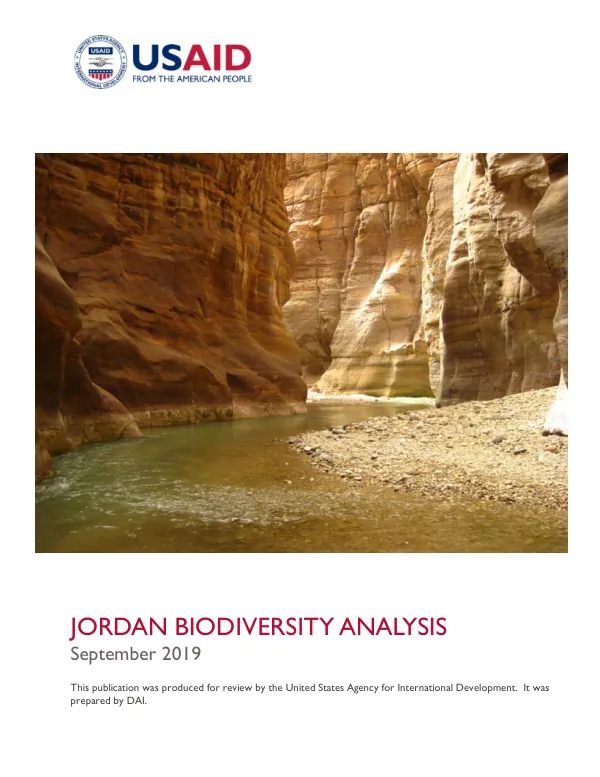
Jordan Biodiversity Analysis
The agricultural development initiative in Jordan began with the Biodiversity Results Integrated and Development Gains Enhanced (BRIDGE) Project, funded by the USAID Bureau for Economic Growth, Education, and Environment/Office of Forestry and Biodiversity.
2019 · 78 pages
Sign in to readA free account is required to download.
Abstract
The project aimed to conserve biodiversity in Jordan, with a focus on the country's unique ecosystems and species. The biophysical setting of Jordan is characterized by a diverse range of ecosystems, including deserts, mountains, and coastal areas. The country's ecosystems support a wide variety of plant and animal species, many of which are found nowhere else in the world. However, these ecosystems are under threat from human activities such as deforestation, overgrazing, and pollution. The values and benefits of biodiversity in Jordan are numerous. Ecosystem products, such as timber and non-timber forest products, provide income and employment opportunities for local communities. Ecosystem services, such as water filtration and soil conservation, are essential for maintaining the country's agricultural productivity and food security. Non-material benefits of ecosystems, such as recreation and tourism, also contribute to the country's economic development. Jordan has a range of laws and policies aimed at conserving biodiversity, including the Convention on Biological Diversity (CBD) and the Man and the Biosphere Program (MAB). However, the country's government institutions, national NGOs, and international agreements also play a crucial role in promoting biodiversity conservation. Protected areas, such as national parks and wildlife reserves, provide a safe haven for threatened and endangered species. Threats to biodiversity in Jordan include habitat destruction, overexploitation of resources, and climate change. Causes of these threats include human population growth, urbanization, and economic development. Drivers and root causes of these threats include poverty, lack of education, and inadequate governance. Actions needed to conserve biodiversity in Jordan include implementing sustainable land-use practices, reducing pollution, and promoting eco-tourism. The government of Jordan has identified several key actions needed to conserve biodiversity, including developing a national biodiversity strategy and establishing a network of protected areas. Other sources, such as international organizations and civil society organizations, also have a role to play in promoting biodiversity conservation in Jordan. USAID/Jordan's current programs are contributing to actions needed to conserve biodiversity, including the BRIDGE Project. The project has supported the development of a national biodiversity strategy and has helped to establish a network of protected areas. However, there are still opportunities for USAID/Jordan to contribute to actions needed to conserve biodiversity, including integrating biodiversity conservation into its strategy and program design. Recommendations for USAID/Jordan include integrating biodiversity conservation into its strategy and program design, using ecosystem services at watershed scale as a framework for integrated programs, and building on and replicating successful biodiversity and development integration models already tested. The agency should also support biodiversity awareness and education, continue support for population, reproductive health, and women's empowerment, and promote sustainable land-use practices.
Related documents