USAID DEC
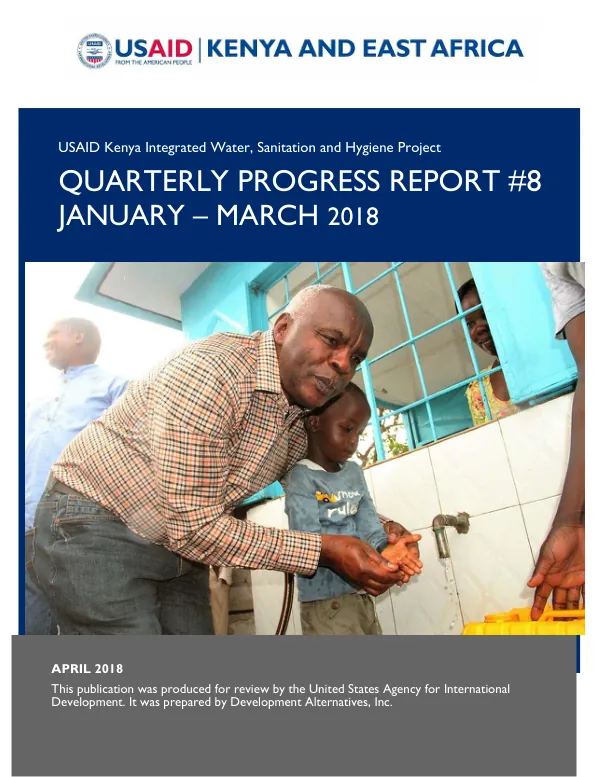
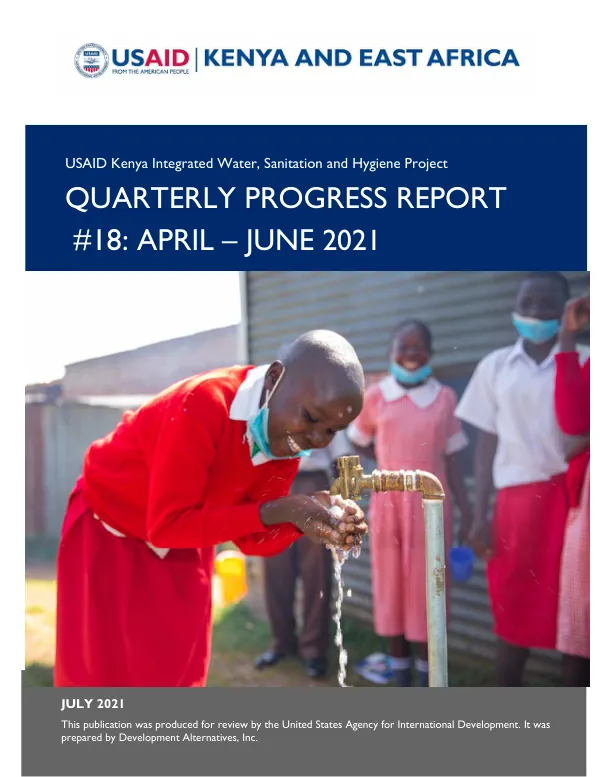
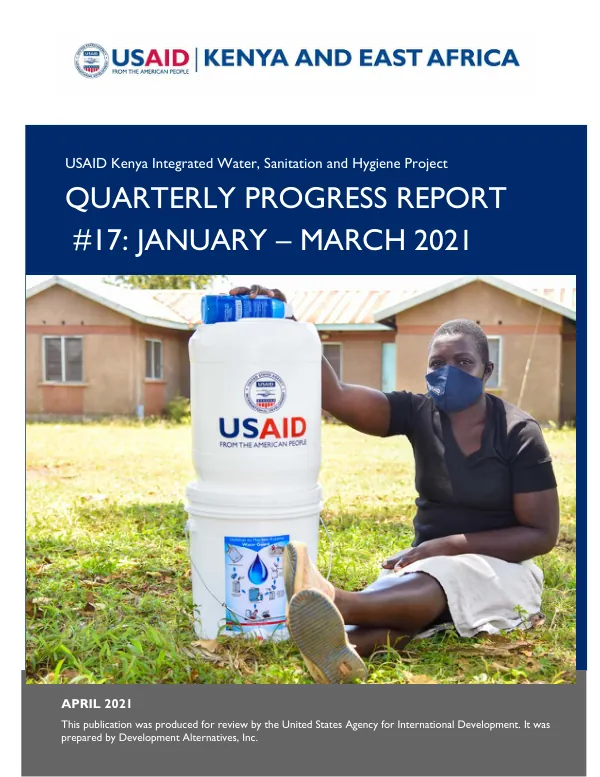
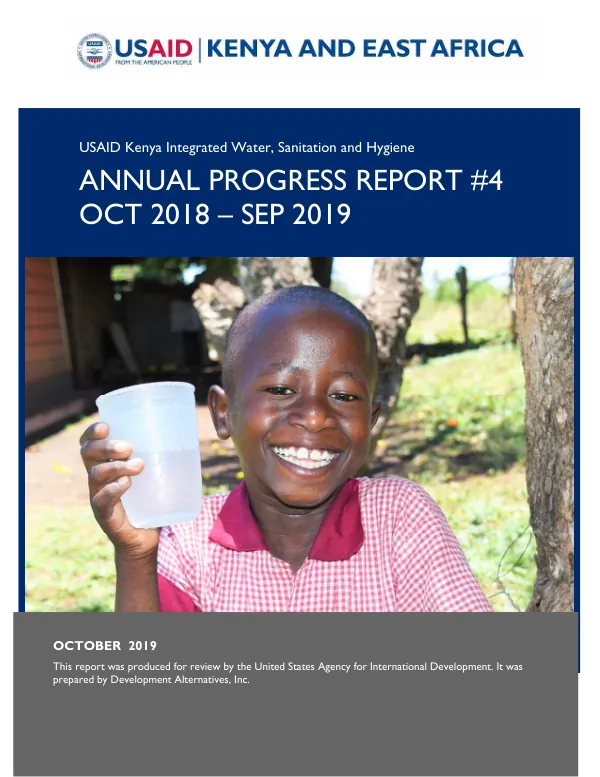
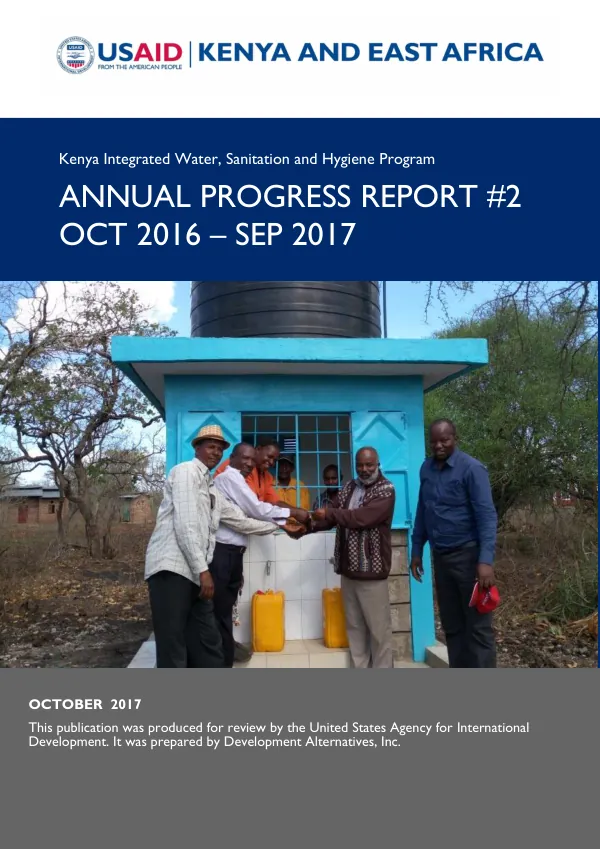
Kenya Integrated Water, Sanitation and Hygiene project (KIWASH) works to improve the health of 1 million Kenyan citizens through the development and health of sustainable water, hygiene and nutrition services
Sign inDEVELOPMENT ALTERNATIVES, INC./FINNET
Kenya Integrated Water, Sanitation and Hygiene project (KIWASH) works to improve the health of 1 million Kenyan citizens through the development and health of sustainable water, hygiene and nutrition services
The Kenya Integrated Water, Sanitation and Hygiene Program (KIWASH) aims to improve lives and health of 1 million Kenyan citizens in nine counties through sustainable water, sanitation, hygiene, and nutrition services.
2016 · 80 pages
Sign in to readA free account is required to download.
Abstract
The program focuses on scaling up infrastructure projects, training and capacity building for WASH services, and mobilizing water financing. Scaling up infrastructure projects, KIWASH has designed and implemented 65 infrastructure projects, which are currently at various stages of implementation. These projects will benefit a substantial number of beneficiaries in the nine counties. Additionally, the program has improved access to basic drinking water through spring protection, rehabilitation, and expansion of various water schemes. The Service Provider Capacity Building Team has rolled out Phase 1 of business incubation for 108 WASH enterprises across the nine counties. This has led to training of 966 WASH enterprise staff, reaching 52,194 new beneficiaries with access to basic drinking water. Business incubation entails training on nine modules, targeted on-the-job mentoring, business planning, and linkage to KIWASH through development of concept notes and proposals for direct infrastructure investments and recoverable grants. Mobilizing water financing, KIWASH has supported strategic plans for WSP strategic plans, advocating for substantial budgetary allocations for water projects in Makuenen and Kakamega counties. At least three WSPs will access county funding for specific projects. The program has also supported the Nairobi County Water and Sewerage Company (NCWSC) Sewerage Investment Forum, leveraging KES 10 billion (USD 98.5 million) for 40 sewerage projects. The program has strengthened partnerships with national institutions and other development institutions with similar goals. The program's methodology relies heavily on the selection and engagement of key partners that have the potential to respond to the growing demands for water and sanitation services, improved irrigation, and improved WASH and nutrition practices. The program has made significant progress in improving access to basic WASH services, reaching 52,194 new beneficiaries with access to basic drinking water. The program has also improved irrigation and WASH services, leading to increased production and consumption of nutrient-dense food. The program has also strengthened institutions and governance of WASH services, leading to increased environmental sustainability. The program has also made progress in advancing targeted policy reforms, stimulating and supporting improvements in WASH services. The program has also made progress in performance monitoring, gender, environmental mitigation and monitoring, links to other USAID programs, and links with government agencies. The program has also made progress in cash flow report and projections, administrative activities, and personnel. The program has also made progress in infrastructure projects, listing infrastructure projects in Annex I, and listing of deliverables and case studies in Annex II and III. The program has also made progress in improving the lives and health of 1 million Kenyan citizens in nine counties through sustainable water, sanitation, hygiene, and nutrition services. The program has also made progress in improving access to basic WASH services, reaching 52,194 new beneficiaries with access to basic drinking water. The program has also made progress in improving irrigation and WASH services, leading to increased production and consumption of nutrient-dense food. The program has also made progress in strengthening institutions and governance of WASH services, leading to increased environmental sustainability. The program has also made progress in improving the lives and health of 1 million Kenyan citizens in nine counties through sustainable water, sanitation, hygiene, and nutrition services. The program has also made progress in improving access to basic WASH services