DEVELOPMENT ALTERNATIVES, INC./FINNET
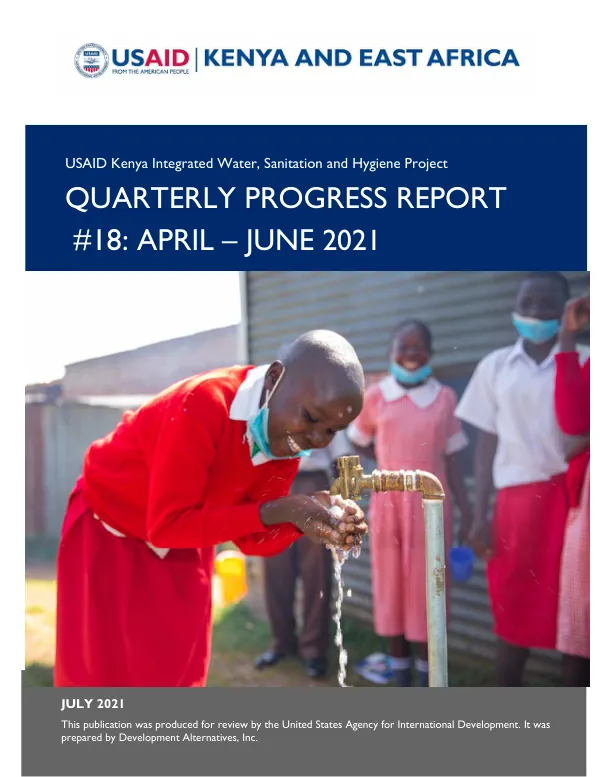
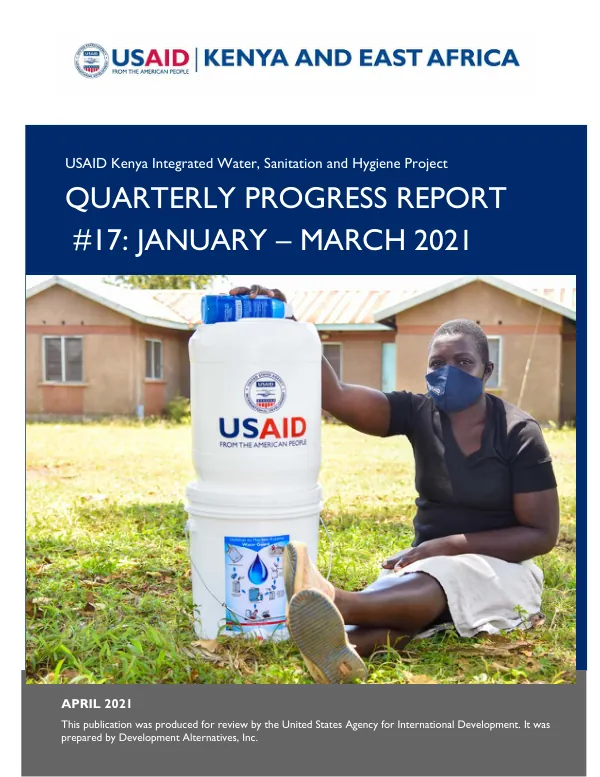
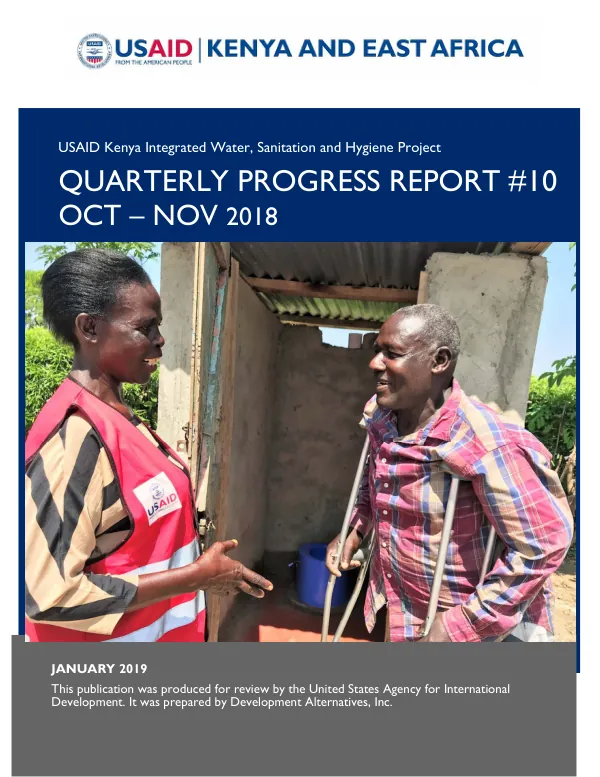
USAID/Kenya KIWASH Progress Report for Q2 FY 2018
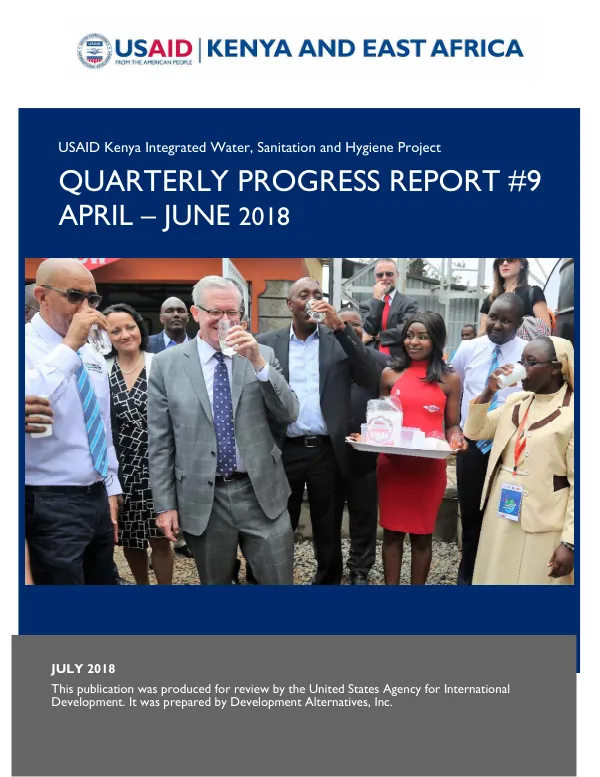
The Kenya Integrated Water, Sanitation and Hygiene project (KIWASH) aims to improve the lives and health of 1 million Kenyan citizens in nine counties through the development and management of sustainable water, sanitation, hygiene, and nutrition services.
2018 · 76 pages
Sign in to readA free account is required to download.
Abstract
KIWASH works to improve the performance of service providers through training and targeted infrastructure support, improve the WASH policy environment through coordinated training with stakeholders, and promote adoption of hygiene behaviors through community engagement. During the quarter, KIWASH technical assistance and strategic infrastructure investments resulted in 72,008 people accessing basic water. The project completed six infrastructure projects in Busia, Kitui, and Makueni counties, sent out 25 Request for Proposals (RFPs) for 16 projects, carried out 27 evaluations, and initiated construction on six projects totaling nearly USD 1 million. KIWASH infrastructure interventions aim to increase revenues and/or reduce non-revenue water through installation of household metering, expansion of distribution networks, installation of master meters that increase billing accuracy, and replacement of power supplies with energy-efficient systems for maximum cost-effectiveness. KIWASH also commenced training of government officials on the use of climate change data in water safety and resilience planning, source water protection, infrastructure design, and sanitation. The project strengthened relationships with county governments, water service providers, smaller WASH enterprises, donors, and relevant national institutions. Through these partnerships, KIWASH worked to improve the WASH policy environment and promote adoption of hygiene behaviors through community engagement. In terms of access to water, KIWASH infrastructure interventions aim to increase water coverage through the installation of household metering, expansion of distribution networks, and replacement of power supplies with energy-efficient systems. The project also worked to improve the performance of service providers through training and targeted infrastructure support. In Busia, Kitui, and Makueni counties, KIWASH completed six infrastructure projects, which resulted in 72,008 people accessing basic water. KIWASH also made progress in promoting access to financing and credit for WASH services. The project worked with financial institutions to develop financial products and services that cater to the needs of WASH service providers. In addition, KIWASH provided training and technical assistance to WASH service providers on financial management and sustainability. In terms of sanitation and hygiene, KIWASH worked to promote adoption of hygiene behaviors through community engagement. The project implemented community-led total sanitation (CLTS) approaches to promote behavior change and improve sanitation practices. KIWASH also provided training and technical assistance to government officials on sanitation and hygiene. KIWASH's agricultural-nutrition and adoption of new technologies component aimed to improve nutrition outcomes through the promotion of agricultural practices that enhance nutrition. The project worked with farmers to promote the use of improved agricultural practices, such as conservation agriculture and agroforestry. KIWASH also provided training and technical assistance to farmers on nutrition-sensitive agriculture. In terms of governance and policy, KIWASH worked to improve the WASH policy environment through coordinated training with stakeholders. The project provided training and technical assistance to government officials on WASH policy and planning. KIWASH also worked with county governments to develop and implement WASH policies and plans. KIWASH's environmental sustainability component aimed to promote sustainable WASH practices and reduce the environmental impact of WASH services. The project worked with WASH service providers to promote the use of energy-efficient technologies and reduce water waste. KIWASH also provided training and technical assistance to WASH service providers on environmental sustainability. In terms of performance monitoring, KIWASH used a range of indicators to track progress towards its objectives. The project monitored access to water, sanitation, and hygiene services, as well as the performance of WASH service providers. KIWASH also tracked progress towards its environmental sustainability objectives. KIWASH's gender strategy aimed to promote gender equality and address the needs of women and girls in WASH services. The project worked with WASH service providers to promote the use of gender-sensitive approaches and address the needs of women and girls. KIWASH also provided training and technical assistance to WASH service providers on gender and WASH. In terms of environmental mitigation and monitoring, KIWASH worked to promote sustainable WASH practices and reduce the environmental impact of WASH services. The project provided training and technical assistance to WASH service providers on environmental sustainability and promoted the use of energy-efficient technologies. KIWASH's links to other USAID programs aimed to leverage resources and expertise from other USAID programs to support WASH services. The project worked with other USAID programs to promote the use of WASH services and improve access to WASH services. In terms of links with GOK agencies, KIWASH worked with government agencies to promote the use of WASH services and improve access to WASH services. The project provided training and technical assistance to government officials on WASH policy and planning. KIWASH's USAID Forward component aimed to promote the use of WASH services and improve access to WASH services. The project worked with WASH service providers to promote the use of
Related documents