USAID
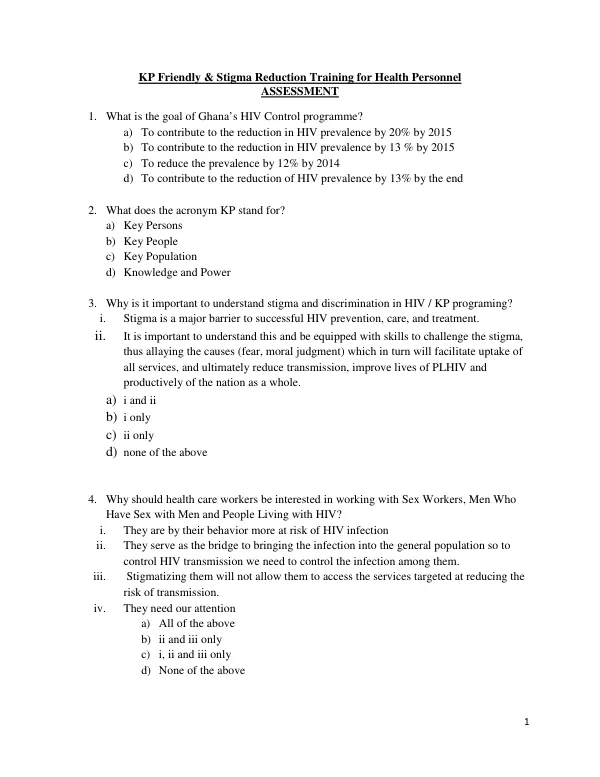
KP Friendly & Stigma Reduction Training for Health Personnel
The goal of Ghana's HIV Control programme is to contribute to the reduction in HIV prevalence by 13% by 2015.
2017 · 4 pages
Sign in to readA free account is required to download.
Abstract
The programme aims to achieve this objective through various interventions, including the promotion of key populations' health and rights. Key populations refer to individuals who are at higher risk of HIV infection due to their behavior, including men who have sex with men, sex workers, and people living with HIV. Understanding stigma and discrimination in HIV/KP programming is crucial for the success of the programme. Stigma is a major barrier to HIV prevention, care, and treatment, and it can prevent individuals from accessing essential services. By understanding the root causes of stigma and discrimination, health personnel can develop effective strategies to challenge and alleviate these issues, ultimately reducing transmission and improving the health and productivity of the nation. Healthcare workers should be interested in working with key populations, including sex workers, men who have sex with men, and people living with HIV, because they are at higher risk of HIV infection and serve as a bridge to bringing the virus into the general population. By providing healthcare services to these individuals, healthcare workers can help control HIV transmission and reduce transmission to the general population. A referral system is essential in healthcare, particularly for key populations. A referral system involves linking clients to other services that are not being offered at the current delivery point. This can include services such as pharmacy services, counseling, and follow-up care. A referral system can help ensure that clients receive comprehensive care and support, which is critical for their health and well-being. The difference between gender and sex is a critical concept in healthcare, particularly in the context of HIV prevention. Sex refers to the biological reproductive makeup of an individual, while gender refers to the roles or responsibilities assigned to individuals based on their sex by society. Understanding the distinction between sex and gender is essential for developing effective healthcare services that address the unique needs of key populations. Gender issues are important in HIV prevention programmes because they can fuel the spread of HIV infection. Deviation from societal standards can result in stigma and discrimination, which can prevent individuals from accessing essential services. By addressing gender issues, healthcare workers can help reduce stigma and discrimination, ultimately reducing transmission and improving the health and productivity of the nation. The rights of key populations, including the right to services, the right to information on safer sex, and the right to be treated with dignity and respect, should be promoted in HIV prevention programmes. These rights are essential for ensuring that key populations receive comprehensive care and support, which is critical for their health and well-being. The risk of HIV transmission during unprotected receptive anal sex is significantly higher than during unprotected insertive anal sex. According to research, the risk of HIV transmission during unprotected receptive anal sex is about five times higher than during unprotected insertive anal sex. Asking key populations about their sexual behavior can provide an assessment of their sexual risk-taking behavior and help healthcare workers develop effective prevention strategies. However, it is essential to approach this conversation in a non-judgmental and empathetic manner to ensure that clients feel comfortable and willing to disclose their behavior. Health workers should promote key behaviors among female sex workers and people living with HIV, including preventive behaviors such as testing and counseling, protective behaviors such as condom use and safer sex, and promotion of good health behaviors such as good nutrition and exercise. The United Nations General Assembly adopted the Declaration of Commitment on HIV/AIDS, "Global Crisis-Global Response," in 2006. This declaration aimed to address the global HIV/AIDS epidemic and promote a comprehensive response to the crisis. Human rights are essential for ensuring that individuals, including people living with HIV and key populations, receive comprehensive care and support. Human rights are basic standards required for people to live with dignity and respect, and they are enshrined in national and international laws and international human rights instruments.
Related documents