CORPORACIÓN DE GESTIÓN Y DERECHO AMBIENTAL
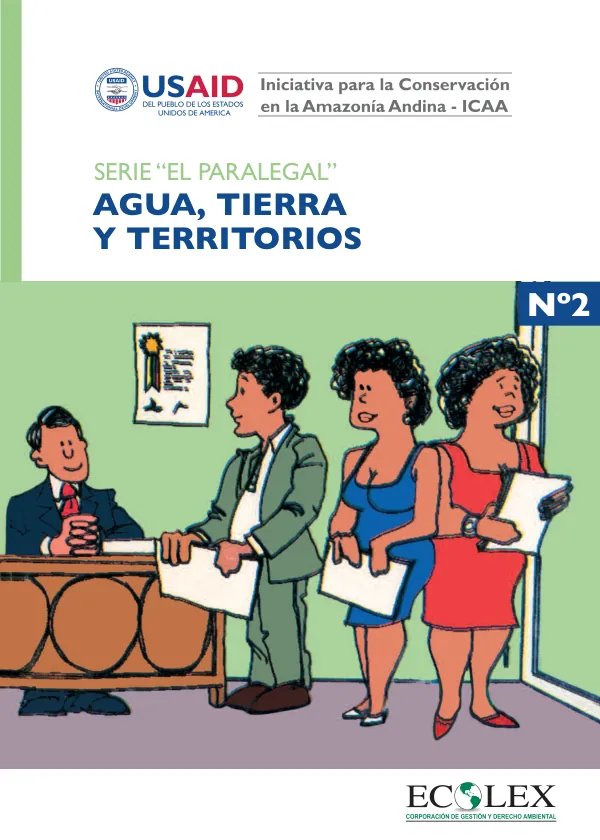
La Serie de cartillas "El Paralegal"
The concept of territorial space is essential for human dignity, as it allows individuals to construct their homes and live with dignity, as guaranteed by the Universal Declaration of Human Rights and the Ecuadorian Constitution.
2014 · 54 pages
Sign in to readA free account is required to download.
Abstract
This territorial space enables families to form, raise children, organize communities, and live according to their customs, ultimately developing their culture. In addition to providing a space for cultural development, territorial space is also necessary for cultivating land and producing daily sustenance for families and communities. The ability to own and control land is crucial for economic development and improving the standard of living. The process of legalizing land ownership is essential for defending against invaders and developing productive projects. This, in turn, enables communities to improve their living conditions and overall well-being. The Ecuadorian Constitution and the Universal Declaration of Human Rights emphasize the importance of land ownership and territorial space for human dignity. The Ecuadorian legal system recognizes various types of land ownership, including colonization lands, ancestral possession lands, and lands within areas managed by the Ministry of the Environment. The process of accessing these lands involves navigating a complex system of regulations and procedures. The Ley de Desarrollo Agrario (Agricultural Development Law) and the Ley de Tierras Baldías y Colonización (Law of Vacant Lands and Colonization) are key pieces of legislation governing land ownership and use in Ecuador. These laws aim to promote agricultural development, protect the rights of landowners, and ensure the sustainable use of natural resources. The Concesión de agua (Water Concession) is another critical aspect of land ownership and use in Ecuador. The Ley de Aguas (Water Law) regulates the allocation and use of water resources, ensuring that they are used efficiently and sustainably. The Ecuadorian Constitution and various laws and regulations provide a framework for land ownership and use. However, the process of accessing and utilizing these lands can be complex and challenging, particularly for marginalized communities. The Ecuadorian government has implemented various initiatives to promote land reform and protect the rights of indigenous communities. The Corporación de Gestión y Derecho Ambiental ECOLEX (Environmental Management and Law Corporation) has developed a series of cartillas (handbooks) to provide guidance on land ownership and use in Ecuador. These cartillas aim to empower community leaders and organizations to navigate the complex legal system and promote sustainable land use practices. The Programa de Paralegales Comunitarios (Community Paralegals Program) is a key initiative of ECOLEX, which aims to strengthen the capacities of community organizations and leaders in areas related to community life and environmental management. The program provides training and support to community leaders, enabling them to manage legal principles, legislation, and institutional frameworks related to socio-agrarian and environmental issues. Through this program, ECOLEX seeks to empower community leaders and organizations to interact more effectively with state institutions and promote sustainable land use practices. The cartillas developed by ECOLEX are an essential tool for community leaders and organizations, providing them with the knowledge and skills necessary to navigate the complex legal system and promote sustainable land use practices.