USAID DEC
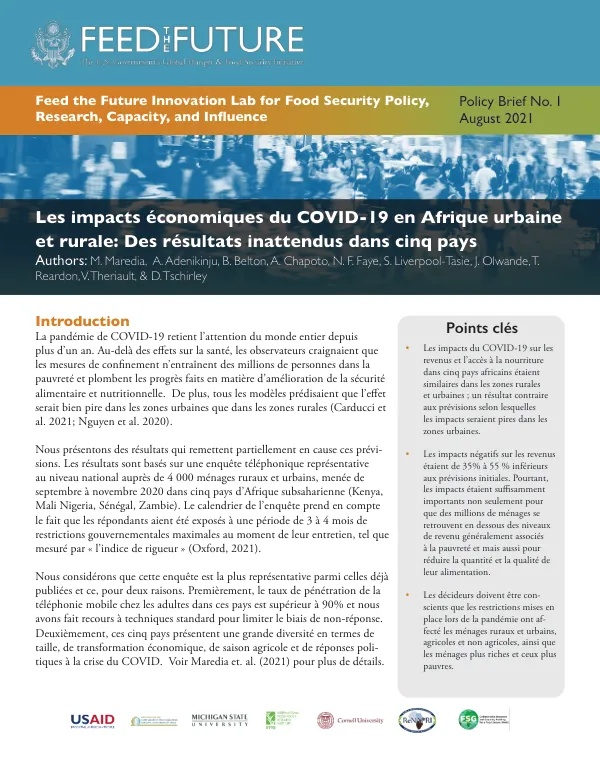
Les impacts économiques du COVID-19 en Afrique urbaine
The study found that the impacts of COVID-19 on revenues and food access in the five countries were similar in rural and urban areas.
2021 · 4 pages
Sign in to readA free account is required to download.
Abstract
The negative impacts on revenues were 35% to 55% lower than initial predictions. The study also found that the restrictions imposed during the pandemic affected both rural and urban households, as well as households with higher incomes. The study's results are based on a national telephone survey of 4,000 households in the five countries. The survey found that a significant portion of households reported a reduction in the quantity or quality of food consumed, or an increase in skipped meals due to a lack of food. The study also found that more households in rural areas reported a reduction in the quantity of food consumed compared to urban areas. The study's findings suggest that the links between rural and urban areas contribute to the conclusions drawn. The diversification made possible by these links offers households a form of insurance against shocks such as the COVID-19 pandemic. The study's results have implications for policymakers seeking to address the impacts of the pandemic on food security and economic well-being. The study's authors also note that the results are consistent with previous research on the economic impacts of the pandemic. The study's findings suggest that the pandemic has had a significant impact on food security and economic well-being in the five countries. The study's results have implications for policymakers seeking to address the impacts of the pandemic on food security and economic well-being.