AFRICAN WILDLIFE FOUNDATION
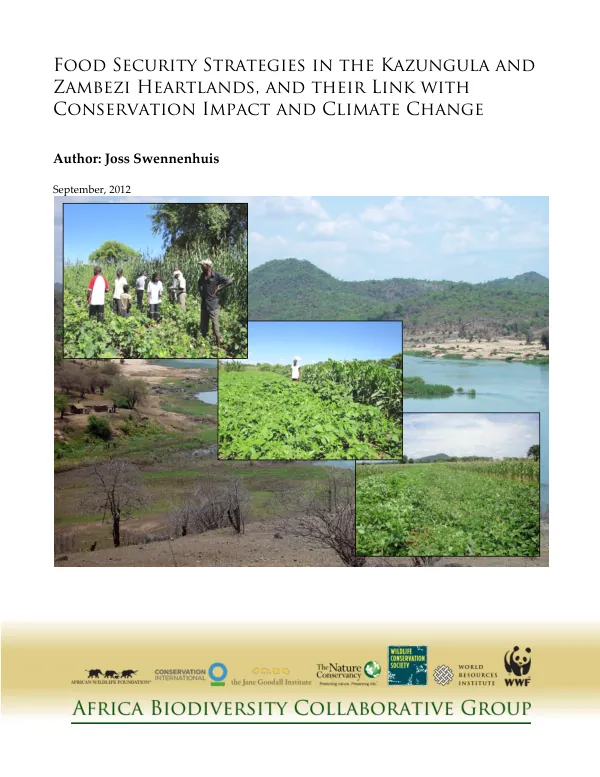
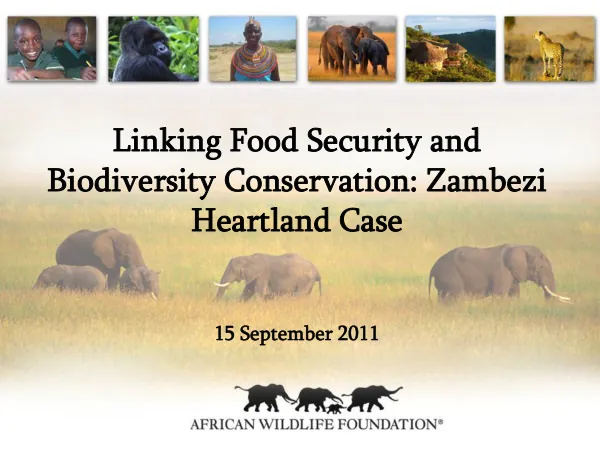
Linking Food Security and Biodiversity Conservation: Zambezi Heartland Case
The Zambezi Heartland is a region in southern Africa where food security and biodiversity conservation are critical issues.
2011 · 14 pages
Sign in to readA free account is required to download.
Abstract
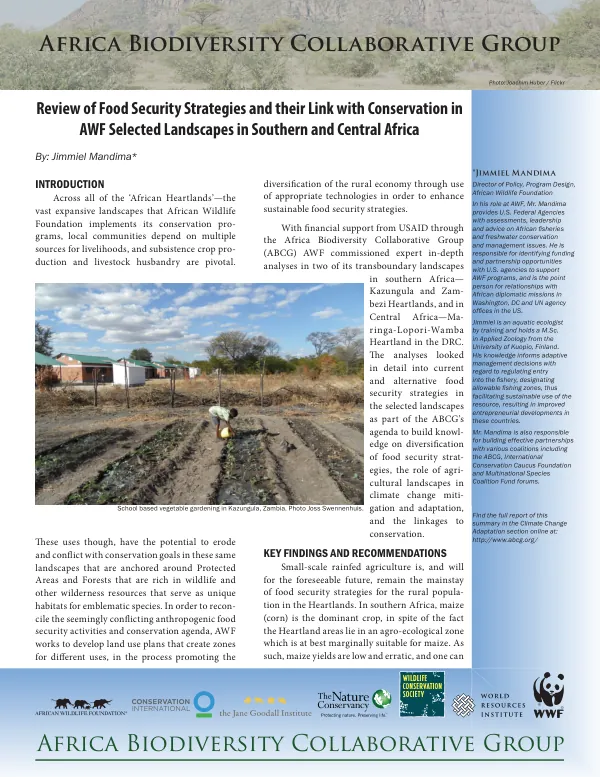
The region is characterized by a high level of poverty, with many communities relying on subsistence farming and charcoal production for their livelihoods. Deforestation for charcoal production is a major threat to biodiversity conservation in the region, with trees being cut down for fuel and charcoal production. Incompatible land uses, human-wildlife conflict, and rampant poverty are other significant threats to biodiversity conservation in the region. The African Wildlife Foundation (AWF) recognizes the importance of linking food security and biodiversity conservation in the Zambezi Heartland. The organization believes that strengthening all aspects of rural livelihoods and economies, with agriculture as a key pillar, can achieve ecological and economic viability. Agriculture offers opportunities to diversify AWF's traditional enterprise portfolio and mitigate human-wildlife conflict, reduce illegal resource extraction, and contribute to ecosystem health. The AWF has implemented a project in the Siavonga District, a pilot site in the Zambezi Heartland. The project aims to strengthen agricultural productivity and biodiversity conservation through training of extension workers and focal farmers, supply of input packs, monitoring and evaluation, field days, and exchange visits. The project focuses on four crop variety categories: cereals, legumes, agroforestry, and local vegetables. The project also includes other complementary food security strategies, such as capture fisheries and small livestock production. The project focuses on training farmers in sustainable agricultural practices, including the use of crop rotation, composting, and conservation agriculture. The project also aims to improve soil fertility and reduce soil erosion. The project has identified several crops that are suitable for the region, including sorghum, green gram, guar, cowpea, and maize. The project also aims to promote the use of drought-tolerant crops and improve crop yields. The project aims to achieve several outcomes, including improved agricultural productivity, increased household income, and improved food security. The project also aims to reduce human-wildlife conflict and promote biodiversity conservation. The project will be monitored and evaluated to ensure that it is achieving its objectives and to identify areas for improvement.
Related documents