USAID DEC
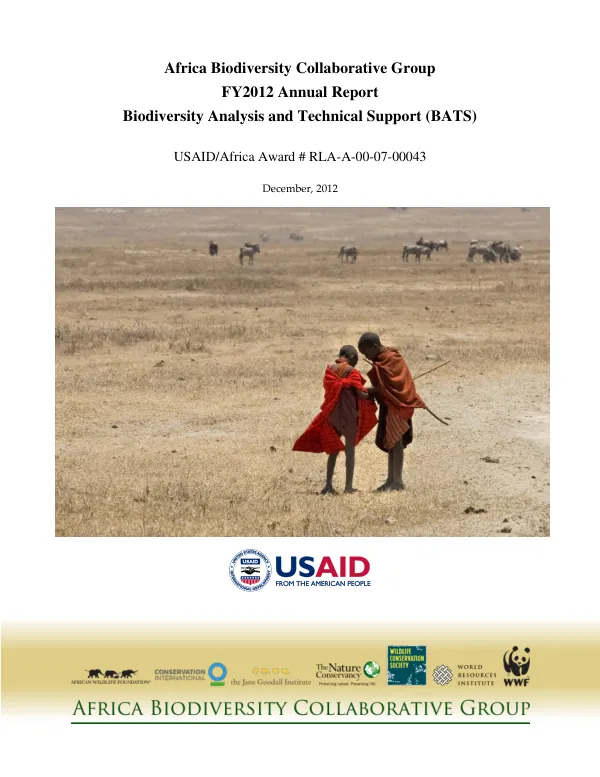
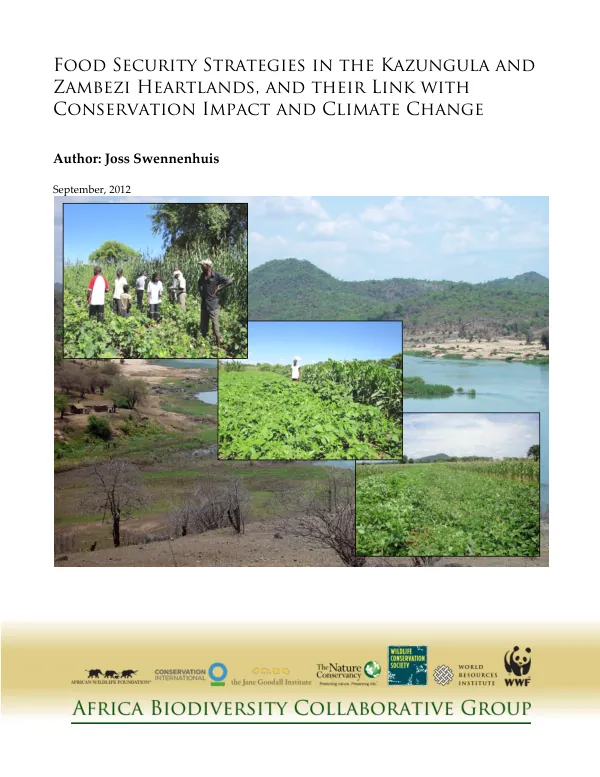
Study on food security strategies in AWF’s Kazungula and Zambezi Heartlands in Zambia, Southern Africa
Sign inAFRICAN BIODIVERSITY COLLABORATIVE GROUP
Study on food security strategies in AWF’s Kazungula and Zambezi Heartlands in Zambia, Southern Africa
The Kazungula and Zambezi Heartlands in Zambia, Southern Africa, are two transboundary landscapes where the African Wildlife Foundation has been working on conservation and livelihoods for over 10 years.
2012 · 37 pages
Sign in to readA free account is required to download.
Abstract
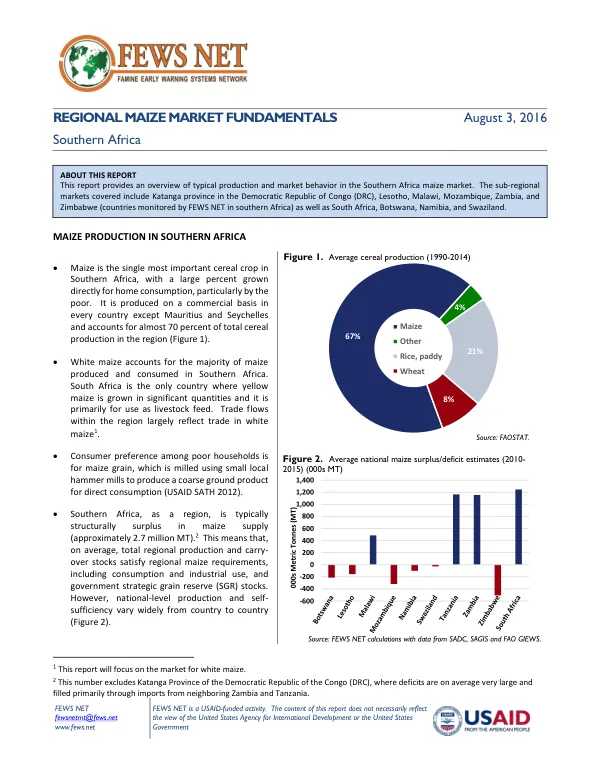
The study on food security strategies in these areas is part of the work supported by the Africa Biodiversity Collaborative Group (ABCG), a collaboration between the African Wildlife Foundation, Conservation International, and the Wildlife Conservation Society. The ABCG is building knowledge on diversification of food security strategies, the role of agricultural landscapes in climate change mitigation and adaptation, and the linkages to conservation. The study focused on the Zambian side of the Kazungula and Zambezi Heartlands, which are highly vulnerable to the impact of climate change. The area has low rainfall, with an average of below 800 mm, and soils are generally poorly suited for agriculture. The Heartlands are part of agro-ecological zone I, with a mosaic of protected areas, buffer zones, and community lands, including important wildlife corridors. The main administrative districts covered by the Heartlands are Luangwa, Chongwe, Kafue, Siavonga, Livingstone, Kazungula, and Sesheke. The study looked into current and alternative food security strategies in the Heartlands, including agriculture, forest resources, and other income-generating activities based on natural resources. The research also examined the relationship between current food security strategies and natural resources, as well as the impact of climate change on these strategies. The study aimed to identify alternative food security strategies with potential conservation benefits, including climate change mitigation and adaptation. The Kazungula Heartland is centred around the mid-upper Zambezi and spans five countries: Namibia, Angola, Botswana, Zimbabwe, and Zambia. The Zambezi Heartland is located along the middle-lower Zambezi reaches, spanning three countries: Mozambique, Zimbabwe, and Zambia. Both Heartlands consist of a mosaic of protected areas, buffer zones, and community lands, including important wildlife corridors. The area is highly vulnerable to the impact of climate change, with low rainfall and high variability, leading to more droughts and floods. The study found that the current food security strategies in the Heartlands are largely based on agriculture, with a focus on staple crops such as maize and beans. However, these strategies are often unsustainable and have negative impacts on the environment and wildlife. The research identified alternative food security strategies that have potential conservation benefits, including climate change mitigation and adaptation. These strategies include agriculture, forest resources, and other income-generating activities based on natural resources. The study also examined the relationship between current food security strategies and natural resources, as well as the impact of climate change on these strategies. The research found that the current food security strategies in the Heartlands are often in conflict with conservation goals, and that climate change is exacerbating these conflicts. The study identified the need for alternative food security strategies that are more sustainable and have positive impacts on the environment and wildlife. The study's findings have important implications for conservation and livelihoods in the Kazungula and Zambezi Heartlands. The research highlights the need for a more integrated approach to conservation and livelihoods, one that takes into account the complex relationships between food security, natural resources, and climate change. The study's recommendations include the development of alternative food security strategies that have potential conservation benefits, as well as the implementation of climate change mitigation and adaptation measures.