USAID DEC
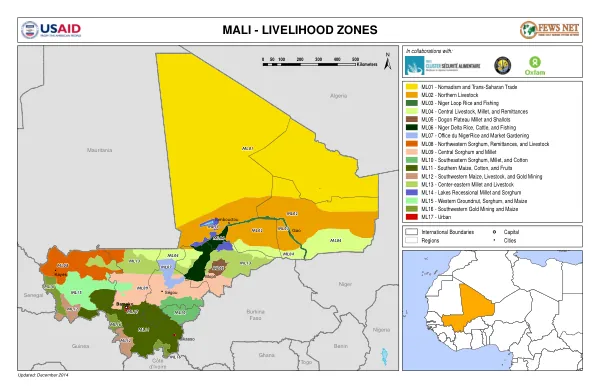
Livelihood Zone Map for Mali
Livelihood zones in Mali are defined by distinct geographic and economic characteristics.
2014 · 1 pages
Sign in to readA free account is required to download.
Abstract
The country is divided into 17 zones, each with its unique set of agricultural practices, market access, and economic activities. The zones are identified by a combination of geographic features, such as rivers, lakes, and mountain ranges, as well as economic factors, including the types of crops grown and the presence of mining activities. The northern regions of Mali are characterized by nomadic herding and trans-Saharan trade, with zones ML01 and ML02 focused on livestock production. Zone ML01, in particular, is known for its nomadic herding practices, while zone ML02 is centered on livestock production and trade. In contrast, the central regions of Mali are characterized by millet and sorghum production, with zones ML04 and ML09 focused on these crops. Zone ML04 is also notable for its remittances from migrant workers, which contribute significantly to the local economy. The southern regions of Mali are characterized by a mix of agricultural and mining activities. Zone ML11 is focused on maize, cotton, and fruit production, while zone ML12 is centered on maize, livestock, and gold mining. Zone ML16, in particular, is known for its gold mining activities, which have contributed significantly to the local economy. The urban zone, ML17, is characterized by a diverse range of economic activities, including market gardening, fishing, and small-scale manufacturing. The livelihood zones in Mali are not only defined by their economic characteristics but also by their geographic features. The country's diverse geography, including its rivers, lakes, and mountain ranges, has played a significant role in shaping the economic activities of each zone. For example, the Niger River has played a crucial role in the development of agriculture and trade in the central regions of Mali, while the mountain ranges in the north have facilitated the growth of livestock production and trade. The livelihood zones in Mali have been identified and mapped by a range of organizations, including the Malian government, international development agencies, and research institutions. The zones provide a useful framework for understanding the economic and geographic characteristics of each region, and for identifying areas of opportunity for development and investment.
Related documents