USAID
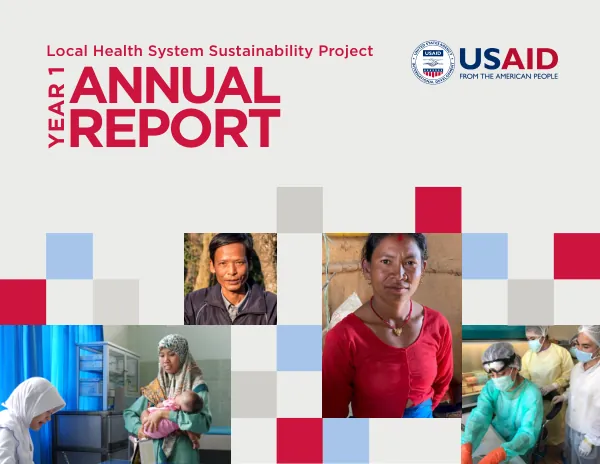
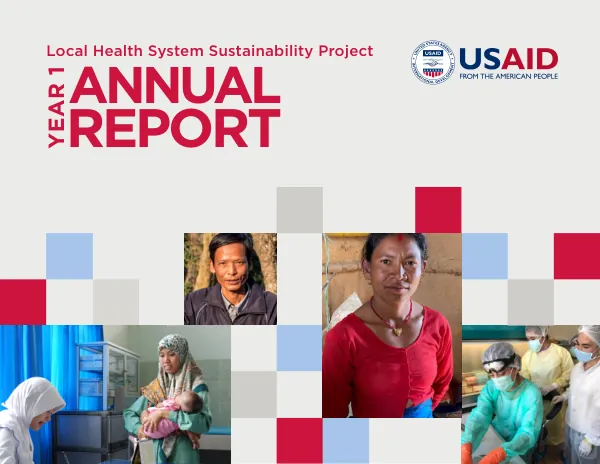
Local Health System Sustainability Project Annual Report Year 1
The Local Health System Sustainability Project began in 2022 with the goal of strengthening the resilience of local health systems in low- and middle-income countries.
2021 · 169 pages
Sign in to readA free account is required to download.
Abstract
The project focuses on improving the quality of care, increasing access to health services, and enhancing the overall sustainability of local health systems. The project's approach is centered on a comprehensive framework that addresses key areas of health system resilience, including equity, quality, resource optimization, health systems resilience, private sector engagement, and digital transformation. The framework is designed to be adaptable to the specific needs of each country and context. In Year 1, the project implemented a range of activities aimed at improving health system resilience. These included the development of a results framework, the establishment of a monitoring and evaluation system, and the implementation of a range of technical assistance activities. The project also engaged with a range of stakeholders, including government officials, civil society organizations, and private sector partners. One of the key areas of focus for the project was equity. The project worked to improve access to health services for marginalized and vulnerable populations, including migrant and mobile populations. This involved the development of inclusive communication strategies and the strengthening of health worker resilience. The project also made significant progress in the area of quality. This included the implementation of continuous quality improvement (CQI) initiatives and the development of quality of care (QOC) standards. The project also worked to enhance the capacity of health care professionals through continuing professional development (CPD) programs. In addition to these technical assistance activities, the project also made significant progress in the area of sustainability and transition. This included the development of a strategy for sustainability and transition, as well as the establishment of a monitoring system to track progress. The project also engaged with a range of partners, including government agencies, civil society organizations, and private sector companies. This involved the development of partnerships and the implementation of joint activities aimed at improving health system resilience. Overall, the Local Health System Sustainability Project made significant progress in Year 1, with a range of activities aimed at improving health system resilience. The project's comprehensive framework and adaptable approach have positioned it well to address the complex challenges facing local health systems in low- and middle-income countries. The project's results framework provides a clear direction for the project's activities and outcomes. The framework is based on a set of key performance indicators (KPIs) that are designed to measure progress in key areas of health system resilience. The project's monitoring and evaluation system is designed to track progress against these KPIs and to identify areas for improvement. The project's technical assistance activities have been designed to address the specific needs of each country and context. This has involved the development of tailored solutions and the implementation of joint activities with government agencies, civil society organizations, and private sector partners. The project's focus on equity has involved the development of inclusive communication strategies and the strengthening of health worker resilience. This has included the implementation of initiatives aimed at improving access to health services for marginalized and vulnerable populations. The project's focus on quality has involved the implementation of continuous quality improvement (CQI) initiatives and the development of quality of care (QOC) standards. The project has also worked to enhance the capacity of health care professionals through continuing professional development (CPD) programs. The project's focus on sustainability and transition has involved the development of a strategy for sustainability and transition, as well as the establishment of a monitoring system to track progress. This has included the development of a plan for the transition of project activities to government ownership and the establishment of a system for monitoring and evaluating progress. The project's partnerships have been a key factor in its success. The project has engaged with a range of partners, including government agencies, civil society organizations, and private sector companies. This has involved the development of partnerships and the implementation of joint activities aimed at improving health system resilience.
Related documents