USAID
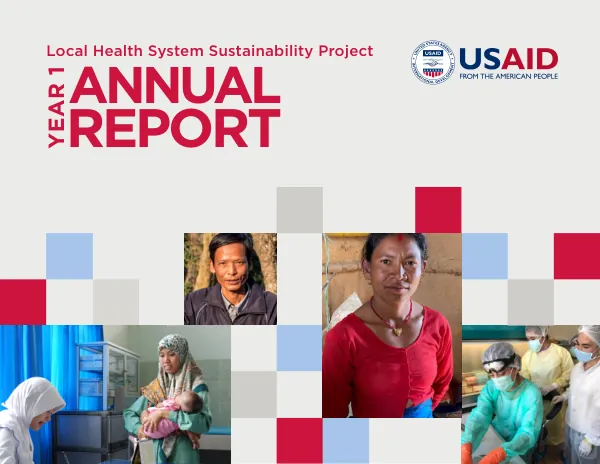
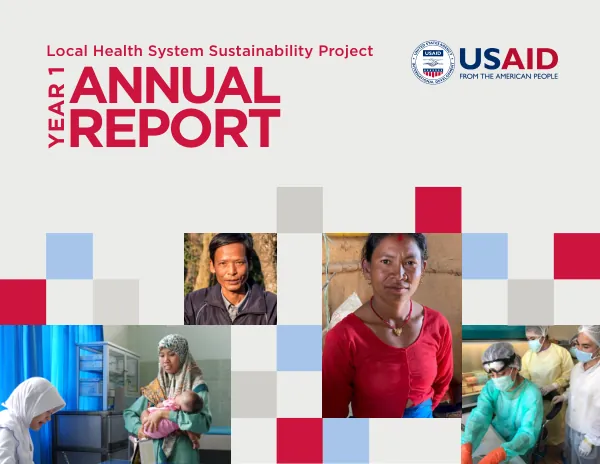
Local Health System Sustainability Project Annual Report Year 1
The Local Health System Sustainability Project began in 2022 with the goal of strengthening local health systems in low- and middle-income countries.
2021 · 50 pages
Sign in to readA free account is required to download.
Abstract
The project's approach focuses on improving equity, quality, resource optimization, health systems resilience, private sector engagement, and digital transformation. Core activities include monitoring, evaluation, and learning, as well as addressing capacity gaps and promoting leadership and commitment. Implementation of the project took place in multiple countries, with a focus on improving health care delivery and increasing access to quality services. Partnerships were established with various organizations, including government agencies, civil society organizations, and private sector entities. Funding for the project came from a combination of sources, including government grants and private sector investments. Early learnings and promising practices emerged in several areas, including equity, quality, and resource optimization. For example, the project found that targeted interventions aimed at improving health care access for marginalized populations resulted in significant increases in utilization and quality of care. Additionally, the project demonstrated the effectiveness of digital transformation in improving health information systems and enhancing the quality of care. The project also made progress in promoting health systems resilience, private sector engagement, and digital transformation. For instance, the project established partnerships with private sector entities to improve access to quality health care services and to enhance the capacity of local health systems. Furthermore, the project implemented digital solutions to improve health information systems and to enhance the quality of care. Country snapshots revealed that addressing capacity gaps was a critical component of the project's success. The project worked with local stakeholders to identify and address capacity gaps, which resulted in improved health care delivery and increased access to quality services. Leadership and commitment were also essential to the project's success, as local stakeholders demonstrated a strong commitment to improving health care delivery and increasing access to quality services. Monitoring, evaluation, and learning were critical components of the project, as they enabled the project team to track progress, identify areas for improvement, and make data-driven decisions. The project also made progress in promoting gender equality and social inclusion, as well as environmental mitigation and monitoring. Looking ahead to year 2, the project team identified several key areas for focus, including continued implementation of the project's core activities, further development of partnerships, and expansion of the project's geographic scope. The project team also recognized the importance of sustainability and transition, and made plans to establish a strong foundation for long-term success. The project's results framework and link to activities provided a clear roadmap for the project's implementation and evaluation. The framework outlined the project's key objectives, indicators, and activities, and provided a basis for monitoring and evaluation. The project's performance indicators were tracked and reported on a regular basis, providing a clear picture of progress and areas for improvement. Overall, the Local Health System Sustainability Project made significant progress in its first year, with a focus on improving equity, quality, resource optimization, health systems resilience, private sector engagement, and digital transformation. The project's early learnings and promising practices provided a strong foundation for continued success, and the project team was well-positioned to build on this momentum in year 2.