INTERNATIONAL RESOURCES GROUP
Low Emission Report: Quarterly Report No. 3
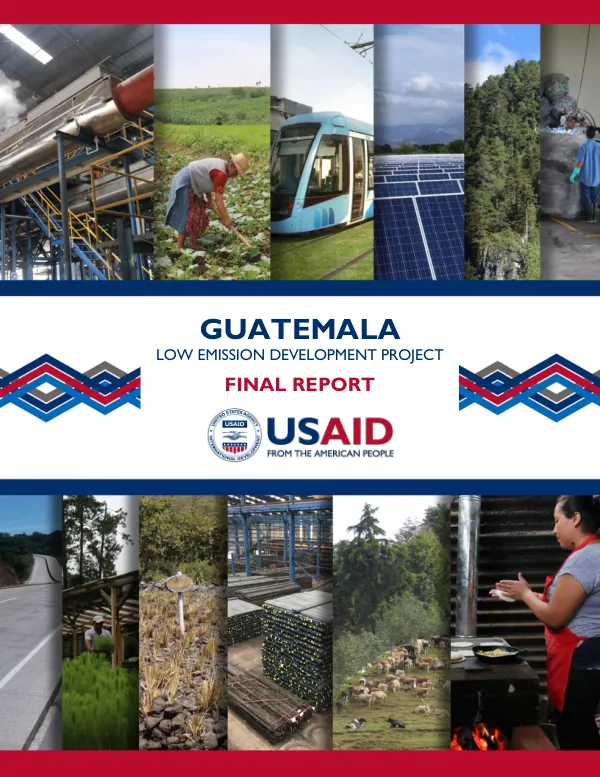
Establishing Reliable Science and Analytics was a key component of the Low Emission Development Project in Guatemala.
2015 · 39 pages
Sign in to readA free account is required to download.
Abstract
By January 1, 2015, analytical tools, methodologies, models, and approaches had been improved and/or transferred to the Government of Guatemala (GOG) and incorporated into Low Emission Development Strategies (LEDS) development processes. This included the development of mechanisms to ensure the transfer of information on greenhouse gas (GHG) emissions between and among GOG, stakeholders, and partners in Guatemala, including beneficiaries in key sectors and rural and indigenous communities. A comprehensive system to collect, store, and manage GHG emission and removal information was established, which included an information system between end users, sector leads, and the Ministry of Environment and Natural Resources (MARN) to report and verify GHG emissions and removal levels. Procedures and user-friendly, standardized systems were also developed to collect, store, and manage GHG information within the GOG. Models and scenarios based on alternative paths to Business as Usual (BAU) were generated and shared with the government, private sector, and civil society to promote an informed process of decision-making towards low emission development. The project also focused on building institutional capacity, with the GOG's capacities increased to collect and process basic data relevant to designing and implementing LEDS in each prioritized sector. Local capacity building and climate change units were strengthened through the embedding of key advisors in GOG institutions on LEDS on a sustainable basis. A legal and institutional framework was established to institutionalize coordination mechanisms within the GOG on LEDS, including working groups on sectoral topics. Developing participatory processes and transparency was another key component of the project. A comprehensive system was established to ensure the engagement of relevant private sector, academia, NGO, and civil society stakeholders. This included the development of a strategic communication plan for LEDS, which was produced and implemented. Communication and education tools were also designed and applied for key stakeholders, including media campaigns, radio, newspaper, and training modules. Promoting implementation through demonstrations was a critical aspect of the project. At least three policies and/or regulatory changes were developed and adopted by the GOG to facilitate the implementation of LEDS actions at the national level. The National Strategy for the Sustainable Production and Use of Firewood was also under implementation. Additionally, at least five different large and small-scale agro-industrial initiatives to reduce GHG emissions were showcased and promoted, and at least two integrated approaches to promote emission reductions were identified and promoted. Supporting communication and education was also a key component of the project. A strategic communication plan for LEDS was produced and implemented, and communication and education tools were designed and applied for key stakeholders. Civil society awareness and public perception of LEDS and climate change mitigation were increased as measured by surveys or other methodologies. In the coming quarter, priorities included establishing reliable science and analytics, building institutional capacity, developing participatory processes and transparency, promoting implementation through demonstrations, and supporting communication and education. Cross-cutting issues, such as environmental compliance, rapid response fund, gender equity and social inclusion, small grants, and contributions to TRAINET, were also addressed. Monitoring and evaluation were critical components of the project, and challenges were identified and addressed through the project's implementation.
Related documents