FEDERATION MINISTRY OF ENERGY, MINING AND INDUSTRY
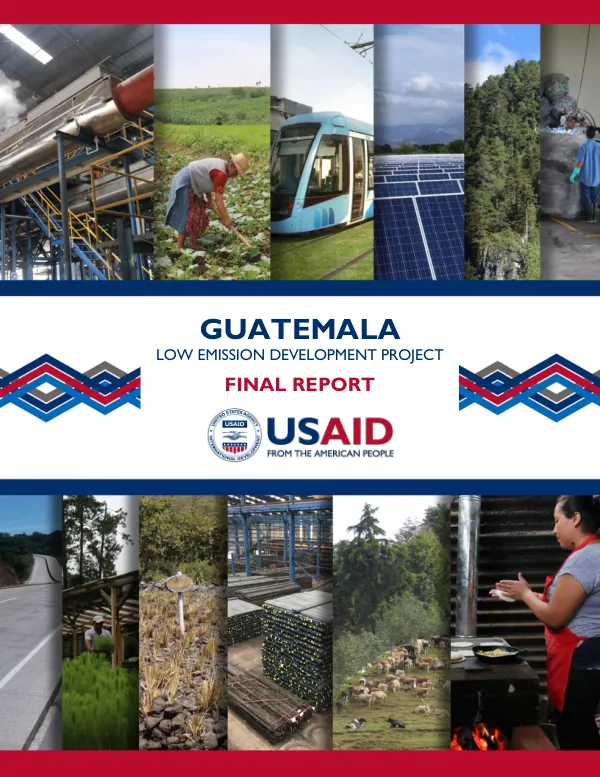
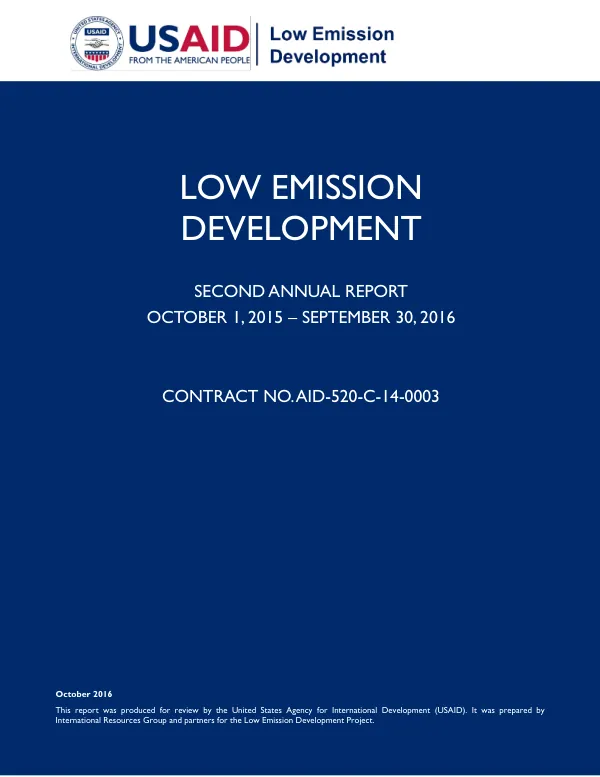
SECOND ANNUAL REPORT: Guatemala Low Emission Development Strategy
The Low Emission Development Project in Guatemala aimed to support the country's efforts to reduce greenhouse gas emissions and transition to a low-carbon economy.
2016 · 75 pages
Sign in to readA free account is required to download.
Abstract
The project was implemented from October 1, 2015, to September 30, 2016, and was funded by the United States Agency for International Development (USAID) under contract number AID-520-C-14-0003. The project focused on five key components: establishing reliable science and analytics, building institutional capacity, developing participatory processes and transparency, promoting implementation through demonstrations, and supporting communication and education. The project's overall goal was to support the Government of Guatemala (GOG) in developing and implementing a Low Emission Development Strategy (LEDS) that would help the country achieve its intended nationally determined contribution (INDC) under the Paris Agreement. Component 1, Establishing Reliable Science and Analytics, aimed to improve the GOG's ability to collect and analyze data on greenhouse gas emissions. The project established a comprehensive system to collect, store, and manage GHG emissions and removals information, which included information systems between the end-users and the Ministry of Environment and Natural Resources (MARN) to report and verify GHG emissions and removal levels. The project also developed analytical tools, methods, models, and approaches to support LEDS development processes. Component 2, Building Institutional Capacity, focused on increasing the GOG's capacity to design and implement LEDS in each prioritized sector. The project built local capacity and strengthened climate change units through embedding key advisors in GOG institutions on a sustainable basis. The project also established a legal and institutional framework to institutionalize coordination mechanisms within the GOG on LEDS. Component 3, Developing Participatory Processes and Transparency, aimed to ensure the engagement of relevant private sector, academia, NGO, and civil society stakeholders in the LEDS development process. The project established a comprehensive system to ensure the engagement of stakeholders, which included a strategic communication plan for LEDS. Component 4, Promoting Implementation through Demonstrations, focused on promoting the implementation of LEDS actions at the national level. The project developed and adopted at least three policies and/or regulatory changes by the GOG to facilitate the implementation of LEDS actions. The project also showcased and promoted at least five different large and small-scale agro-industrial initiatives to reduce GHG emissions. Component 5, Supporting Communication and Education, aimed to raise awareness on climate change in Guatemalan media and promote LEDS through communication and education tools. The project produced and implemented a strategic communication plan for LEDS, which included media campaigns, radio, newspaper, and training modules. The project also focused on social inclusion and gender equity, which was a cross-cutting theme throughout the project. The project aimed to ensure that the LEDS development process was inclusive and equitable, and that the benefits of LEDS were shared equitably among all segments of Guatemalan society. Overall, the Low Emission Development Project in Guatemala made significant progress in supporting the country's efforts to reduce greenhouse gas emissions and transition to a low-carbon economy. The project established a comprehensive system to collect and analyze data on GHG emissions, built institutional capacity, and promoted the implementation of LEDS actions at the national level. The project also raised awareness on climate change and promoted LEDS through communication and education tools.
Related documents