USAID DEC
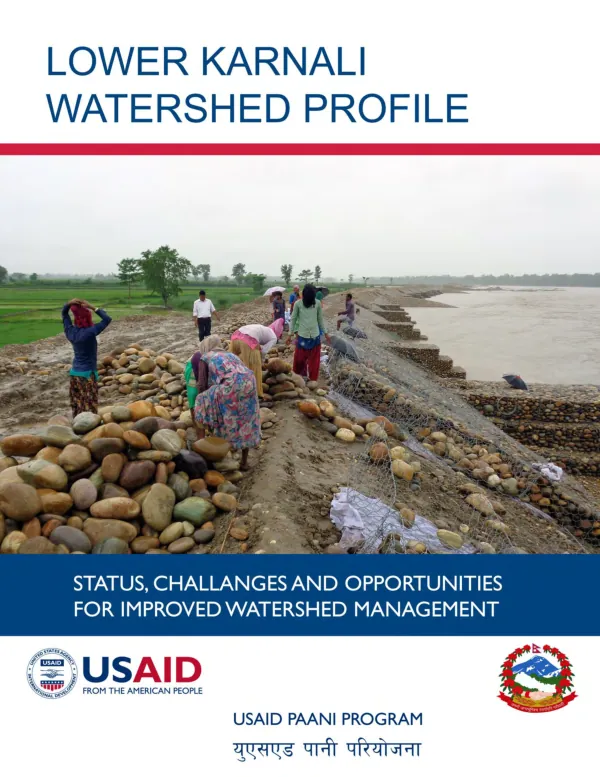
LOWER KARNALI WATERSHED PROFILE: STATUS, CHALLENGES AND OPPORTUNITIES FOR IMPROVED WATER RESOURCE MANAGEMENT
Sign inDAI GLOBAL, LLC
LOWER KARNALI WATERSHED PROFILE: STATUS, CHALLENGES AND OPPORTUNITIES FOR IMPROVED WATER RESOURCE MANAGEMENT
The Lower Karnali watershed is a vital region in Nepal, encompassing a diverse range of ecosystems and supporting a variety of livelihoods.
2019 · 112 pages
Sign in to readA free account is required to download.
Abstract
The watershed's natural resources, including water, land, and biodiversity, are essential for the well-being of its inhabitants. However, the region faces numerous challenges, including soil degradation, limited market access, and climate change. The watershed's natural characteristics are shaped by its geography, climate, and hydrology. The Lower Karnali River, which flows through the region, is a vital source of water for both domestic and agricultural use. The river's discharge rates vary throughout the year, with peak flows occurring during the monsoon season. The watershed's land use and land cover are also critical factors, with agriculture, forests, and grasslands dominating the landscape. The region's wealth is derived from its natural resources, including fishing, agriculture, and infrastructure development. Fishing practices in the Lower Karnali watershed are primarily subsistence-based, with local communities relying on the river for their livelihoods. Agriculture productivity is also a significant contributor to the region's wealth, with staple crops such as maize and beans being grown in the area. However, soil management and fertility are critical issues, with soil degradation and erosion posing significant threats to agricultural productivity. Infrastructure development is also a key aspect of the region's wealth, with hydropower, gravel mining, and road construction being significant contributors to the local economy. However, these activities also pose environmental risks, including sedimentation and habitat destruction. Solid waste management is another critical issue, with the region's growing population generating increasing amounts of waste. Access to water, early warning systems, and disaster risk reduction are critical for the region's inhabitants, with many communities lacking access to these essential services. Climate change adaptation and disaster risk reduction are also critical issues, with the region's communities facing increasing risks from climate-related hazards. Natural resource management (NRM) groups and activities are essential for the region's sustainability, with local communities playing a critical role in managing the watershed's resources. The Lower Karnali watershed faces numerous threats, including soil degradation, limited market access, and climate change. However, the region also presents opportunities for improved water resource management, including the development of sustainable agriculture practices and the promotion of climate-resilient infrastructure. The USAID Paani Program is working to address these challenges and opportunities, with a focus on improving water resource management and promoting sustainable livelihoods in the region. The program's vision for the Lower Karnali watershed is to create a resilient and sustainable community that manages its natural resources effectively. The program's commitment to conservation is reflected in its efforts to promote sustainable agriculture practices, protect biodiversity, and reduce the impacts of climate change. The program's recommendations for the region include the development of a watershed management plan, the promotion of sustainable agriculture practices, and the establishment of NRM groups and activities.
Related documents