USAID DEC
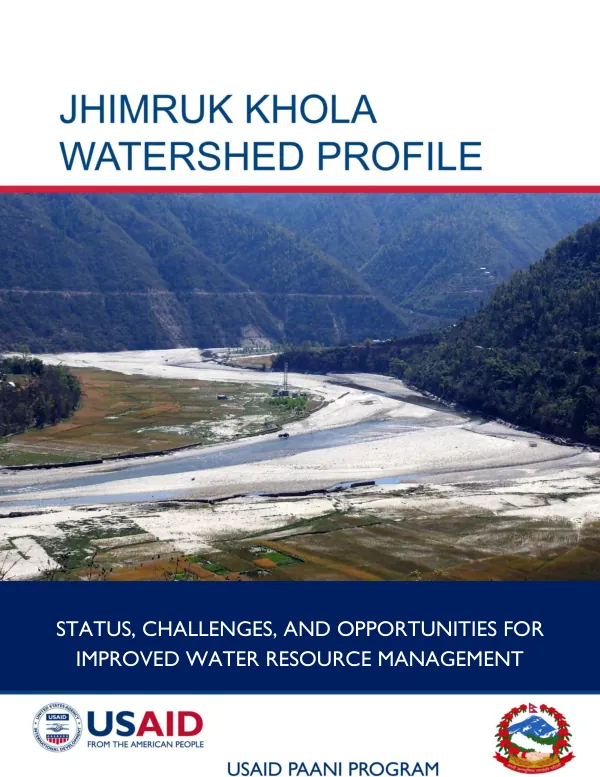
Jhimruk Khola Watershed Profile: Status, Challenges, and Opportunities for Improved Water Resource Management
Sign inDAI GLOBAL, LLC
Jhimruk Khola Watershed Profile: Status, Challenges, and Opportunities for Improved Water Resource Management
The Jhimruk watershed is a vital region in Nepal, encompassing a diverse range of ecosystems and supporting a significant portion of the country's population.
2018 · 99 pages
Sign in to readA free account is required to download.
Abstract
The watershed's natural resources, including water, land, and biodiversity, are essential for the livelihoods of local communities. However, the region faces numerous challenges, including soil degradation, limited market access, and inadequate infrastructure. The watershed's water availability and quality are critical concerns. River and stream discharge rates in the Jhimruk watershed vary significantly, with some areas experiencing high levels of sedimentation and pollution. Environmental issues, such as deforestation, soil erosion, and invasive species, are also prevalent in the region. Climate and physiography play a significant role in shaping the watershed's ecosystem, with rainfall and temperature fluctuations affecting agricultural productivity and infrastructure development. Fishing practices in the Jhimruk watershed are a significant source of income for local communities, with many households relying on fishing as their primary livelihood. However, overfishing and habitat degradation threaten the long-term sustainability of this industry. Agriculture productivity in the watershed is also a concern, with soil management and fertility being critical factors in determining crop yields. Infrastructure development, including hydropower, gravel mining, and road construction, is essential for supporting economic growth and improving living standards. Access to water for domestic and agricultural use is a significant challenge in the Jhimruk watershed, with many communities relying on unreliable and contaminated water sources. Early warning systems and disaster risk reduction measures are also lacking, leaving communities vulnerable to natural hazards such as landslides and floods. Community action and response to these challenges are essential, with local NRM groups and activities playing a critical role in promoting sustainable resource management. The Jhimruk watershed faces numerous threats, including soil degradation, water pollution, and climate change. However, these challenges also present opportunities for improved watershed health and sustainable development. Prioritizing major issues and challenges is essential for addressing these threats and promoting community-led conservation efforts. A vision statement for the Jhimruk watershed emphasizes the importance of conservation and sustainable development, with a commitment to protecting the watershed's natural resources for future generations. Recommendations for improved water resource management in the Jhimruk watershed include strengthening community-led conservation efforts, promoting sustainable agriculture practices, and improving access to water and sanitation services. These efforts will require the involvement of local communities, government agencies, and other stakeholders, as well as a commitment to long-term sustainability and environmental protection.
Related documents