DAI GLOBAL, LLC
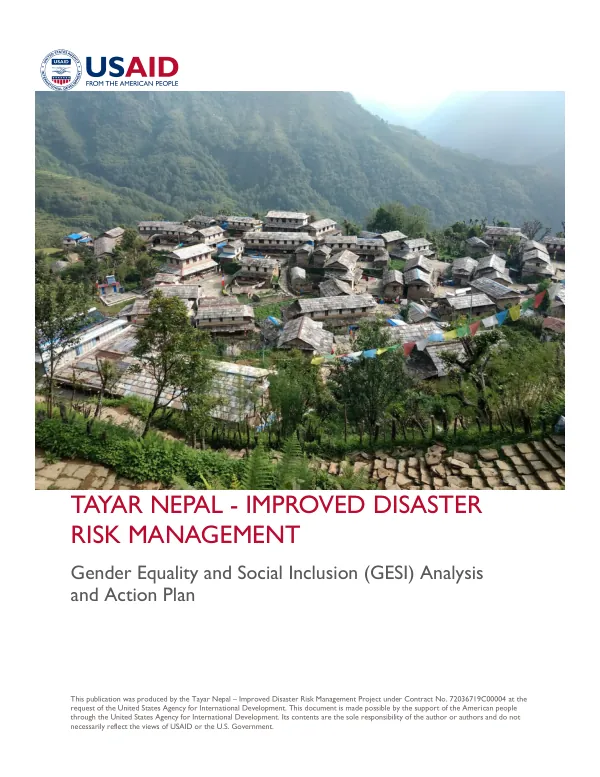
Tayay Nepal – GESI Analysis and Action Plan
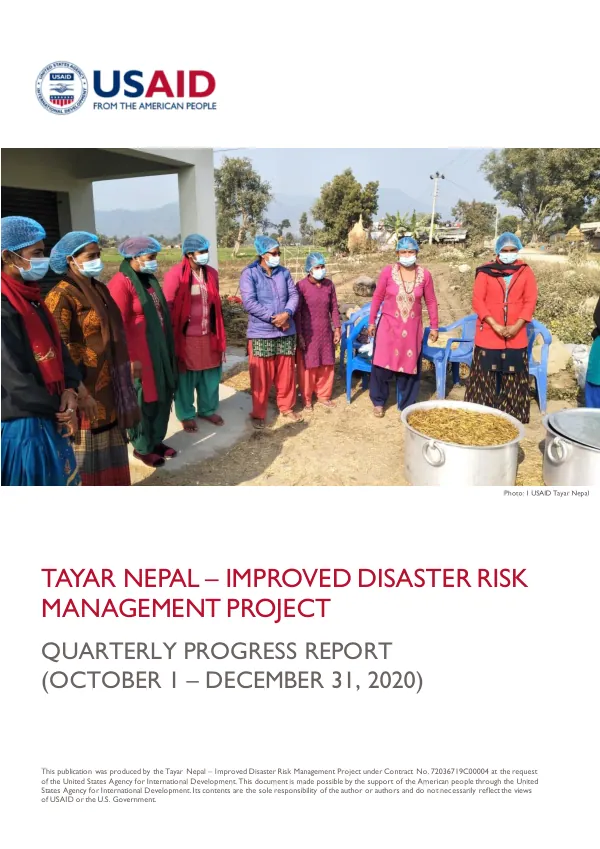
The Tayar Nepal – Improved Disaster Risk Management project is a flagship disaster preparedness and response project for Nepal, implemented by the United States Agency for International Development (USAID).
2019 · 35 pages
Sign in to readA free account is required to download.
Abstract
The project aims to strengthen the capacity of Nepal's disaster risk management and preparedness institutions, with a focus on both excluded and vulnerable groups, with additional emphasis on excluded groups within the vulnerable groups. The project's objectives are to identify existing Disaster Risk Reduction and Management (DRRM) policies, structures, and practices that promote or impede Gender Equality and Social Inclusion (GESI), and to suggest promising actions for promoting the inclusion of women and other excluded groups. The GESI analysis was conducted through a literature review and data collected through focus group discussions. Nepal is prone to a range of natural disasters, including floods, landslides, fires, earthquakes, and disease outbreaks. The project will support eight urban municipalities to develop risk-sensitive land use plans and then support the prioritization and implementation of a set of technical assistance packages to improve disaster resilience. In the event of a disaster, USAID/Nepal may engage the project's rapid emergency response mechanism. The project defines excluded groups as those who have been systematically excluded due to economic, caste, ethnic, gender, disability, and geographic reasons. These groups include women, the poor, Dalits, Adibasis/Janajatis, Madhesis, Muslims, persons with disabilities, sexual minorities, and people living in remote areas. Vulnerable groups are people whose disadvantage or risk of disadvantage is situational rather than structural. The findings of the GESI analysis indicate that disasters affect all people in Nepal, but they are more impactful for vulnerable groups, including poor households, children, persons with disabilities, sexual and gender minorities, and others. Poverty accentuates the vulnerability of both men and women during disaster events, and women and girls face greater vulnerability and exposure to disasters due to socio-economic conditions, cultural beliefs, and traditional practices. The project's focus on excluded and vulnerable groups is essential to ensure that the project's technical interventions and decision-making processes are responsive to the vulnerability and capabilities of these groups. The project's GESI analysis and action plan aim to promote the inclusion of women and other excluded groups in all project activities, and to assist the project to meaningfully integrate these groups into its work. The project will work closely with the Government of Nepal and Nepali emergency responders to mobilize technical assistance, commodity support, small-scale infrastructure, and information management support. The project will apply lessons learned from disaster response efforts to improve national-level DRM systems and municipal-level risk-reduction activities. The project's GESI action plan includes several key recommendations, including: * Developing a GESI framework for the project that outlines the project's GESI objectives, strategies, and indicators. * Conducting a GESI analysis of the project's technical interventions and decision-making processes to identify areas for improvement. * Developing a GESI training program for project staff and partners to ensure that they have the necessary skills and knowledge to implement the project's GESI objectives. * Establishing a GESI monitoring and evaluation system to track the project's progress in achieving its GESI objectives. * Developing a GESI communication strategy to raise awareness about the project's GESI objectives and progress among project stakeholders. Overall, the Tayar Nepal – Improved Disaster Risk Management project aims to promote the inclusion of women and other excluded groups in disaster risk reduction and management efforts in Nepal, and to improve the resilience of vulnerable communities to disasters.
Related documents