USAID DEC
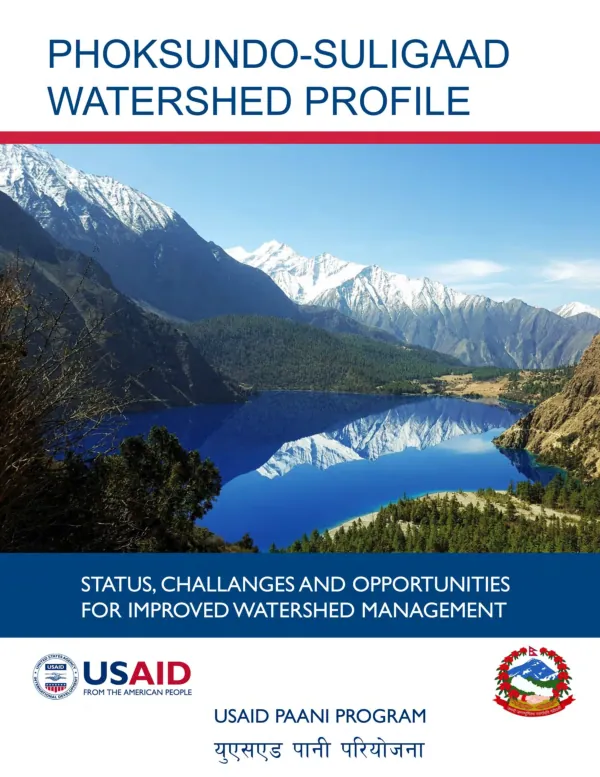
Phoksundo Suligaad Watershed Profile: Status, Challenges and Opportunities for Improved Water Resource Management
Sign inDAI GLOBAL, LLC
Phoksundo Suligaad Watershed Profile: Status, Challenges and Opportunities for Improved Water Resource Management
The Phoksundo Suligaad watershed is a critical region in Nepal, characterized by its unique natural features and diverse ecosystems.
2019 · 101 pages
Sign in to readA free account is required to download.
Abstract
The watershed is home to Phoksundo Lake, a scenic and culturally significant site, and is surrounded by the Dolpa district. The area is known for its rich biodiversity, with a variety of flora and fauna, including several endangered species. The watershed's natural resources are under threat due to various human activities, including agriculture, infrastructure development, and mining. Soil management and fertility are significant concerns, with soil erosion and degradation affecting agricultural productivity. The watershed's infrastructure, including hydropower, gravel mining, and roads, also poses environmental risks. Solid waste management is another critical issue, with improper disposal contributing to water pollution. Access to water and early warning systems are essential for the communities living in the watershed. However, access to these resources is limited, and the communities are vulnerable to climate-related disasters. The watershed's governance structure is also a concern, with inadequate representation and participation of local communities in decision-making processes. The Phoksundo Suligaad watershed faces several major issues and challenges, including aquatic biodiversity loss, climate change, and environmental degradation. Prioritizing environmental threats and opportunities is crucial for the watershed's sustainable management. A vision statement for the watershed emphasizes the importance of conserving its natural resources and promoting sustainable development. Recommendations for the Phoksundo Suligaad watershed include improving water resource management, enhancing biodiversity conservation, and promoting sustainable agriculture practices. The watershed's communities must be involved in decision-making processes to ensure that their needs and concerns are addressed. Effective governance and management of the watershed's natural resources are essential for its long-term sustainability. The watershed's natural resources, including its lakes, ponds, and waterfalls, are critical components of its ecosystem. Forest cover and type are also essential for maintaining biodiversity and preventing soil erosion. The watershed is home to several endemic plants, medicinal plants, and protected animals, which require conservation efforts to ensure their survival. The Phoksundo Suligaad watershed is a complex system, with multiple stakeholders and interests involved. Effective management of the watershed requires a coordinated approach, involving government agencies, local communities, and other stakeholders. The watershed's vision and mission statements emphasize the importance of conserving its natural resources and promoting sustainable development. The watershed's infrastructure, including micro-hydropower plants and irrigation projects, is critical for the communities living in the area. However, these projects also pose environmental risks, including water pollution and habitat destruction. Effective management of these projects is essential to minimize their impacts on the watershed's ecosystem. The Phoksundo Suligaad watershed is a critical region in Nepal, requiring careful management and conservation to ensure its long-term sustainability. Effective governance, community involvement, and sustainable resource management are essential for the watershed's future.
Related documents