GOVERNMENT OF MALAWI
Mali Livestock for Growth FY15 Quarter 1 Progress Report
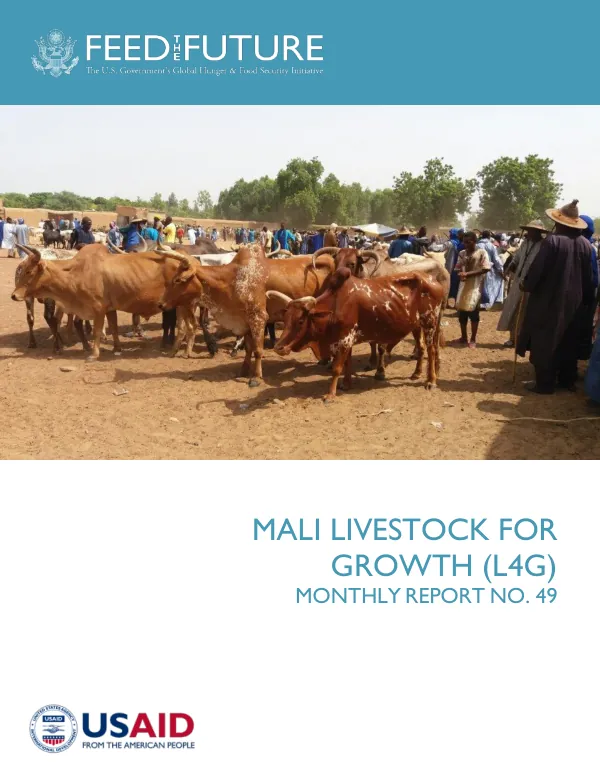
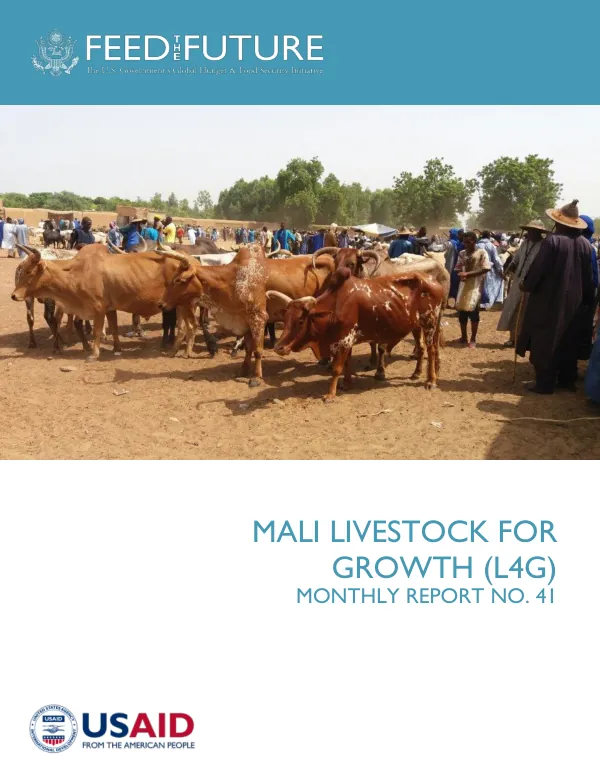
The USAID Mali Livestock for Growth (L4G) program aims to improve the quality of livestock, expand market access and incentives, and include poorer households in livestock value chain development.
2015 · 34 pages
Sign in to readA free account is required to download.
Abstract
The program targets herders and small producers who do not have reliable access to inputs or financial services, particularly female producers, who are largely isolated from markets and training programs due to cultural norms. L4G also considers youth to be a vulnerable population due to their lack of access to education, land, financial services, extension services, and high rates of unemployment. The program focuses on four key components: Increased Livestock Productivity, Increased Domestic and Export Trade, Strengthened Local Capacities and Systems, and Improved Enabling Environment for Livestock Sector. The first component, Increased Livestock Productivity, includes four sub-components: Enhanced Technology Innovation, Dissemination, and Management; Increased Access to Quality Inputs and Services; Improved Pastureland and Water Resources Management; and Improved Community Literacy, Numeracy, and Nutrition and Hygiene Practices. The second component, Increased Domestic and Export Trade, includes two sub-components: Strengthened Market Access and Linkages and Decreased Barriers to Trade. The third component, Strengthened Local Capacities and Systems, includes two sub-components: Strengthened Capacity of Local Actors and Strengthened Capacity of Civil Society for Policy Analysis and Advocacy. The fourth component, Improved Enabling Environment for Livestock Sector, includes two sub-components: Increased Capacity of Civil Society for Policy Analysis and Advocacy and Improved Regulatory Framework for Livestock Sector. The program targets several intermediate results, including Enhanced Technology Development, Dissemination, Management, and Innovation; Strengthened Market Linkages and Access; Strengthened Capacity of Livestock Actors; Increased Advocacy Capacity of Livestock Sector Organizations; and Improved Enabling Environment for Livestock Sector. The program also focuses on several cross-cutting themes, including Gender, Environmental Compliance, and Monitoring and Evaluation. The program has made significant progress in its first year, with several success stories and lessons learned. For example, the program has established a network of private proximity veterinary services, which has improved access to veterinary care for small producers. The program has also established a system for monitoring and evaluation, which has provided valuable insights into the program's impact and effectiveness. The program has also faced several challenges, including the need to improve the capacity of local actors and civil society organizations to participate in the program. The program has also faced challenges related to the availability of funding and the need to ensure that the program is sustainable in the long term. Overall, the USAID Mali Livestock for Growth program has made significant progress in its first year, with several success stories and lessons learned. The program continues to face several challenges, but it has the potential to make a significant impact on the livestock sector in Mali and contribute to the country's economic growth and development.