USAID
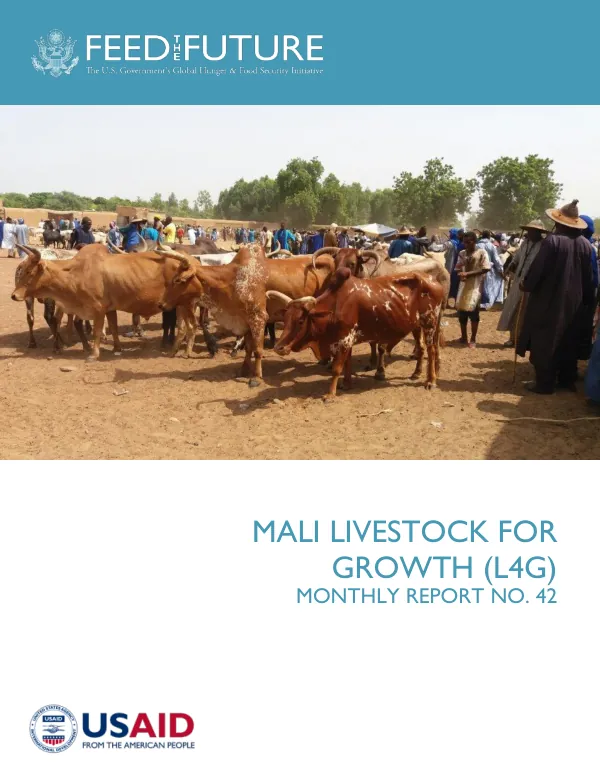
Mali Livestock for Growth (L4G) Monthly Report No. 42
The Mali Livestock for Growth (L4G) program is a USAID-funded initiative aimed at increasing animal production and access to technologies, as well as promoting livestock trade with reduced barriers.
2018 · 24 pages
Sign in to readA free account is required to download.
Abstract
The program operates in several regions of Mali, including Bankass, Djenné, Goundam, Koro, Mopti, and Niafunké. During the period from March 15th to April 15th, 2018, the program achieved several key results. In terms of animal health, 7,300 cattle were vaccinated against contagious bovine pleuropneumonia (CBPP), 6,783 cattle were vaccinated against bovine pasteurellosis, and 18,601 sheep and goats were vaccinated against small ruminant pasteurellosis. The three SVPPs (Service Vétérinaire Privé Partenariat) earned a gross margin of 2,390,080 CFA or $4,780 USD. The program also made significant progress in terms of seed reimbursement, fodder production, and production of multi-nutritional licking blocks (MNLBs). A total of 109kg of peanut flower II seeds were reimbursed by L4G beneficiaries in Bankass, while 156,375kg of fodder was produced and sold for a total amount of 4,736,550 CFA or $9,473 USD. Additionally, 802 MNLBs were produced by 20 producer organizations (POs) in Bankass and Djenné Cercles, and 659 MNLBs were sold for a total estimated value of 555,500 CFA or $1,111 USD. In terms of livestock trade, 1,037 animals were purchased by 70 POs and 30 individuals to undertake fattening activities. The combined value of animals sold during the period was estimated at 79,873,000 CFA or about $159,746 USD. The program also facilitated access to finance for several POs, including the cooperative society of Takoty in Mopti Cercle, which received a loan of 1,700,000 FCFA from PAMF, and the PO Mérindjimema in Koro, which obtained a loan of 1,312,500 FCFA from SOROYIRIWASSO. The program also made progress in terms of capacity building of SVPPs, with 20 POs in Timbuktu receiving support and training on animal health and vaccination. However, the POs noted that they lacked veterinarians and qualified auxiliary vets to treat their livestock and provide good animal health advice. Overall, the L4G program has made significant progress in promoting animal production and access to technologies, as well as promoting livestock trade with reduced barriers. The program's achievements are expected to contribute to improved food security and economic growth in Mali.