USAID
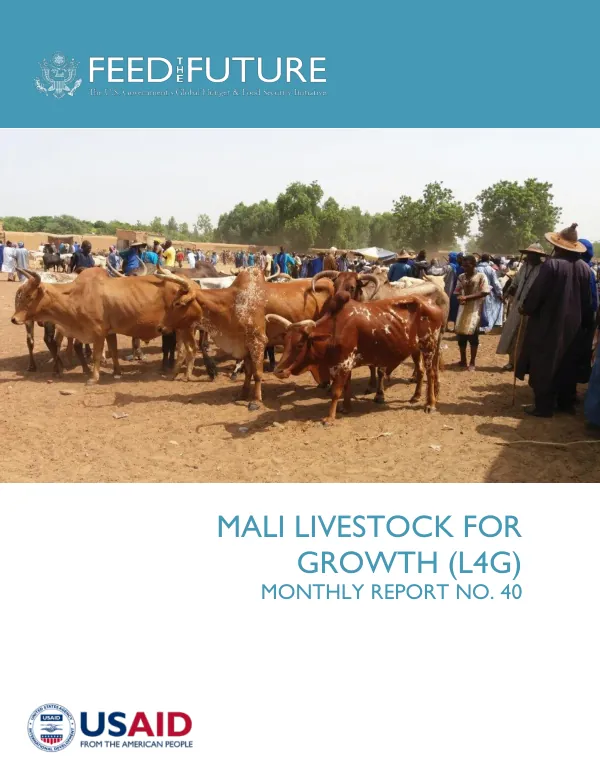
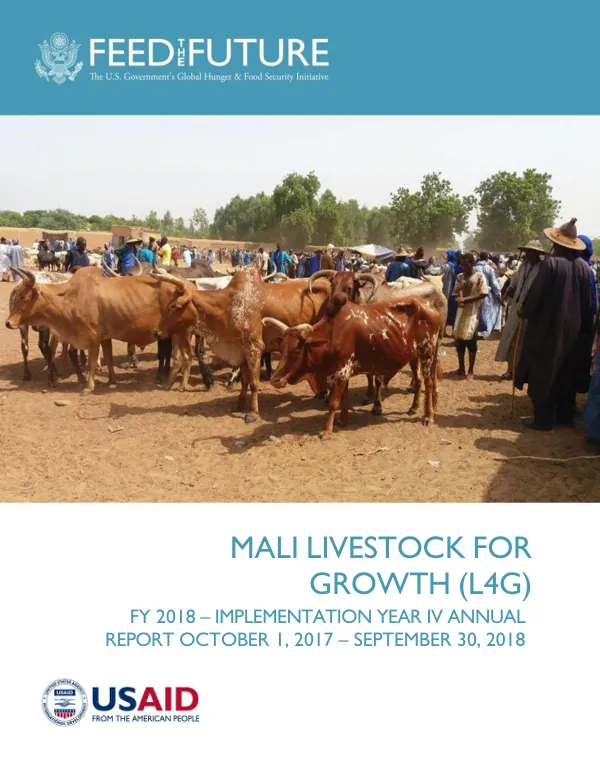
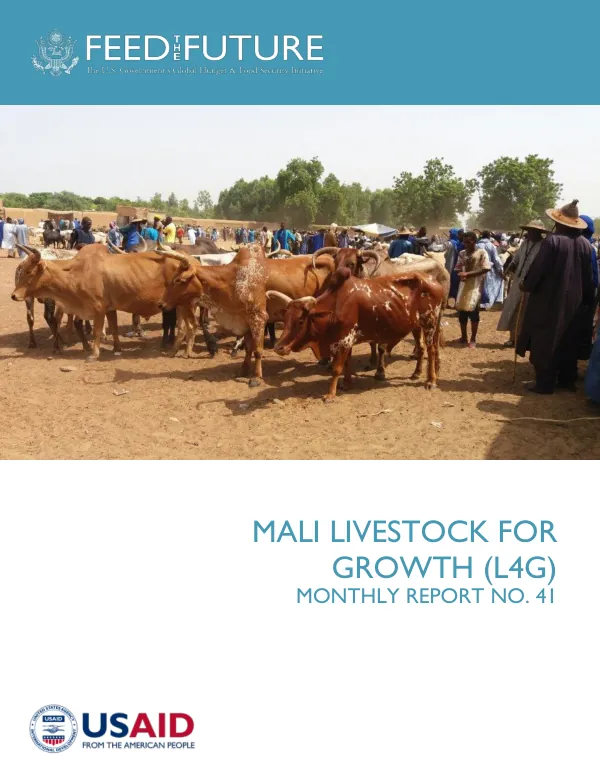
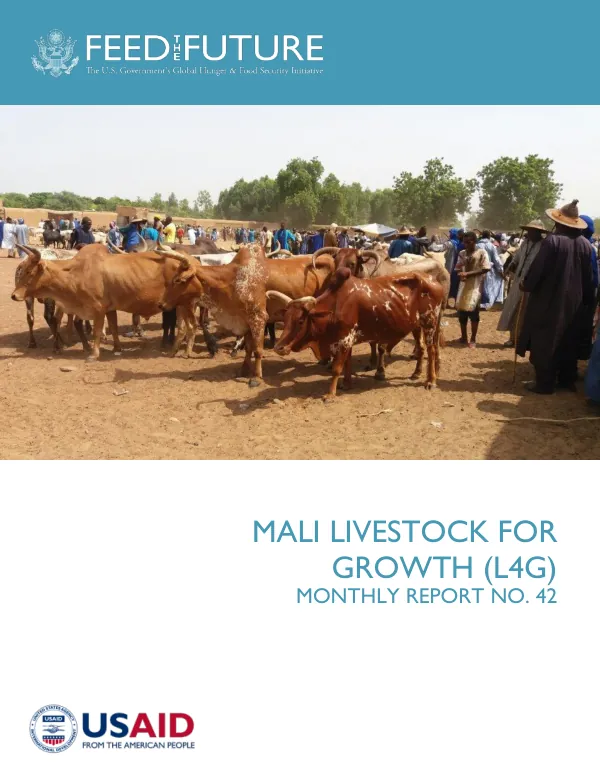
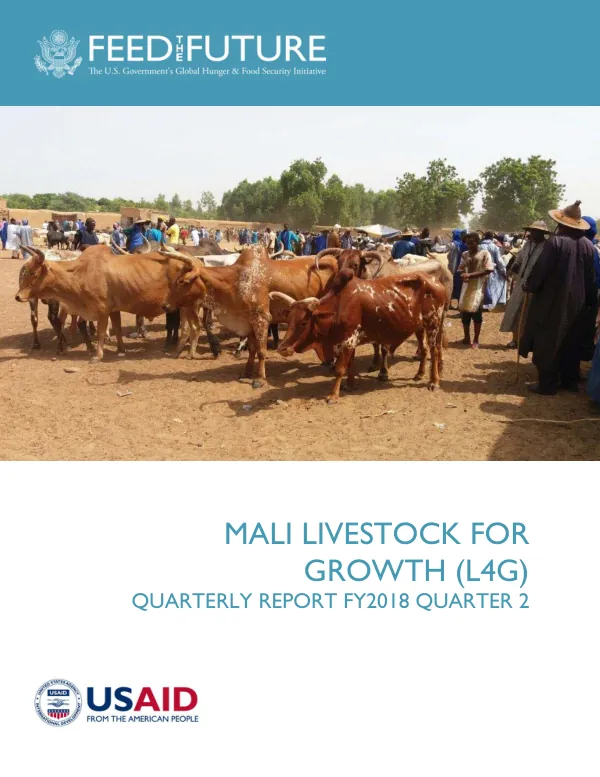
Mali Livestock for Growth (L4G) Quarterly Report FY2018 Quarter 2
The Livestock for Growth (L4G) program in Mali aims to increase animal production and access to technologies, as well as promote trade and strengthen local capacities and systems.
2018 · 50 pages
Sign in to readA free account is required to download.
Abstract
The program is implemented by AECOM International Development and is funded by USAID. The program's main objective is to improve the livelihoods of livestock farmers and pastoralists in Mali. Component IR1: Increased Animal Production and Access to Technologies focuses on enhancing technology innovation, dissemination, and management. Task 1.1.1 aims to modernize animal health delivery systems, while Task 1.1.2 involves developing and disseminating messages about good livestock management practices and issues. Task 1.1.3 targets improving livestock forage and animal feed production and supply. These interventions aim to increase animal productivity and improve the overall health of livestock. Component IR2: Increased Livestock Trade with Reduced Barriers focuses on strengthening market linkages and access. Task 2.1.1 aims to improve vertical linkages to build trust and sustainable market relationships, while Task 2.1.2 targets strengthening horizontal linkages to achieve economies of scale. Task 2.1.3 involves improving producer capacity to identify and achieve market requirements, and Task 2.1.4 links producers to financial services. These interventions aim to increase trade and improve the competitiveness of Malian livestock products. Component IV: Strengthened Local Capacities and Systems focuses on building the capacity of key national livestock stakeholders, including public, private, and civil society actors. Task 4.2.1 aims to build the capacity of key public sector actors in the livestock value chain to manage donor funds. This intervention aims to improve the overall management of the livestock sector in Mali. Component V: Improved Enabling Environment for Livestock Sector focuses on increasing the capacity of civil society for policy analysis and advocacy. This component aims to improve the policy environment for the livestock sector in Mali and promote the interests of livestock farmers and pastoralists. The program has made significant progress in the first half of FY2018, with several key achievements reported. These include the establishment of a Livestock Management Information System, which aims to improve the collection and analysis of data on the livestock sector in Mali. The program has also made progress in building the capacity of key national livestock stakeholders, including public, private, and civil society actors. The program has also faced several challenges, including the need to improve the capacity of civil society organizations to advocate for the interests of livestock farmers and pastoralists. The program has also faced challenges in improving the policy environment for the livestock sector in Mali, including the need to strengthen the capacity of key public sector actors in the livestock value chain. Overall, the Livestock for Growth program in Mali aims to improve the livelihoods of livestock farmers and pastoralists in Mali by increasing animal production and access to technologies, promoting trade, and strengthening local capacities and systems. The program has made significant progress in the first half of FY2018, but faces several challenges that need to be addressed in order to achieve its objectives.