FANTA
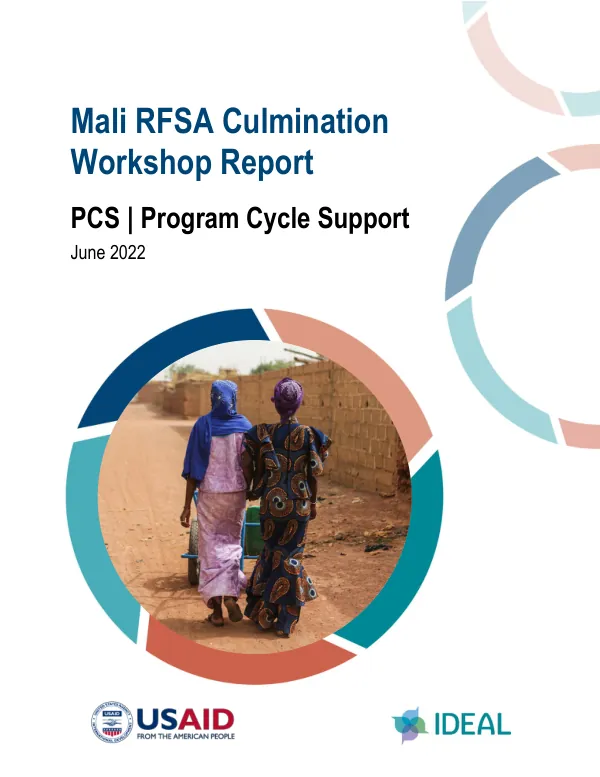
Mali Resilience Research Report
The agricultural development initiative in Mali began in 2018 with funding from USAID's Food Security Program.
2018 · 102 pages
Sign in to readA free account is required to download.
Abstract
Initial assessments conducted in various regions identified soil degradation, limited market access, and exposure to shocks and stresses as primary challenges. Household exposure to shocks and stresses was found to be widespread, with 70% of households experiencing at least one shock in the past year. Households employed various coping strategies to recover from shocks, including reducing expenses, selling assets, and borrowing money. Livelihoods were also affected, with 40% of households reporting a decline in income due to shocks. Household well-being outcomes, such as dietary diversity and hunger, were also impacted, with 30% of households experiencing hunger in the past year. Household resilience capacities, including absorptive, adaptive, and transformative capacities, were found to play a crucial role in mitigating the negative impact of shocks on well-being. Absorptive capacity, which refers to the ability to absorb and manage shocks, was found to be the strongest predictor of well-being outcomes. Adaptive capacity, which refers to the ability to adapt to changing circumstances, was also found to be important, particularly in the context of agricultural practices. The study found that households with higher levels of absorptive capacity were more likely to recover from shocks and experience improved well-being outcomes. In contrast, households with lower levels of absorptive capacity were more likely to experience negative outcomes, such as poverty and hunger. The study also found that the utilization of anticipated project-promoted practices, such as agricultural practices and WASH practices, was associated with improved resilience capacities and well-being outcomes. Regression analysis of the effects of program variables on recovery and resilience capacity outcomes revealed that direct impact of program variables on recovery, absorptive capacity, and adaptive capacity was significant. Changes in absorptive capacity were found to be the strongest predictor of recovery and well-being outcomes. The study concludes that strengthening household resilience capacities, particularly absorptive capacity, is critical to improving well-being outcomes and mitigating the negative impact of shocks in Mali.
Related documents
Documents in this collection
 2021
2021USAID DEC
Harnessing Local Sources of Social Cohesion in Niger: Lessons for Building Resilience in Protracted Crises and Conflict-affected Settings
Open record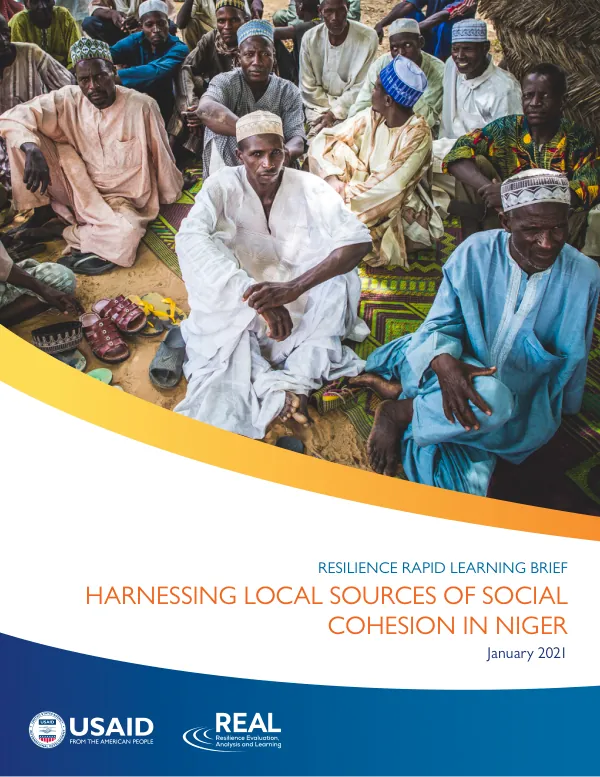 2021
2021USAID DEC