USAID DEC
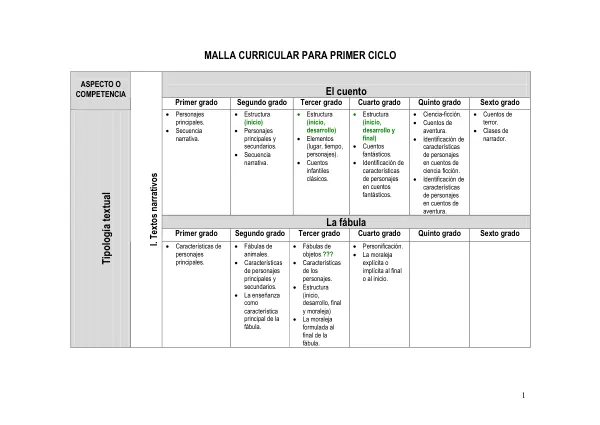
Malla Curricular para Primer Ciclo
The curriculum for the first cycle of education focuses on developing students' skills in reading and understanding various types of texts.
22 pages
Sign in to readA free account is required to download.
Abstract
The curriculum is divided into several aspects, each with specific competencies and grade levels. In the aspect of cuentos (short stories), students learn to identify and analyze the structure, characters, and plot of different types of stories, including fábulas (fables), parábolas (parables), and cuentos infantiles (children's stories). They also learn to distinguish between different types of stories, such as fantásticos (fantastic), de aventura (adventure), and de terror (horror). In the aspect of la fábula, students learn to identify and analyze the characteristics of fables, including the use of animals and objects as characters, and the structure of the story, which typically includes an introduction, development, and conclusion. They also learn to recognize the moral of the story and how it is presented. In the aspect of la parábola, students learn to identify and analyze the differences and similarities between fables and parables. They also learn to recognize the characteristics of parables, including the use of everyday situations and the presentation of a moral lesson. In the aspect of textos de tradición oral (oral traditions), students learn to recognize and analyze different types of oral traditions, including trabalenguas ( tongue-twisters), rondas (riddles), and chistes (jokes). They also learn to identify and analyze the characteristics of different types of oral traditions, such as refranes (proverbs) and colmos (bombas). In the aspect of la leyenda, students learn to identify and analyze the characteristics of legends, including the use of supernatural elements and the presentation of a moral lesson. They also learn to recognize the differences and similarities between legends and myths. In the aspect of el mito, students learn to identify and analyze the characteristics of myths, including the use of supernatural elements and the presentation of a moral lesson. They also learn to recognize the differences and similarities between myths and legends. In the aspect of la anécdota, students learn to identify and analyze the characteristics of anecdotes, including the use of everyday situations and the presentation of a moral lesson. They also learn to recognize the differences and similarities between anecdotes and other types of stories. In the aspect of la novela, students learn to identify and analyze the characteristics of novels, including the use of a plot, characters, and setting. They also learn to recognize the differences and similarities between novels and other types of stories. In the aspect of la descripción, students learn to identify and analyze the characteristics of descriptive texts, including the use of sensory details and the presentation of a scene or setting. They also learn to recognize the differences and similarities between descriptive texts and other types of texts. In the aspect of el drama, students learn to identify and analyze the characteristics of dramatic texts, including the use of dialogue and stage directions. They also learn to recognize the differences and similarities between dramatic texts and other types of texts. In the aspect of el poema, students learn to identify and analyze the characteristics of poetic texts, including the use of rhyme and meter. They also learn to recognize the differences and similarities between poetic texts and other types of texts. In the aspect of juegos, recetas y otros (games, recipes, and others), students learn to identify and analyze the characteristics of instructional texts, including the use of step-by-step instructions and diagrams. They also learn to recognize the differences and similarities between instructional texts and other types of texts. In the aspect of la carta, la nota, la invitación, el aviso, la noticia, la biografía, el informe y otros (letters, notes, invitations, announcements, news, biographies, reports, and others), students learn to identify and analyze the characteristics of informative texts, including the use of headings and subheadings. They also learn to recognize the differences and similarities between informative texts and other types of texts. In the aspect of señales de tránsito, del entorno, carteles, afiches y otros (traffic signs, environmental signs, posters, and others), students learn to identify and analyze the characteristics of visual texts, including the use of images and symbols. They also learn to recognize the differences and similarities between visual texts and other types of texts. In the aspect of la historieta y la caricatura (comics and cartoons), students learn to identify and analyze the characteristics of visual texts, including the use of images and text. They also learn to recognize the differences and similarities between visual texts and other types of texts. In the aspect of cuadros de doble entrada, menú, calendario, diagramas de Venn y otros (double-entry charts, menus, calendars, Venn diagrams, and others), students learn to identify and analyze the characteristics of graphic organizers, including the use of charts and diagrams. They also learn to recognize the differences and similarities between graphic organizers and other types of texts. In the