USAID DEC
Management of Diarrhea
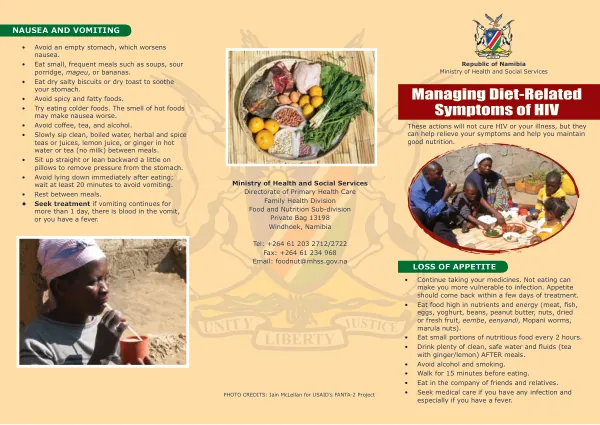
The Ministry of Health and Social Services in Namibia has issued guidelines for managing nausea and vomiting associated with HIV/AIDS.
2 pages
Sign in to readA free account is required to download.
Abstract
The guidelines emphasize the importance of maintaining good nutrition to alleviate symptoms and prevent malnutrition. Nausea and vomiting can lead to dehydration and malnutrition if left unchecked. To manage nausea and vomiting, individuals are advised to eat small, frequent meals such as soups, sour porridge, mageu, or bananas. Dry salty biscuits or dry toast can also help soothe the stomach. Spicy and fatty foods should be avoided, as well as coffee, tea, and alcohol. Colder foods may be more tolerable, and sitting up straight or leaning backward can help alleviate pressure on the stomach. The guidelines also recommend drinking clean, boiled water, herbal and spice teas, or juices between meals. Resting between meals and avoiding lying down immediately after eating can help prevent vomiting. It is essential to continue taking medications, even if appetite is lost, as not eating can make individuals more vulnerable to infection. The guidelines suggest eating foods high in nutrients and energy, such as meat, fish, eggs, yoghurt, beans, peanut butter, nuts, dried or fresh fruit, and Mopani worms. Small portions of nutritious food should be consumed every 2 hours, and clean, safe water and fluids should be drunk after meals. Avoiding alcohol and smoking is also crucial. The guidelines also provide information on making Oral Rehydration Solution (ORS) at home, which can help alleviate dehydration. A mixture of ½ teaspoon of salt, 8 teaspoons of sugar, and 1 liter of clean water can be made and sipped every 5 minutes until urine appears lighter. Premixed ORS is generally recommended, but the homemade solution can be used if ingredients are not available. In addition to managing nausea and vomiting, the guidelines provide advice on maintaining good nutrition during diarrhoea. Eating more bread, mahangu, pasta, or rice, and consuming 2-3 snacks between meals, can help alleviate symptoms. Combining beans and peas with rice, maize, or other grains, and adding peanut butter, cheese, or avocado to vegetables and bread, can also be beneficial. The guidelines also recommend drinking sour milk, such as omaere, and eating soft fruits and cooked vegetables to strengthen the immune system and digestive tract. Foods rich in potassium, such as bananas, spinach, potatoes, and meat, should be consumed, as well as easily digestible foods like oatmeal, white rice, and soft porridge. It is essential to avoid fresh milk and milk soured artificially with roots or lemon juice, as well as foods that cause gas, such as beans, cabbage, and carbonated drinks. Fried foods, coffee, tea, cool drinks, and alcohol should also be avoided. Rinsing the mouth frequently with a solution recommended by a doctor or with a pinch of salt or 1 teaspoon of baking soda mixed with lukewarm boiled or filtered water can help alleviate mouth sores. The guidelines emphasize the importance of seeking medical care if diarrhoea does not stop or gets worse, and if dehydration or malnutrition is suspected. Drinking 8 or more glasses of boiled or filtered water, diluted fruit juice, electrolyte drinks, soups, or broth per day, and sipping ORS as soon as diarrhoea starts and after every loose stool, can help alleviate symptoms. Eating 5 or more small meals a day can also be beneficial.