USDA
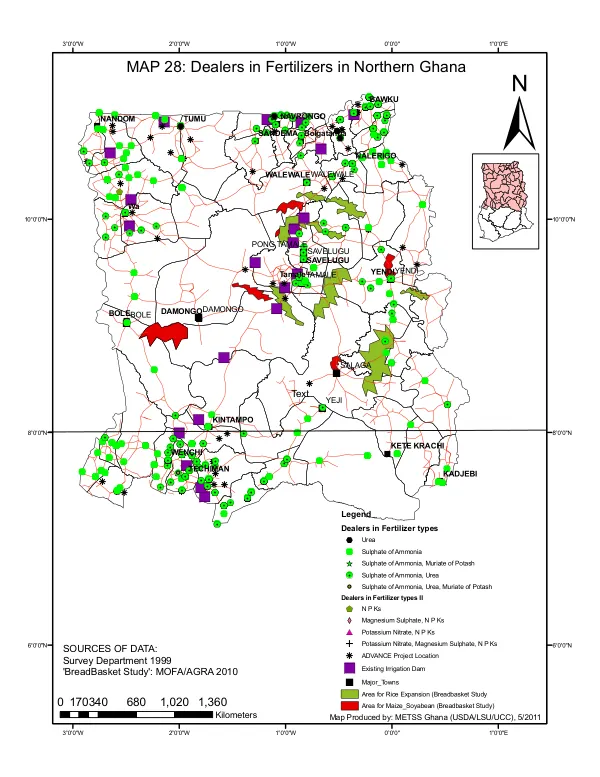
MAP 28: Dealers in Fertilizers in Northern Ghana ±
The agricultural sector in Northern Ghana is characterized by low crop yields and limited access to fertilizers.
1 pages
Sign in to readA free account is required to download.
Abstract
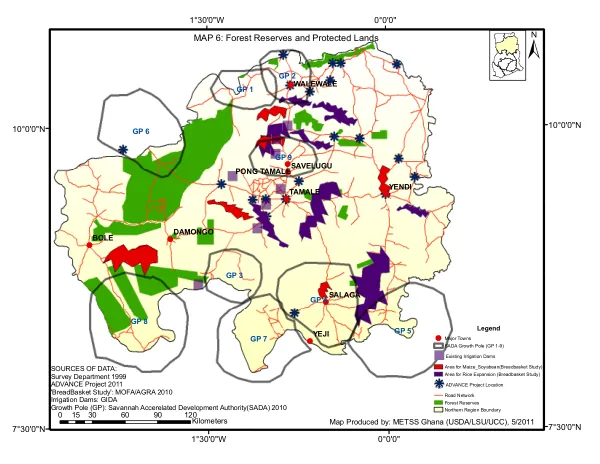
The region's geography is marked by a diverse range of ecosystems, including the Guinea savanna and the Sudan savanna. The climate is generally hot and dry, with two distinct seasons: a wet season from May to October and a dry season from November to April. The existing irrigation dams in the region, such as the Bole and Yendi dams, provide a vital source of water for agriculture. However, the dams' capacity is often limited by inadequate maintenance and insufficient water supply. The major towns in the region, including Tamale, Salaga, and Damongo, serve as hubs for agricultural production and trade. The breadbasket study, conducted by the Ministry of Food and Agriculture (MOFA) and the Alliance for a Green Revolution in Africa (AGRA) in 2010, identified areas suitable for rice and maize-soybean production. The study recommended the expansion of rice production in the Bole and Yendi areas, while the Salaga and Damongo areas were identified as suitable for maize-soybean production. The ADVANCE project, implemented in the region, focused on improving agricultural productivity and access to fertilizers. The project established a network of dealers in fertilizers, including urea, sulphate of ammonia, and muriate of potash. The dealers were located in major towns and rural areas, providing farmers with easy access to fertilizers. The project also implemented a range of interventions, including farmer training programs, infrastructure development, and market linkage facilitation. The training programs focused on sustainable agriculture practices, such as composting and crop rotation. The infrastructure development component involved the construction of roads, bridges, and irrigation systems. The market linkage facilitation component aimed to improve farmers' access to markets and increase their incomes. The project established a range of market linkages, including contracts with buyers and suppliers of inputs. The project also provided farmers with access to credit and other financial services. The geographic focus of the ADVANCE project was on the Northern Region of Ghana, which includes the districts of Bole, Yendi, Tamale, Salaga, and Damongo. The project's timeframes were from 2010 to 2015, during which it implemented a range of interventions aimed at improving agricultural productivity and access to fertilizers. The project's recommendations included the expansion of rice production in the Bole and Yendi areas, the development of irrigation systems, and the establishment of a network of dealers in fertilizers. The project also recommended the implementation of sustainable agriculture practices, such as composting and crop rotation, and the provision of farmers with access to credit and other financial services.
Related documents