USDA
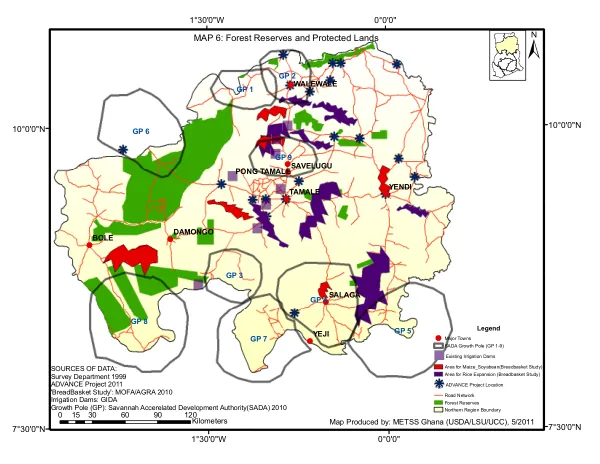
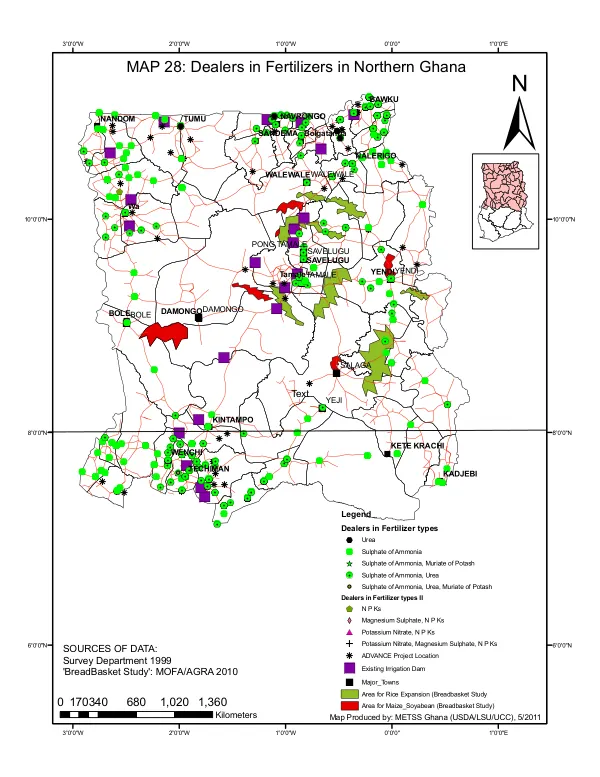
Northern Volta Region Water Resources Map
The Volta River Basin in Ghana is a critical region for agricultural development and water resources management.
2011 · 1 pages
Sign in to readA free account is required to download.
Abstract
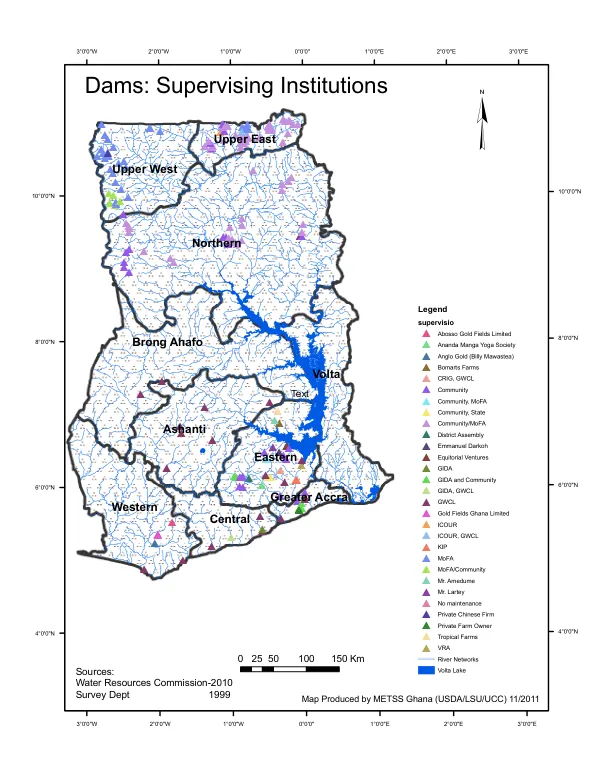
The basin spans across 10 regions, including Northern, Volta, Ashanti, Brong Ahafo, Western, Eastern, Upper West, Central, Upper East, and Greater Accra. The region's geography is characterized by a series of dams and river networks, with the Volta Lake being a major water body. Supervising institutions for the dams in the region include Abosso Gold Fields Limited, Ananda Manga Yoga Society, Anglo Gold (Billy Mawastea), Bomarts Farms, CRIG, GWCL, Community, Community/MoFA, District Assembly, Emmanuel Darkoh, Equitorial Ventures, GIDA, GIDA and Community, GIDA, GWCL, Gold Fields Ghana Limited, ICOUR, ICOUR, GWCL, KIP, MoFA, MoFA/Community, Mr. Amedume, Mr. Lartey, Private Chinese Firm, Private Farm Owner, Tropical Farms, and VRA. These institutions play a crucial role in managing the water resources and ensuring the sustainability of the region's agricultural activities. The region's geography is also characterized by a series of latitudes and longitudes, ranging from 3°0'0"E to 3°0'0"W and 10°0'0"N to 4°0'0"N. The region's climate is influenced by its proximity to the equator, with temperatures ranging from 25°C to 35°C throughout the year. The region's water resources are managed by a combination of government agencies, private companies, and community-based organizations. The Volta River Basin is a critical region for Ghana's agricultural development, with the majority of the country's crops being grown in this region. The region's fertile soil and favorable climate make it an ideal location for crop production, with staple crops such as maize and beans being grown in large quantities. The region's water resources are also critical for irrigation, with many farmers relying on the Volta Lake and other water bodies to support their agricultural activities. The management of the Volta River Basin's water resources is a complex task, requiring the coordination of multiple stakeholders and institutions. The region's supervising institutions play a crucial role in ensuring the sustainability of the region's agricultural activities and managing the water resources in a way that balances the needs of different users. The region's geography and climate also pose significant challenges to water resources management, with the need for careful planning and management to ensure the long-term sustainability of the region's water resources.