USDA
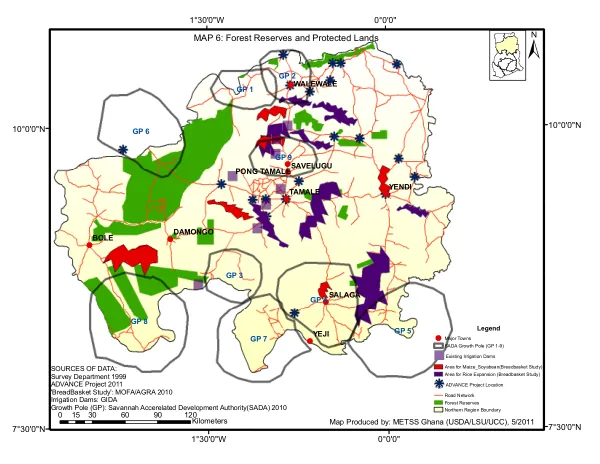
Map 6: Forest Reserves and Protected Lands
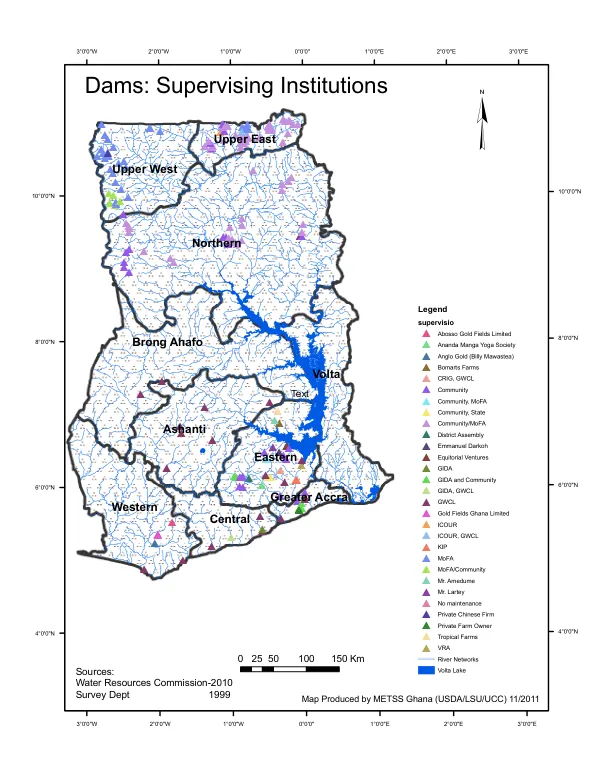
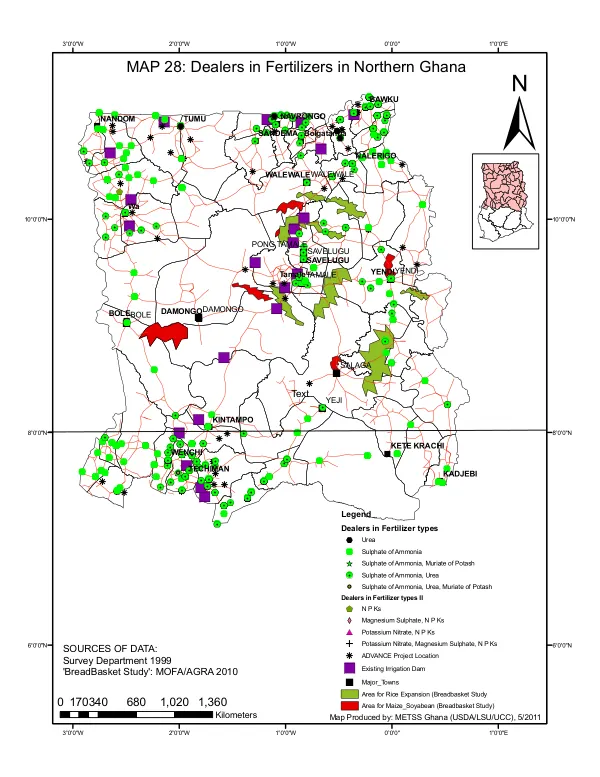
The Northern Region of Ghana is characterized by a diverse geography, with the Savannah Accelerated Development Authority (SADA) Growth Pole (GP) 1-9 located in the region.
2011 · 1 pages
Sign in to readA free account is required to download.
Abstract
GP 1 is situated near BOLE, while GP 2 is located near YEJI. GP 3 is situated near YENDI, and GP 4 is located near TAMALE. GP 5 is situated near SALAGA, GP 6 is located near DAMONGO, GP 7 is situated near WALEWALE, GP 8 is located near SAVELUGU, and GP 9 is situated near PONG TAMALE. The region's geography is marked by a range of latitudes, with GP 1-9 spanning from 0°0'0" to 10°0'0" North. The longitudes of the growth poles range from 1°30'0" West to 7°30'0" West. The region's terrain is characterized by a mix of flat plains and rolling hills, with the Savannah Accelerated Development Authority (SADA) Growth Pole (GP) 1-9 located in the northern part of the region. The region's road network is well-developed, with major towns and cities such as BOLE, YEJI, YENDI, TAMALE, SALAGA, DAMONGO, WALEWALE, SAVELUGU, and PONG TAMALE providing access to the growth poles. The region is also home to several existing irrigation dams, which provide water for agricultural purposes. The area is suitable for maize and soybean production, with the "Breadbasket Study" identifying the region as a key area for agricultural development. The region's forest reserves and protected lands are also an important feature of the geography. The forest reserves provide a habitat for a range of wildlife species, while the protected lands help to conserve the region's natural resources. The region's geography is characterized by a mix of flat plains and rolling hills, with the Savannah Accelerated Development Authority (SADA) Growth Pole (GP) 1-9 located in the northern part of the region. The region's road network is well-developed, with major towns and cities providing access to the growth poles. The region's geography is also characterized by a range of climate zones, with the Savannah Accelerated Development Authority (SADA) Growth Pole (GP) 1-9 located in the northern part of the region. The region's climate is characterized by a dry season from November to March, with the majority of the region's rainfall occurring during the wet season from April to October. The region's geography is well-suited for a range of agricultural activities, including maize and soybean production.