CLINTON HEALTHCARE ACCESS INITIATIVE
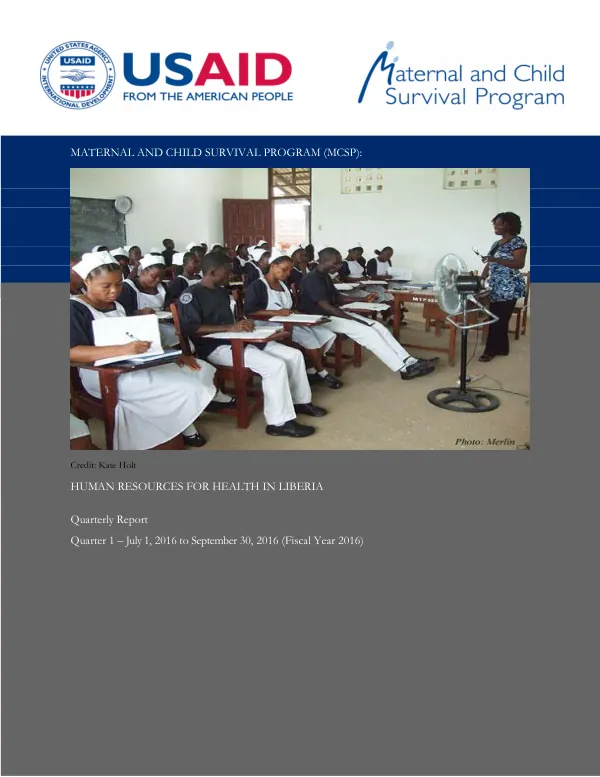
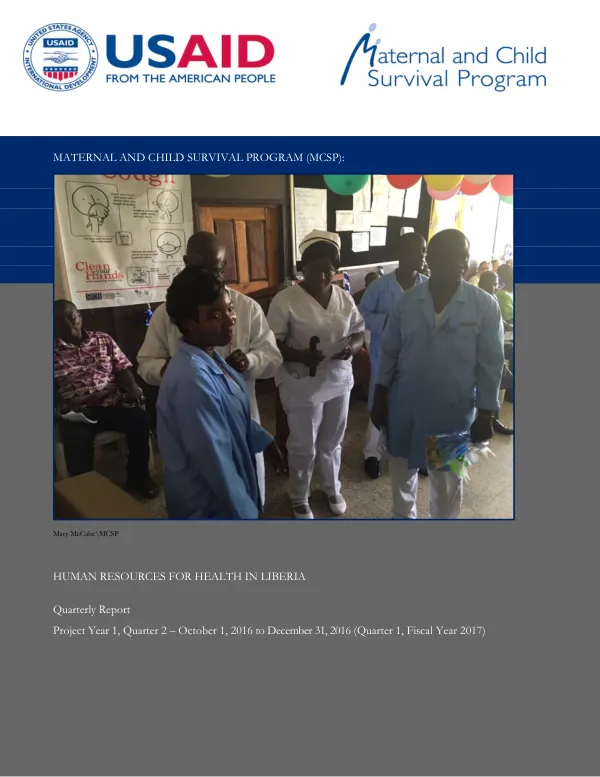
Maternal and Child Survival Program (MCSP): Human Resources for Health in Liberia
The Maternal and Child Survival Program (MCSP) Human Resources for Health in Liberia is a global U.S.
2016 · 32 pages
Sign in to readA free account is required to download.
Abstract
Agency for International Development (USAID) cooperative agreement aimed at introducing and supporting high-impact health interventions in 25 priority countries. The program's ultimate goal is to end preventable child and maternal deaths within a generation. MCSP engages governments, policymakers, private sector leaders, health care providers, civil society, faith-based organizations, and communities in adopting and accelerating proven approaches to address major causes of maternal, newborn, and child mortality. The program focuses on health systems strengthening, household and community mobilization, gender integration, and eHealth, among others. MCSP carries forward the momentum and lessons learned from the highly successful USAID-funded Maternal and Child Health Integrated Program (MCHIP), which made significant progress in improving the health of women and children in over 50 developing countries throughout Africa, Asia, Latin America, and the Caribbean. In response to the second-order impacts of the 2014 Ebola Virus Disease (EVD) Outbreak, USAID/Liberia requested MCSP to support its commitment to strengthening Liberia's frontline health workforce through the new MCSP Liberia Human Resources for Health (HRH) project. This project, funded with Ebola Emergency Funding, is focused on midwifery and laboratory technician pre-service education in targeted institutions throughout the country. The MCSP HRH Liberia team members are leaders in implementing pre-service education and maternal, newborn, and child health (MNCH) programs, and all partners are established entities in Liberia with formalized relationships with the Ministry of Health (MOH). MCSP HRH builds on previous work focused on Pre-Service Education (PSE) strengthening in Liberia to continue contributing to the strengthening of the health workforce, particularly focusing on midwives and lab technicians. The technical approach of the project emphasizes the pre-service model, highlighting several influencing factors necessary in a pre-service education program to achieve quality outcomes in performance, community health, and health systems. The influencing factors include students, faculty, curriculum, and infrastructure. The project aims to strengthen the capability and resilience of Liberia's frontline health workforce to address second-order impacts from the Ebola crisis by strengthening pre-service training of midwives and laboratory personnel. The project's goal is to rapidly mitigate the second-order impacts of Ebola through a targeted technical approach focused on clinical competency of frontline midwives and lab technicians. MCSP HRH will reach the project goal by strengthening pre-service training of midwives and laboratory personnel, two critical cadres whose shortage and lack of adequate training contribute to Liberia's vulnerability to public health crises. Key achievements in the first quarter of the project include the development of a comprehensive workplan, the establishment of a project management unit, and the initiation of pre-service training programs for midwives and laboratory technicians. The project has also established partnerships with key stakeholders, including the Ministry of Health, the Liberia Medical and Dental Council, and the Liberia Board of Nursing and Midwifery. The project's implementation is focused on three main objectives: increased quality of instruction at targeted pre-service training institutions, strengthened learning environment at targeted pre-service training institutions, and coordination and collaboration with partners. The project's technical approach emphasizes the pre-service model, highlighting several influencing factors necessary in a pre-service education program to achieve quality outcomes in performance, community health, and health systems. The project's geographic coverage includes Grand Gedeh, Lofa, Bong, and Montserrado counties, and the reporting period is from October 1, 2016, to December 31, 2016. The total funds obligated to date are $10,000,000 USD. The project's progress is monitored and evaluated through a comprehensive monitoring and evaluation system, which includes the use of performance indicators, data collection, and analysis. The project's achievements in the first quarter of the reporting period are significant, and the project is on track to meet its objectives. The project's technical approach, partnerships, and implementation plan are designed to ensure clinical competence and a strengthened, more resilient health system in Liberia.