CLINTON HEALTHCARE ACCESS INITIATIVE
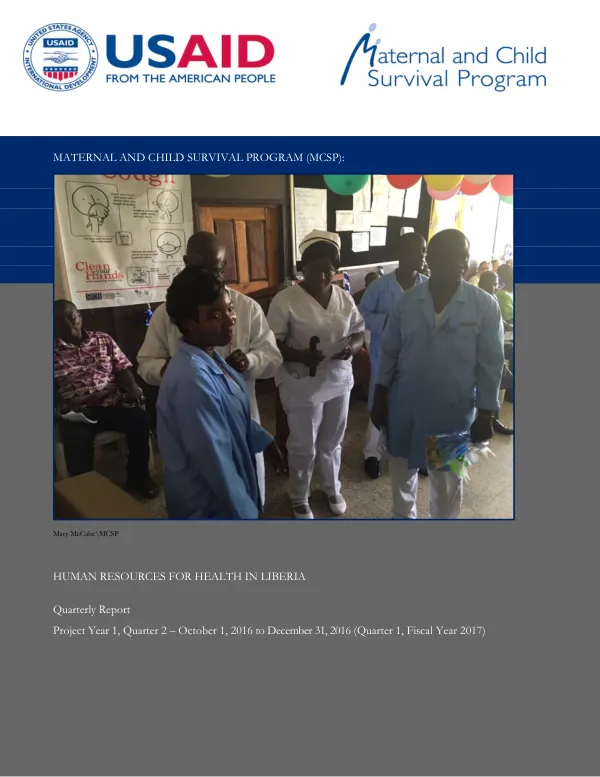
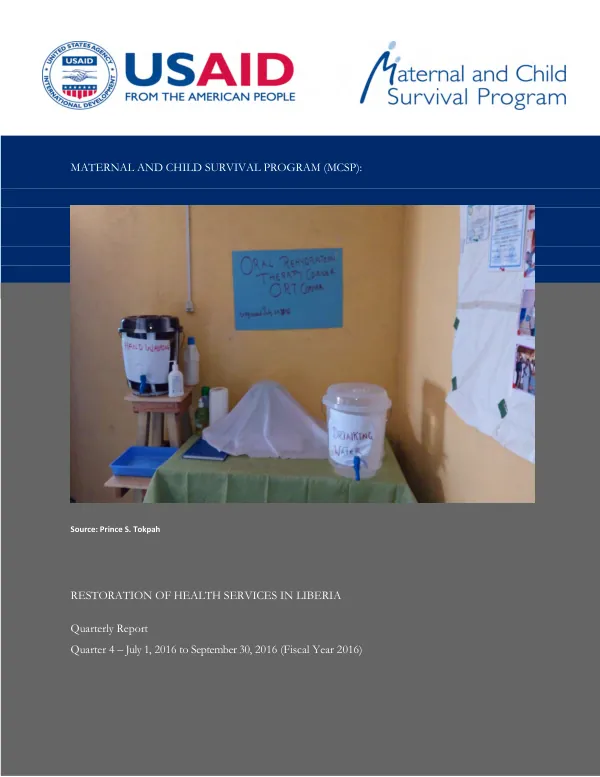
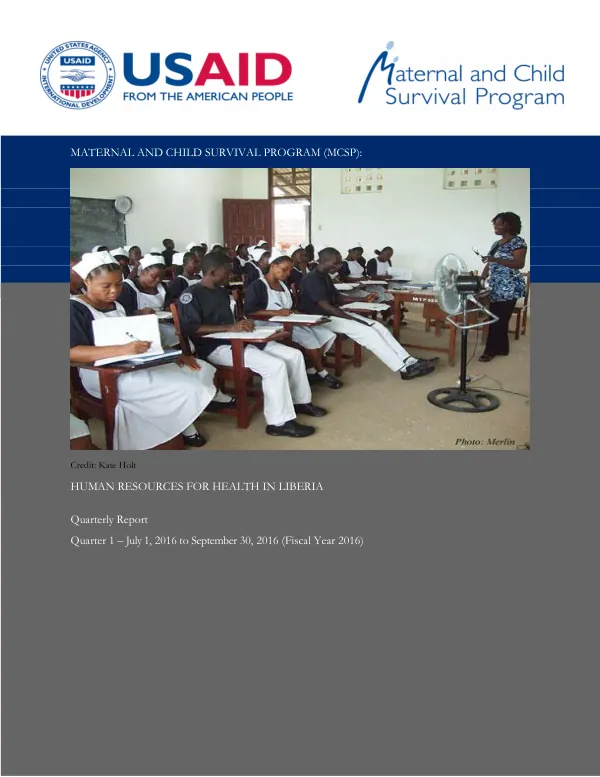
Maternal and Child Survival Program (MCSP): Human Resources for Health in Liberia
The Maternal and Child Survival Program (MCSP) is a global initiative to introduce and support high-impact health interventions in 25 priority countries.
2016 · 30 pages
Sign in to readA free account is required to download.
Abstract
The program aims to end preventable child and maternal deaths within a generation. MCSP engages governments, policymakers, private sector leaders, health care providers, civil society, faith-based organizations, and communities in adopting and accelerating proven approaches to address major causes of maternal, newborn, and child mortality. In Liberia, MCSP is implementing a 23-month program focused on restoration of health services (RHS). The program is working to restore confidence in the healthcare system by upgrading Infection Prevention and Control (IPC) practices critical for fighting Ebola and other infectious diseases. MCSP/RHS is also ensuring the restoration of Reproductive, Maternal, Newborn, Child, and Adolescent Health (RMNCAH) services in target facilities. The project is being implemented in 77 health facilities in Grand Bassa, Nimba, and Lofa Counties. MCSP/HRH builds on previous work focused on Pre-Service Education (PSE) strengthening in Liberia. The program aims to strengthen the health workforce, particularly focusing on midwives and lab technicians. MCSP/HRH envisions that at the end of the program, Liberia will have stronger midwifery and laboratory educators, a larger and better prepared matriculating class of senior students equipped with practical skills, better-equipped and managed pre-service training institutions, and ultimately a more resilient health and laboratory workforce. Key achievements in the first quarter of the program include upgrading the technical competencies and teaching skills of faculty, including clinical preceptors, and strengthening curricula, course materials, and delivery of both didactic and clinical training. The program has also strengthened the learning environment at targeted pre-service training institutions and teaching sites through a comprehensive approach to improving access to high-quality instructional resources, equipment, and technology. Implementation of the program is being coordinated with partners, including the Ministry of Health (MOH), USAID Collaborative Support for Health Program (MSH), World Bank, Clinton Health Access Initiative (CHAI), Health Resources and Services Administration (HRSA), and others. The program has received $5,000,000 USD in funding, with an additional $5,000,000 received on October 3, 2016. The program is being implemented in Grand Gedeh, Lofa, Bong, and Montserrado counties. The MCSP/HRH team members are leaders in implementing pre-service education and maternal, newborn, and child health programs, and all partners are established entities in Liberia with formalized relationships with the MOH. The program is working closely with MCSP/RHS to ensure that all activities are coordinated, plans synergistic, and resources appropriately leveraged. MCSP/HRH is focused on midwifery and laboratory technician pre-service education in targeted institutions throughout the country. The program aims to rapidly mitigate the second-order impacts of the 2014 Ebola Virus Disease (EVD) Outbreak by strengthening Liberia's frontline health workforce. The program's goal is to contribute to USAID/Liberia's strategy toward strengthening and expanding Liberia's skilled health workforce and ending preventable child and maternal deaths. The program's technical approach was designed with significant stakeholder input and leverages work completed under Rebuilding Basic Health Services (RBHS) and synergizes current Collaborative Support for Health (CSH) efforts in health professional regulation strengthening for midwifery and lab cadres. MCSP/HRH envisions a more resilient health and laboratory workforce that will be well-positioned to address Liberia's maternal and child health needs and prevent future outbreaks of Ebola and other infectious diseases.