HELLEN KELLER INTERNATIONAL
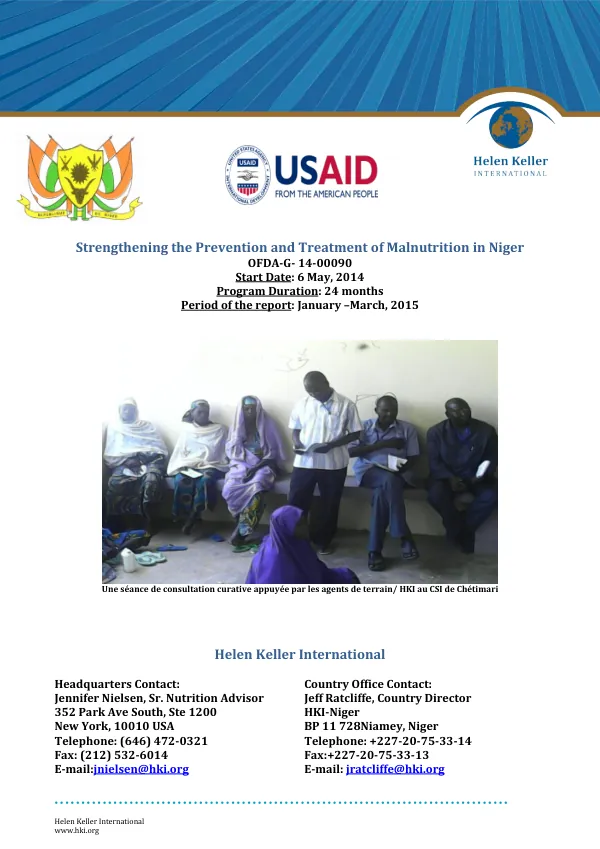
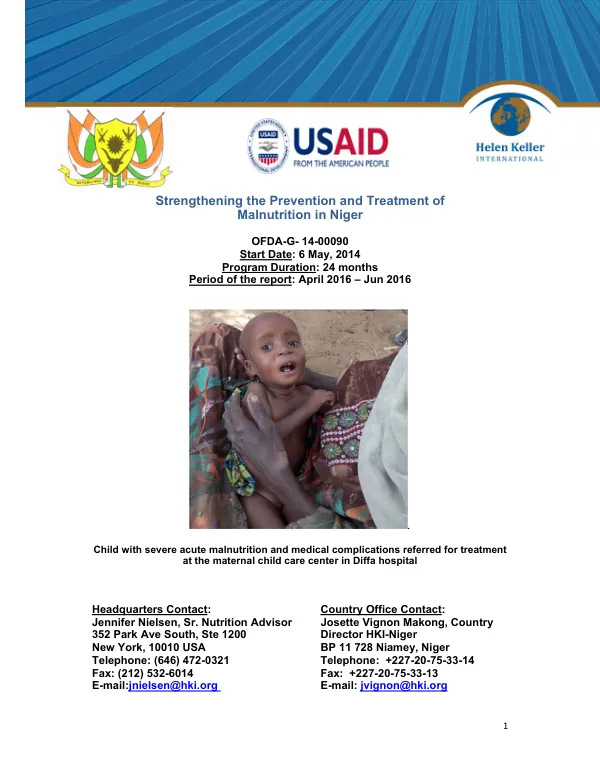
Strengthening the Prevention and Treatment of Malnutrition in Niger
In Niger, a landlocked nation with a subsistence-based economy, acute malnutrition in children under five has consistently been above the alert threshold since 2005.
2016 · 12 pages
Sign in to readA free account is required to download.
Abstract
The Diffa region, one of the most underserved areas, faces remote location, insecurity, and climactic challenges. The most recent estimates of prevalence among children under five included 12.3% global acute malnutrition (GAM), 3.9% severe acute malnutrition (SAM), 42.3% chronic malnutrition, and anemia at 88%. This project targets 80 villages in Diffa district. The program in Niger works at departmental, facility, community, and household levels to strengthen linkages between the health system and communities, and to improve prevention and management of acute malnutrition. The project promotes appropriate preventive practices, regular screening activities, referral of acutely malnourished pregnant and lactating women and children under age 5 to health centers for treatment, and follow-up to recovery. The Essential Nutrition Actions and Essential Hygiene Actions (ENA-EHA) framework is used at both health center and community levels to promote optimal water, sanitation, and hygiene (WASH) practices in coordination with government and other local sanitation strategies. The project in Niger has made significant progress in the management of moderate acute malnutrition (MAM). In Year 1, 74 sites were managing MAM, with 414,152 beneficiaries admitted to MAM services. The default rate among children <5 treated for MAM was <15%, and the mortality rate in children <5 treated for MAM was <5%. In Year 2, 393 sites were managing MAM, with 10,403 beneficiaries admitted to MAM services. The project also strengthened supervision, with 592 formative supervision visits to health centers and 2,160 formative supervision visits to community structures conducted annually. The project in Niger has also made progress in the management of severe acute malnutrition (SAM). In Year 1, 18 sites were established or rehabilitated for inpatient and outpatient care, with 1,405 children admitted for treatment of SAM with complications. In Year 2, 238 sites were established or rehabilitated for inpatient and outpatient care, with 10,644 children admitted for treatment of SAM. The recovery/cure rate among children <5 admitted for SAM treatment was 92.45%.