BROAD BRANCH ASSOCIATES
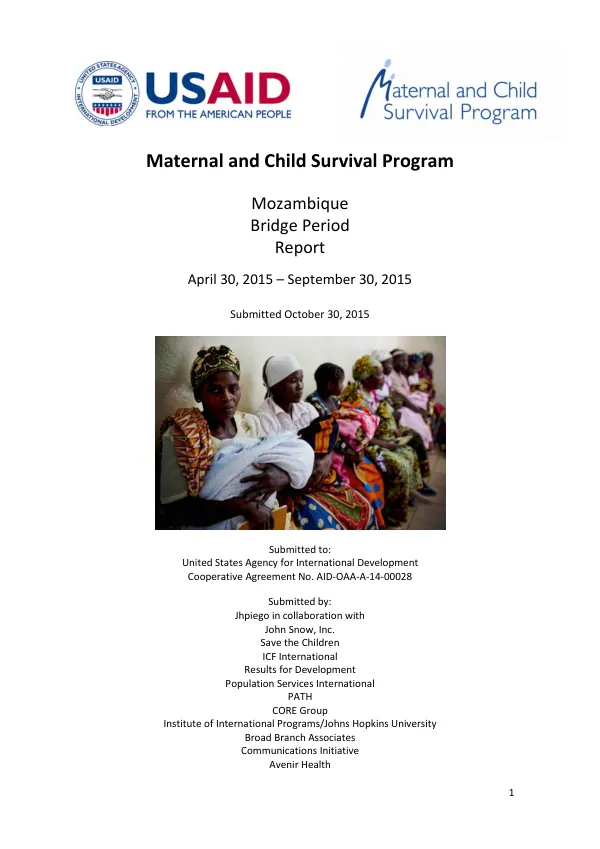
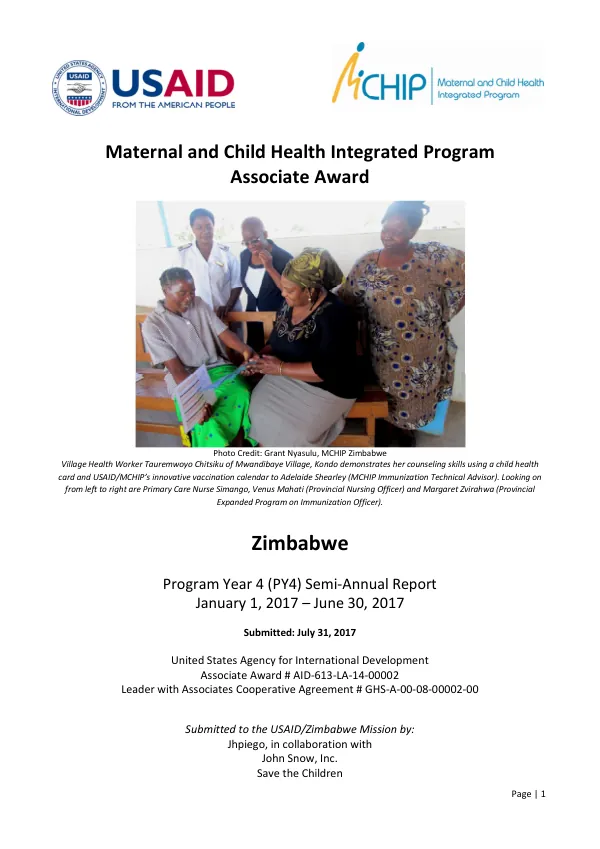
MCHIP Year Four Semi-Annual Report
The Maternal and Child Health Integrated Program (MCHIP) is a global health initiative that aims to improve maternal, newborn, and child health outcomes in developing countries.
2012 · 71 pages
Sign in to readA free account is required to download.
Abstract
The program is implemented by Jhpiego, in collaboration with several international partners, including Save the Children, John Snow Inc., and PATH. MCHIP operates under a cooperative agreement with the United States Agency for International Development (USAID) and is focused on achieving the Millennium Development Goals (MDGs) related to maternal and child health. MCHIP's core-funded achievements in the reporting period of October 1, 2011, to March 31, 2012, are highlighted in the semi-annual report. In the area of maternal health, MCHIP supported the implementation of emergency obstetric and newborn care (EmONC) services in several countries, resulting in improved access to life-saving interventions for pregnant women and newborns. The program also promoted respectful maternity care (RMC) practices, which have been shown to improve the quality of care provided to women during childbirth. In newborn health, MCHIP supported the implementation of essential newborn care (ENC) practices, including kangaroo mother care (KMC) and chlorhexidine (CHX) application for umbilical cord care. These interventions have been shown to reduce neonatal mortality rates and improve newborn health outcomes. The program also promoted the use of effective teaching skills (ETS) for healthcare providers, which has been shown to improve the quality of care provided to newborns. In child health, MCHIP supported the implementation of integrated community case management (iCCM) services, which have been shown to improve access to healthcare for children under the age of five. The program also promoted the use of oral rehydration solution (ORS) and oral rehydration therapy (ORT) for the treatment of diarrhea, which is a leading cause of morbidity and mortality among children in developing countries. In immunization, MCHIP supported the implementation of routine immunization (RI) services, including the use of effective vaccine management (EVM) practices. The program also promoted the use of long-lasting insecticide-treated bed nets (LLINs) for the prevention of malaria, which is a leading cause of morbidity and mortality among children in developing countries. In family planning, MCHIP supported the implementation of long-acting reversible contraception (LARC) methods, including intrauterine devices (IUDs) and implants. The program also promoted the use of postpartum family planning (PPFP) services, which have been shown to improve access to family planning information and services for women in the postpartum period. In malaria, MCHIP supported the implementation of malaria in pregnancy (MIP) services, including the use of intermittent preventive treatment during pregnancy (IPTp) and the distribution of LLINs to pregnant women. The program also promoted the use of rapid diagnostic tests (RDTs) for the diagnosis of malaria, which has been shown to improve the accuracy of malaria diagnosis and treatment. In HIV/AIDS and tuberculosis, MCHIP supported the implementation of HIV prevention and treatment services, including the use of post-exposure prophylaxis (PEP) and antiretroviral therapy (ART). The program also promoted the use of community-based HIV testing and counseling services, which have been shown to improve access to HIV testing and treatment services for individuals in rural and hard-to-reach areas. In urban health, MCHIP supported the implementation of health services for the urban poor (HUP), including the use of community health workers (CHWs) to provide health education and outreach services to urban residents. The program also promoted the use of mobile health (mHealth) technologies, including mobile phones and tablets, to improve access to health information and services for urban residents. Overall, MCHIP's core-funded achievements in the reporting period of October 1, 2011, to March 31, 2012, demonstrate the program's commitment to improving maternal, newborn, and child health outcomes in developing countries. The program's focus on evidence-based interventions, community engagement, and health system strengthening has been shown to improve access to healthcare services and reduce morbidity and mortality rates among vulnerable populations.