USAID DEC
Measuring Social and Behavior Change in Nutrition Activities: A Guide for Evaluators
Sign inBREAKTHROUGH RESEARCH
Measuring Social and Behavior Change in Nutrition Activities: A Guide for Evaluators
USAID activities use social and behavior change (SBC) to improve nutrition outcomes sustainably.
2022 · 37 pages
Sign in to readA free account is required to download.
Abstract
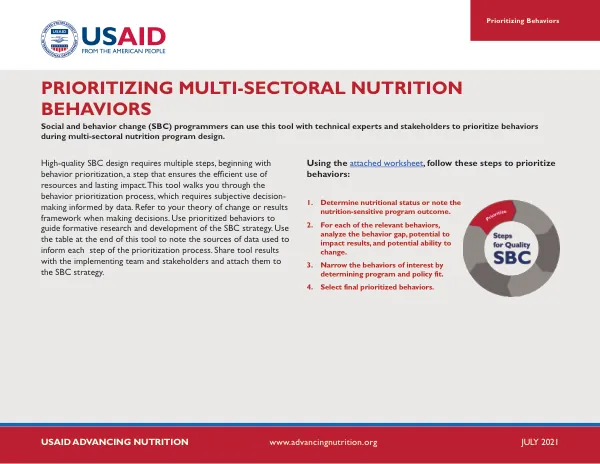
In large, complex multi-sectoral nutrition activities, SBC may be the focus of one outcome, or it may be used as an underpinning, crosscutting approach to achieve several outcomes. As SBC is common in most USAID-funded activities, USAID and implementers rely on program evaluations to determine which approaches and processes are most effective and why. Rigorous evaluations of SBC approaches used in nutrition activities begin with a careful evaluation design, guided by a thoughtful scope of work and key evaluation questions. Once the design is clear, the process for conducting the evaluation involves several steps. The first step is to confirm understanding of the nutrition SBC evaluation question(s). This involves reviewing existing documentation and conducting a thorough analysis of the program's objectives, goals, and expected outcomes. The next step is to review SBC-appropriate documentation, including program documents, reports, and other relevant materials. This helps to ensure that the evaluation team has a comprehensive understanding of the program's SBC components and how they relate to the overall program goals. The evaluation team should also select team members with the necessary expertise and experience in SBC programming and evaluation. The evaluation team should then select appropriate evaluation methods to answer the SBC evaluation question. This may involve using a combination of quantitative and qualitative methods, such as surveys, focus groups, and in-depth interviews. The team should also determine the range of appropriate respondents for SBC evaluations, including program participants, community leaders, and other stakeholders. Once the evaluation methods are selected, the team should collect data using a variety of methods, including surveys, focus groups, and in-depth interviews. The data should be analyzed and interpreted to identify trends, patterns, and correlations. The evaluation team should also write SBC-specific recommendations based on the findings of the evaluation. Understanding behaviors, factors, and audiences is critical to effective SBC programming. This involves identifying the key behaviors, factors, and audiences that are most relevant to the program's objectives and goals. The evaluation team should also prioritize behaviors in nutrition SBC evaluations, focusing on those that are most critical to achieving the program's objectives. The importance of prioritizing behaviors in nutrition SBC evaluations cannot be overstated. By focusing on the most critical behaviors, the evaluation team can identify the most effective approaches and strategies for achieving the program's objectives. This can help to inform program design, implementation, and evaluation, ultimately leading to more effective and sustainable SBC programming. In addition to prioritizing behaviors, the evaluation team should also use evaluations to bring attention to SBC in nutrition-sensitive activities. This involves identifying opportunities to integrate SBC into existing programs and activities, and developing strategies to promote SBC programming in these areas. The evaluation team should also review SBC program documents relevant for evaluations, including program reports, evaluations, and other relevant materials. This helps to ensure that the evaluation team has a comprehensive understanding of the program's SBC components and how they relate to the overall program goals. In conclusion, rigorous evaluations of SBC approaches used in nutrition activities are critical to determining which approaches and processes are most effective and why. By following a careful evaluation design, selecting the right evaluation methods, and analyzing and interpreting data, the evaluation team can identify the most effective approaches and strategies for achieving the program's objectives. This can help to inform program design, implementation, and evaluation, ultimately leading to more effective and sustainable SBC programming.