USAID DEC
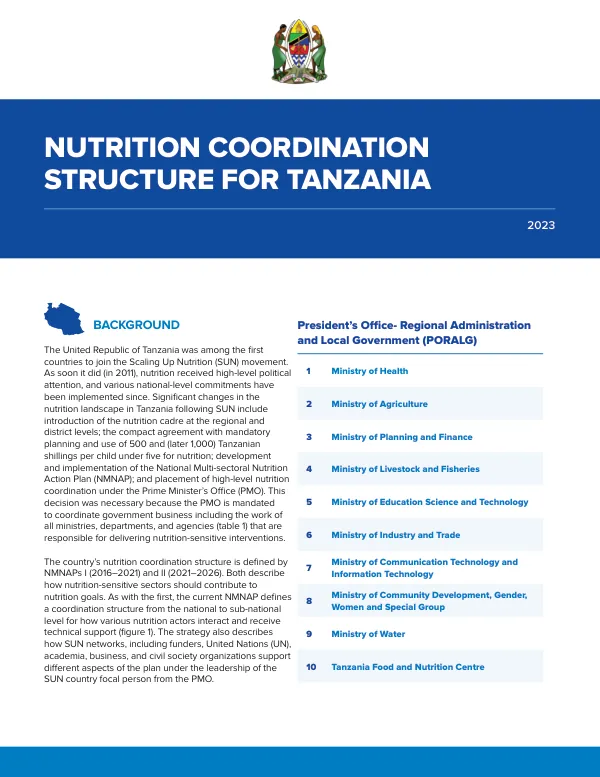
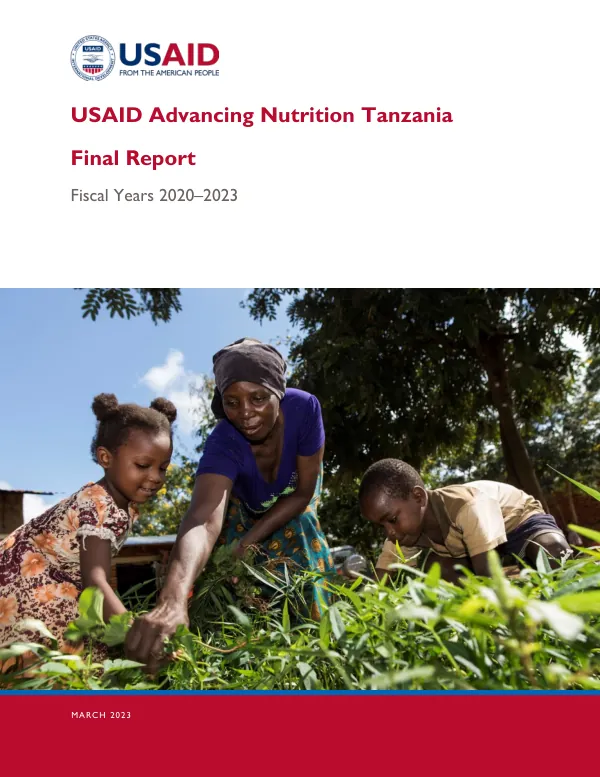
USAID Advancing Nutrition Tanzania Final Report: Fiscal Years 2020–2023 (March 2023)
Sign inINDONESIAN MINISTRY OF RESEARCH, TECHNOLOGY, AND HIGHER EDUCATION
USAID Advancing Nutrition Tanzania Final Report: Fiscal Years 2020–2023 (March 2023)
USAID Advancing Nutrition Tanzania implemented a multi-sectoral nutrition project in Tanzania from 2020 to 2023.
2023 · 36 pages
Sign in to readA free account is required to download.
Abstract
The project aimed to address the root causes of malnutrition through a systems approach, building local capacity, supporting behavior change, and strengthening the enabling environment. The project's geographic focus was Tanzania, with a specific emphasis on supporting the Government of Tanzania's nutrition goals. The project had three primary objectives: to strengthen the capacity of the Prime Minister's Office (PMO) and the Tanzania Food and Nutrition Centre (TFNC) to support nutrition programming across key line ministries; to support the development and dissemination of the National Multi-Sectoral Nutrition Action Plan II (NMNAP II) and its common results framework; and to provide targeted technical assistance to USAID Tanzania's implementing partners. The project also implemented core-funded activities, which included providing technical assistance to government ministries and departments, supporting the development of nutrition policies and guidelines, and conducting research and analysis to inform nutrition programming. One of the key accomplishments of the project was the strengthening of the capacity of the PMO and TFNC to support nutrition programming. The project provided technical assistance to these institutions, which enabled them to develop and implement effective nutrition programs. The project also supported the development and dissemination of the NMNAP II, which provided a framework for addressing malnutrition in Tanzania. Additionally, the project provided technical assistance to USAID Tanzania's implementing partners, which helped to improve the effectiveness of their nutrition programs. The project also conducted research and analysis to inform nutrition programming. The Food Intake Study and Food Preferences Study provided valuable insights into the dietary habits and preferences of Tanzanians, which informed the development of effective nutrition programs. The project also identified key challenges to addressing malnutrition in Tanzania, including limited access to nutritious food, inadequate nutrition knowledge, and insufficient resources. The project's accomplishments were recognized by the Government of Tanzania, which acknowledged the project's contributions to the country's nutrition goals. The project also received recognition from the Development Partners Group for Nutrition (DPGN), which commended the project's leadership and contributions to the group's efforts to address malnutrition in Tanzania. The project's sustainability was ensured through the development of a Capacity Strengthening Plan (CSP), which outlined the steps necessary to maintain the capacity of the PMO and TFNC to support nutrition programming. The project also developed a Common Results, Resources, and Accountability Framework (CRRAF), which provided a framework for monitoring and evaluating the project's progress and outcomes. The project's lessons learned and best practices were documented in the report, which provided valuable insights into the effective implementation of a multi-sectoral nutrition project. The report also highlighted the importance of collaboration and coordination among stakeholders, including government institutions, implementing partners, and development partners. The report concluded that the project's accomplishments were a testament to the effectiveness of a systems approach to addressing malnutrition, and that the project's lessons learned and best practices could be applied to future nutrition programming efforts.