USAID DEC
Methodology of Sociological Research on the Study of Media Consumption and Media of Information Literacy in the Countries of Central Asia
Sign inINTERNEWS
Methodology of Sociological Research on the Study of Media Consumption and Media of Information Literacy in the Countries of Central Asia
The sociological research on media consumption and media literacy in Central Asia aimed to identify the structure of the media environment, preferences, and expectations of the audience in Kazakhstan, Tajikistan, and Uzbekistan.
2019 · 3 pages
Sign in to readA free account is required to download.
Abstract
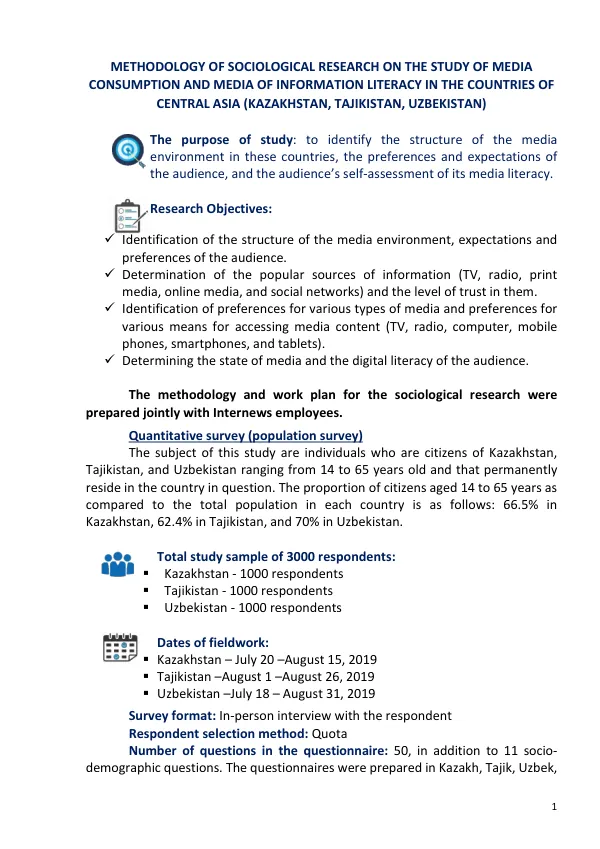
The study's objectives included determining the popular sources of information, the level of trust in these sources, and the state of media and digital literacy among the audience. A quantitative survey was conducted in each country, with a total sample size of 3000 respondents. The survey population consisted of citizens aged 14 to 65 years who permanently resided in the respective countries. The sample was stratified by region and population center type, with 1000 respondents in each country. The survey was conducted in-person, using a quota sampling method, and consisted of 50 questions, including 11 socio-demographic questions. The survey was conducted in Kazakhstan from July 20 to August 15, 2019, in Tajikistan from August 1 to August 26, 2019, and in Uzbekistan from July 18 to August 31, 2019. The questionnaires were prepared in Kazakh, Tajik, Uzbek, and Russian languages. A pre-test questionnaire was conducted in each country, with 20 interviews, to ensure the validity and reliability of the survey instrument. The survey sample was developed based on national statistics for 2018, with a focus on the general population aged 14 to 65 years. The sample composition varied by region and population center type, with a higher proportion of respondents from urban areas. In Kazakhstan, the sample consisted of 1000 respondents from 14 regions, including the cities of Nur-Sultan, Almaty, and Shymkent. In Tajikistan, the sample consisted of 1000 respondents from 3 regions, including Dushanbe and Republican Subordination Regions. In Uzbekistan, the sample consisted of 1000 respondents from 12 regions, including Tashkent and Karakalpakstan. A qualitative survey was also conducted, with 10 respondents in each country, to gather in-depth information from highly qualified specialists and experts in the media field. The qualitative survey aimed to provide a more nuanced understanding of the media environment and the audience's preferences and expectations. The research methodology was prepared jointly with Internews employees, and the survey was conducted in collaboration with local partners in each country. The study's findings are expected to provide valuable insights into the media consumption habits and media literacy levels of the audience in Central Asia, which can inform media development initiatives and policy decisions in the region.
Related documents