FHI 360
Mhuri/Imuli Project Quarterly Report January 1 - March 31, 2019
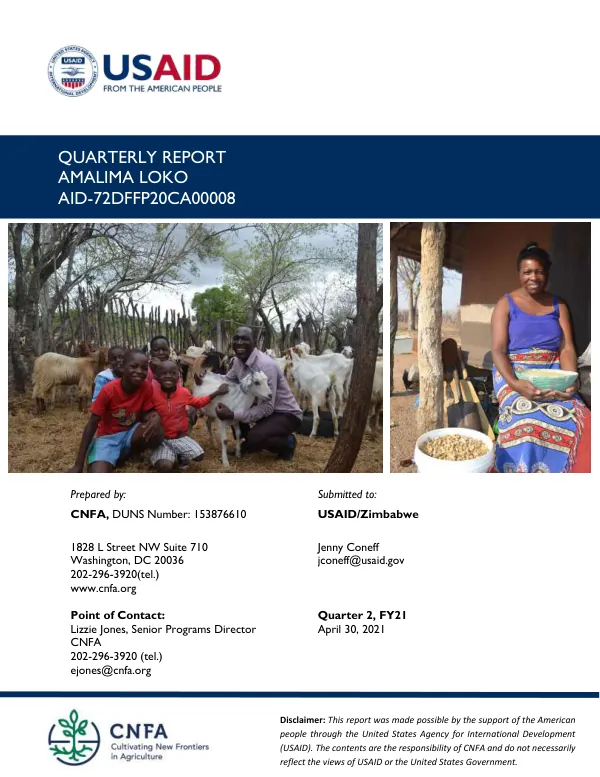
The Mhuri/Imuli project is a five-year cooperative agreement with the United States Agency for International Development (USAID) aimed at improving Maternal, New-born, and Child Health (MNCH) and Family Planning (FP) services in Zimbabwe.
2019 · 28 pages
Sign in to readA free account is required to download.
Abstract
The project's specific objectives are to improve demand for and the availability of quality MNCH-FP services in Manicaland Province and increase access and utilization of quality FP services nationwide through outreach services. The project's key accomplishments during the second quarter of FY 19 (January 1 to March 31, 2019) include establishing 15 skill laboratories at Comprehensive Emergency Obstetric and Neonatal Care (CEmONC) sites and conducting 930 on-the-job training (OJT) contacts using the OJT curriculum. The project also disseminated ANC guidelines to 98% of facilities in Manicaland Province, targeting at least one health worker per facility. In addition, the project trained 60 quality improvement coaches on collaborative quality improvement methods and established 4 CQI collaboratives in Buhera, Makoni, Chipinge, and MPH. The project also initiated family planning (FP) outreach activities in all 10 provinces, serving over 17,000 clients. Furthermore, the project supported 21 district maternal and perinatal audit meetings in Manicaland Province and conducted social norms exploration training and community dialogues with apostolic communities in Mutare district. The project also scaled up the "My Village My Home" initiative to three districts, Chimanimani, Nyanga, and Mutasa. Health center committee (HCC) assessments were conducted at 37 rural health facilities to identify gaps in functionality, and case files were reviewed at 69 USG-supported facilities to obtain information on Performance Monitoring, Evaluation, and Learning Plan (PMELP) indicators that are not available through the District Health Information System 2 (DHIS 2). The project's performance analysis indicates that the target for trainings has been surpassed, with 2,121 individuals trained in MNCH and 2 individuals trained in FP with USG funds. The project also reports a 76% institutional delivery rate, a 1.9% facility-based case fatality rate, and a 12.5% increase in the number of nurses, midwives, clinicians, and doctors in Manicaland (MNCH-FP section) who were trained on the job using a competence-based curriculum. The project's overall goal is to improve maternal and child health status in targeted populations, and the performance analysis indicates that progress is being made towards achieving this goal. The project's achievements during the second quarter of FY 19 demonstrate its commitment to improving MNCH-FP services in Zimbabwe and increasing access and utilization of quality FP services nationwide.