CATHOLIC RELIEF SERVICES ORGANIZATION
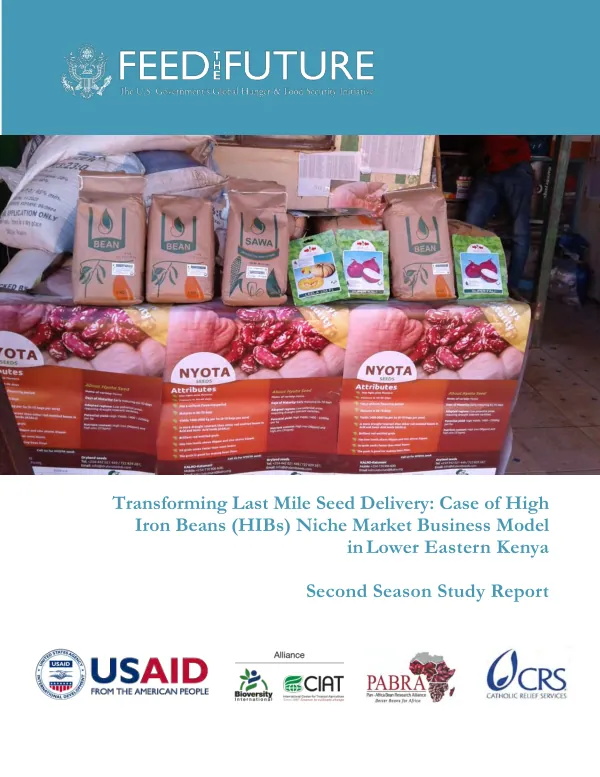
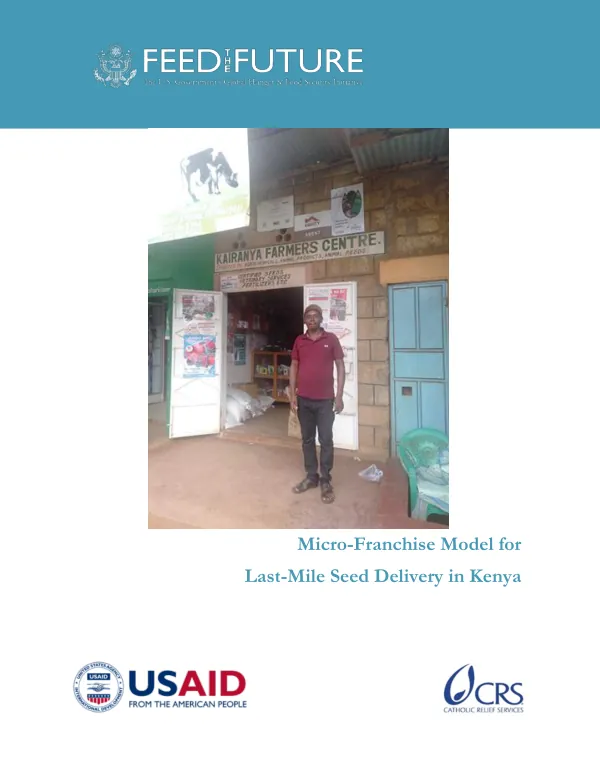
Micro-Franchise Model for Last-Mile Seed Delivery in Kenya
The micro-franchise model for last-mile seed delivery in Kenya was implemented as part of the Feed the Future Global Supporting Seed Systems for Development (S34D) activity, a five-year initiative funded by the Feed the Future Initiative and the United States Agency for International Development (USAID).
2021 · 24 pages
Sign in to readA free account is required to download.
Abstract
The activity aimed to enhance access to a full range of crop and seed choices and provide options to maximize farmers' responsive decision-making and planning for production. The formal seed system is the main pathway for certified seed delivery in sub-Saharan Africa, with a network of agrodealers offering various products and services to farmers. However, innovative models are needed to bridge the gap between service providers and rural small-scale farmers. The micro-franchising model was developed to target the rural small-scale farmer market segment as a viable business opportunity, incorporating attributes such as scalability, sustainability, quality and standards, and utilization of locally available grassroots expertise. Micro-franchising is a subset of the franchising concept, referring to smaller scale or even single person enterprises that distribute standardized branded products and services. A micro-franchise network offers existing businesses a road map to penetrate the market in the last mile through partnerships with locally based micro-entrepreneurs, providing access to supply chains, equipment, products, finance, training, branding, and marketing. The micro-franchise model for last-mile seed delivery in Kenya was implemented by a consortium of partners led by Catholic Relief Services (CRS), including International Fertilizer Development Center (IFDC) as the Formal Seed Systems lead. The model was designed to build integrated seed supply mechanisms involving formal and informal seed systems, with a particular focus on legume crops, root and tuber crops, and other non-maize cereal and fodder crops. The micro-franchise model involved several value chain actors, including anchor organizations, agrodealers, motor riders, farmers, and training providers. Anchor organizations, such as Freshco Seeds, played a crucial role in providing access to supply chains and equipment, while agrodealers offered various products and services to farmers. Motor riders were responsible for transporting seeds to rural areas, and farmers were the end-users of the seeds. Training providers offered training and capacity-building programs to farmers and other value chain actors. The micro-franchise model was designed to be scalable, sustainable, and inclusive, with a focus on quality and standards. The model was implemented in several regions in Kenya, including Eastern Kenya, and involved a range of activities, including training programs, market linkage facilitation, and seed delivery. The implementation of the micro-franchise model for last-mile seed delivery in Kenya faced several challenges, including difficulties in accessing rural areas, limited awareness among farmers about the benefits of improved seeds, and limited availability of quality seeds. However, the model also showed promising results, including increased access to quality seeds among farmers, improved crop yields, and increased household income. The micro-franchise model for last-mile seed delivery in Kenya has the potential to improve the functioning of the high-impact integrated seed systems in the country. The model's scalability, sustainability, and inclusivity make it an attractive option for improving access to quality seeds among rural small-scale farmers. Further research and evaluation are needed to refine the model and ensure its long-term sustainability.
Related documents