JSI RESEARCH & TRAINING INSTITUTE, INC
Mothers Becoming Homestead Farmers in Bangladesh
Anowara, a homemaker living in South Sakuchia Village in Manpura, Bhola, Bangladesh, faced significant challenges in providing for her family's nutritional needs.
2014 · 1 pages
Sign in to readA free account is required to download.
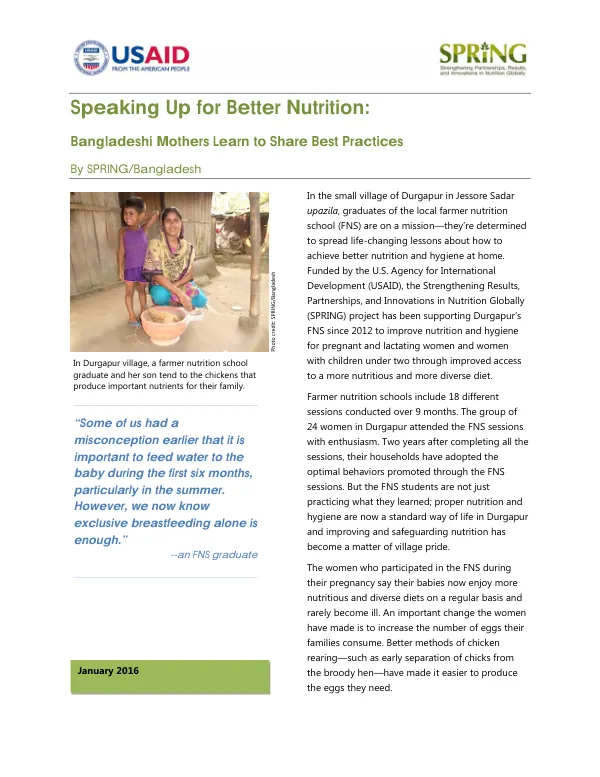
Abstract
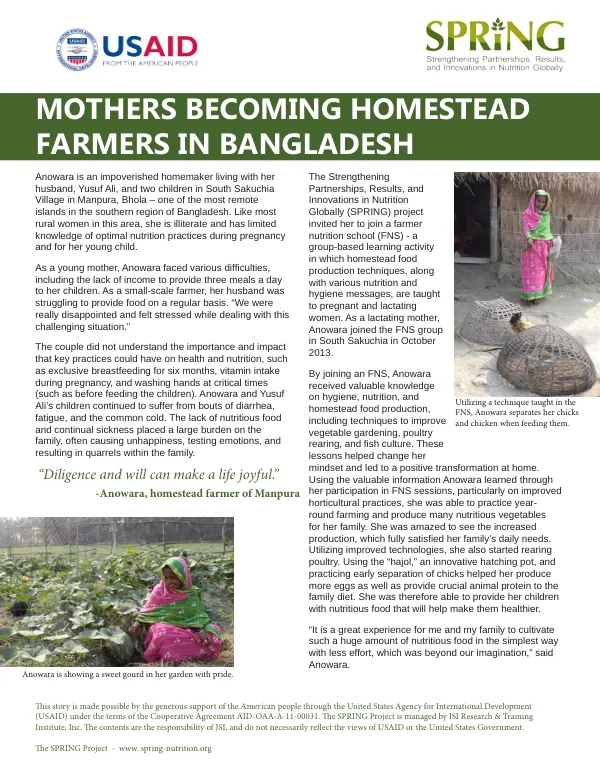
As a young mother, she struggled to provide three meals a day for her children due to her husband's limited income as a small-scale farmer. The couple's children suffered from frequent bouts of diarrhea, fatigue, and the common cold, placing a substantial burden on the family. Anowara and her husband, Yusuf Ali, lacked understanding of key practices that could have positively impacted their children's health and nutrition, such as exclusive breastfeeding for six months, vitamin intake during pregnancy, and proper handwashing techniques. The family's nutritional deficiencies and frequent illnesses often led to unhappiness, emotional strain, and quarrels within the household. In October 2013, Anowara was invited to participate in a farmer nutrition school (FNS) group, a group-based learning activity that teaches homestead food production techniques, nutrition, and hygiene messages to pregnant and lactating women. As a lactating mother, Anowara joined the FNS group in South Sakuchia, where she received valuable knowledge on hygiene, nutrition, and homestead food production. Through her participation in the FNS sessions, Anowara gained a deeper understanding of improved horticultural practices, which enabled her to practice year-round farming and produce a variety of nutritious vegetables for her family. She also learned about innovative technologies, such as the "hajol" hatching pot, which allowed her to rear poultry and produce eggs and animal protein for her family's diet. Anowara's participation in the FNS program led to a significant transformation in her household, as she was able to provide her children with nutritious food that improved their health and well-being. Her experience with the FNS program was a positive one, and she credited the program with helping her cultivate a large amount of nutritious food with minimal effort. Anowara's story serves as an example of the impact that education and training can have on improving the nutritional status of families in rural Bangladesh.