FHI 360
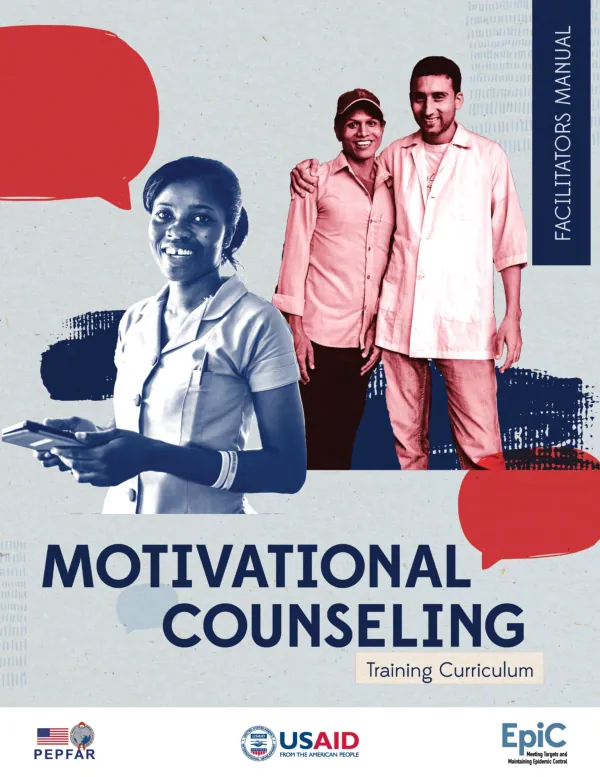
Motivational Counseling—Facilitator Manual
Motivational counseling is a training curriculum designed for frontline staff working in HIV programming for key and priority populations.
2020 · 76 pages
Sign in to readA free account is required to download.
Abstract
The curriculum focuses on advanced interpersonal communication skills, specifically motivational interviewing techniques, to support clients in overcoming individual barriers to change. The training package was developed by FHI 360 with support from USAID and PEPFAR, and it is adapted from a comprehensive counseling package called Motiv8. Motiv8 draws heavily from the University of North Carolina (UNC) Chapel Hill SafeTalk model, which is based on motivational interviewing techniques and has been demonstrated to be effective through a randomized controlled trial. The intended audience for this curriculum includes staff who interact with clients on a regular basis, such as outreach workers, counselors, and providers in various settings. Participants should have prior experience conducting strategic behavioral communication with members of the target population and basic training in communication skills and content. The training is designed to be limited to 20 participants or fewer to meet the needs of each participant and maximize learning. The training requires a minimum of two days with eight hours of instruction and guided practice per day, paired with a half-day practicum. The curriculum consists of 10 modules, including Understanding the Context, Introduction to Motivational Counseling, Reflective Listening, Affirmation, Questioning, Ask-tell-ask, Recognizing When Clients Talk About Change, Eliciting Talk About Change, Dealing with Resistance, and Extended Role Playing with Real-Life Scenarios. The training also includes a pretraining assessment, icebreaker activities, and a post-training assessment. The training methodology combines classroom instruction with guided practice and a practicum, allowing participants to apply the skills they learn in a real-world setting. The curriculum is designed to be flexible and can be adapted to fit the needs of different programs and settings. The training package is focused on building clients' motivation for change, which is a critical component of HIV programming. By providing frontline staff with the skills and knowledge to support clients in overcoming individual barriers to change, the training aims to improve client outcomes and reduce the risk of HIV transmission. The curriculum was developed with the support of USAID and PEPFAR, and it is designed to be used in a variety of settings, including outreach programs, clinics, and community-based organizations. The training package is a valuable resource for frontline staff working in HIV programming, providing them with the skills and knowledge they need to support clients in making informed decisions that lead to sustained positive outcomes. The training package includes a range of activities and exercises designed to help participants develop their skills in motivational counseling. These activities include role-playing, group discussions, and case studies, which are designed to help participants apply the skills they learn in a real-world setting. The curriculum is based on a range of evidence-based practices, including motivational interviewing, which has been demonstrated to be effective in improving client outcomes. The training package is designed to be flexible and can be adapted to fit the needs of different programs and settings. Overall, the motivational counseling training curriculum is a valuable resource for frontline staff working in HIV programming, providing them with the skills and knowledge they need to support clients in making informed decisions that lead to sustained positive outcomes.
Related documents