CONCERN WORLDWIDE INTERNATIONAL
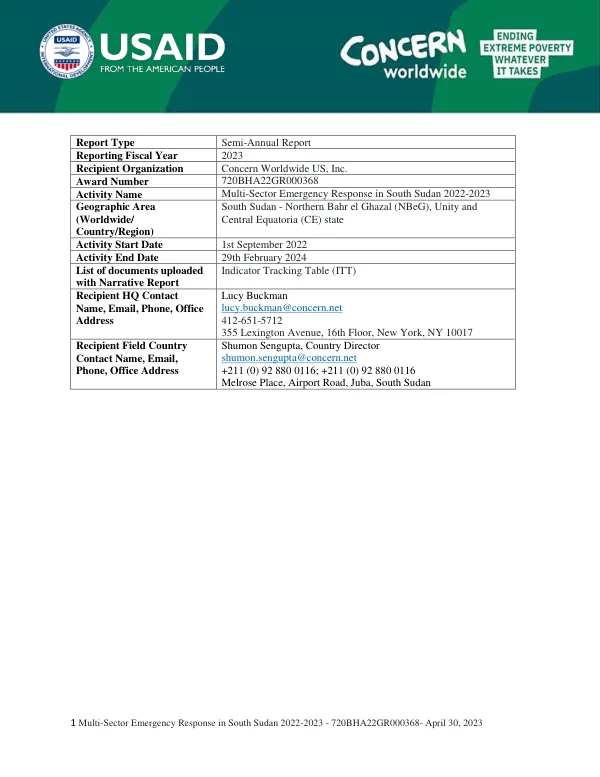
Multi-Sector Emergency Response in South Sudan 2022-2023
The humanitarian situation in South Sudan continues to be severely affected by endemic conflict, climate shocks, and economic instability.
2023 · 19 pages
Sign in to readA free account is required to download.
Abstract
An estimated 9.4 million people, 76% of the population, are in need of humanitarian assistance in 2023, a 6% increase from 2022. The latest food security analysis indicates a deteriorating food and nutrition security situation in target areas, mainly due to consecutive years of flooding, rising food prices, and continued intercommunal conflict. The re-current flooding has resulted in large-scale displacement, submersion of water and sanitation facilities, loss of crops, and livelihoods, adversely affecting the humanitarian gains made. The population displaced from 2021/2022 due to unprecedented flooding in Unity State remains displaced and is currently sheltering in six new displacement sites in Bent and surrounding areas. Access in flood-affected areas of Unity State is a challenge, as the water level has not receded despite the dry season. Poor water, sanitation, and sanitation facilities have led to disease outbreaks, such as cholera, measles, and Hepatitis E. The recent reduction in funding to the Health Pool Fund has resulted in major gaps in health services. The B-funded activity continued to provide cross-sectoral assistance in Aweil West, Aweil North, Aweil South Counties in Northern Bahr el Ghazal State, Rubkona, G, Leer Counties in Unity State, and Kajo-Keji County in Central Equatoria State. Despite operational challenges caused by flooding and insecurity, the overall progress of the interventions is on track to save and improve lives of the most vulnerable people across the target areas. During the reporting period, 144,817 people were reached through essential and lifesaving integrated assistance in the sectors of Nutrition, Agriculture, WASH, Health, and Settlements. Nutrition services continued across 64 nutrition centers, supporting Outpatient Therapeutic Program (OTP) and Targeted Supplementary Feeding Program (TSFP). As of January 2023, one nutrition center in Unity and 22 sites in NBeG were handed over to other partners as part of the WFP/UNICEF new operational strategy. In the reporting period, 21,520 beneficiaries were treated in nutrition centers, with an overall exit performance of OTP/TSFP within the Sphere Standards, except for the low cure rate of 59% and high defaulter's rate of 39% in Kajo-Keji County. The security situation in Kajo-Keji has improved toward the end of the reporting period, and progress is expected to improve with the resumption of operations in targeted areas. To prevent malnutrition, gender transformative nutrition continued across all supported sites, with the formation of mother and father groups to support with Social Behavior Change Communication (SBC) related to nutrition, health seeking behavior, and gender equality. 20,330 beneficiaries were reached with SBC interventions to improve Maternal, Infant, and Young Child Nutrition (MIYCN) across all supported sites. The activity continued to support the implementation of the peace agreement, with the unification of armed forces providing some hope on outstanding issues. However, the implementation of the peace agreement remains slow, with continued politically motivated conflict in pockets throughout the country, resulting in additional displacement. The transitional power-sharing government has been extended for another 24 months, and the election, planned for early 2023, has been postponed. Given the overall fragile and lack of development investment, the humanitarian needs are likely to remain high.