USAID DEC
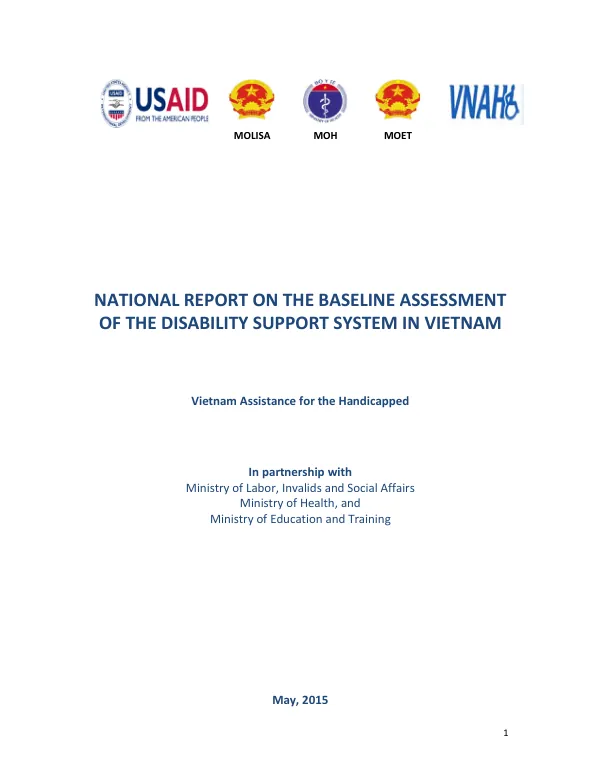
National Report on the Baseline Assessment of the Disability Support System in Vietnam
Sign inMINISTRY OF HEALTH
National Report on the Baseline Assessment of the Disability Support System in Vietnam
The Disability Support System in Vietnam is a comprehensive framework aimed at promoting the rights and well-being of persons with disabilities.
2015 · 131 pages
Sign in to readA free account is required to download.
Abstract
The system is governed by the Ministry of Labor, Invalids and Social Affairs (MOLISA), in partnership with the Ministry of Health (MOH) and the Ministry of Education and Training (MOET). The National Report on the Baseline Assessment of the Disability Support System in Vietnam was conducted in 2015, with the support of the American people through the United States Agency for International Development (USAID). The report highlights the importance of a supportive policy environment for persons with disabilities in Vietnam. The country has ratified several international conventions, including the Convention on the Rights of Persons with Disabilities (CRPD), which provides a framework for promoting the rights and dignity of persons with disabilities. However, the report notes that there are challenges in implementing these policies, including a lack of awareness among relevant staff and persons with disabilities themselves. The report also examines the service provision system for persons with disabilities in Vietnam. The health sector has made significant progress in providing services for persons with disabilities, including rehabilitation and medical care. However, there are still challenges in accessing these services, particularly in rural areas. The education sector has also made efforts to include persons with disabilities in mainstream education, but there are still significant barriers to access. The report highlights the need for a more comprehensive and inclusive approach to disability support in Vietnam. This includes integrating community-based rehabilitation (CBR) into primary health care, establishing centers for inclusive education development, and providing rehabilitation services for children with disabilities. The report also emphasizes the importance of data collection and analysis in understanding the needs of persons with disabilities and in evaluating the effectiveness of disability support programs. The report identifies several effective models of comprehensive disability service provision in Vietnam, including the Center for Inclusive Education Support in Vinh Long Province and the Thuy An Center for Rehabilitation for Children with Disabilities. These models demonstrate the potential for inclusive and effective disability support services in Vietnam. The report concludes that the Disability Support System in Vietnam has made significant progress in recent years, but there are still challenges to be addressed. The report recommends a more comprehensive and inclusive approach to disability support, including the integration of CBR into primary health care, the establishment of centers for inclusive education development, and the provision of rehabilitation services for children with disabilities. The report also emphasizes the importance of data collection and analysis in understanding the needs of persons with disabilities and in evaluating the effectiveness of disability support programs. The report highlights the need for a more coordinated and effective approach to disability support in Vietnam, involving all relevant stakeholders, including government agencies, international organizations, and civil society organizations. The report also emphasizes the importance of involving persons with disabilities themselves in the design and implementation of disability support programs. The report provides a comprehensive overview of the Disability Support System in Vietnam, highlighting the challenges and opportunities for promoting the rights and well-being of persons with disabilities. The report provides a valuable resource for policymakers, practitioners, and researchers working in the field of disability support in Vietnam.
Related documents