USAID FAMINE EARLY WARNING SYSTEMS NETWORK
NIGERIA Food Security Outlook April to September 2012
The rainy season in Nigeria is expected to be average from April to September, with a good harvest anticipated in October and November.
2012 · 6 pages
Sign in to readA free account is required to download.
Abstract
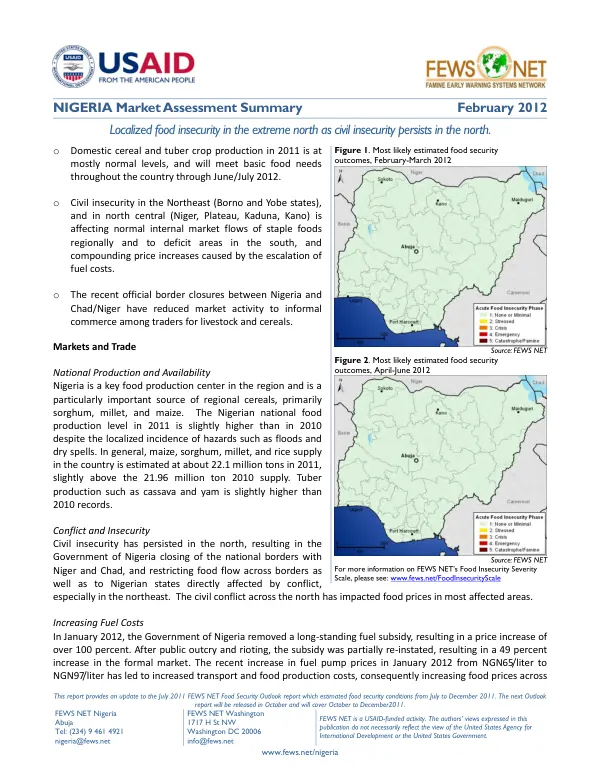
However, the extreme north region remains a concern due to prolonged dry spells during the 2011 growing season, resulting in significant shortfalls in cereal production. Food prices have increased significantly over the last month, largely due to low production shortages in 2011, depleting poor household food stocks, and the intensifying civil insecurity. The Nigerian government has banned future cereal exports to prevent further cereal price increases. The border with Niger and Chad remains closed due to the export ban, which will prevent future large-scale procurement of cereals from Nigeria. However, the government has recently approved an external request to procure 30,000 tons of grains in April for humanitarian use in neighboring Sahelian countries. This will lead to additional price increases during the onset of the lean season in June and July, affecting household food access among poor and very poor households, particularly in the extreme north region. Civil insecurity remains a driver of food insecurity in localized areas in the extreme north and south, causing displacement, loss of income, destruction of agricultural assets, and loss of food stocks. Farmers throughout the country are currently engaged in normal seasonal farming activities, with primary planting activities expected to begin in May when the rain has stabilized in all areas. The early green harvest of vegetables and maize is ongoing, increasing food stocks and tempering food prices.
Related documents