USAID/NIGERIA
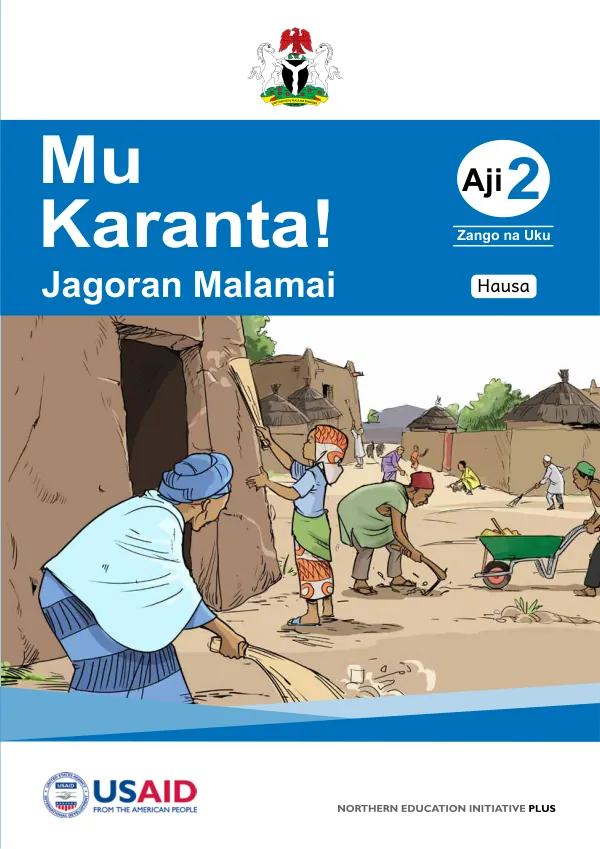
Northern Education Initiative Plus: Jagoran Malamai - Aji 2
The Northern Education Initiative Plus (NEI Plus) is a program aimed at improving education in northern Nigeria.
2016 · 86 pages
Sign in to readA free account is required to download.
Abstract
The program is a collaboration between the Nigerian Educational Research and Development Council (NERDC) and the USAID-funded NEI Plus initiative. The program's primary goal is to improve literacy rates among children in the region, particularly in the states of Bauchi and Sokoto. The program has developed a series of textbooks, including "Jagoran Malamai" (Teacher's Guide), which is designed to improve the teaching and learning of Hausa language and literature. The textbooks are based on a phonics-based approach to reading and writing, which emphasizes the importance of sound-letter correspondence and word recognition. The program also includes a series of teacher training programs, which aim to equip teachers with the skills and knowledge needed to effectively teach reading and writing to their students. The program's approach to literacy education is based on a comprehensive framework that includes six key components: phonics, sound-letter correspondence, word recognition, fluency, vocabulary, and comprehension. The program's textbooks and teacher training programs are designed to provide students with a solid foundation in reading and writing, and to help them develop the skills and confidence they need to become proficient readers and writers. The program has received support from a number of organizations and individuals, including the USAID, the NERDC, and a number of local and international partners. The program's success is dependent on the collaboration and support of these partners, as well as the commitment and dedication of the teachers and students who are involved in the program. The program's impact is expected to be significant, particularly in the areas of literacy rates and educational outcomes. The program's approach to literacy education is based on a comprehensive framework that is designed to provide students with a solid foundation in reading and writing, and to help them develop the skills and confidence they need to become proficient readers and writers. The program's success will depend on the ability of the teachers and students to implement the program's approach and to make progress in their literacy skills. The program's evaluation will be based on a number of indicators, including literacy rates, educational outcomes, and teacher effectiveness. The program's success will be measured against a number of benchmarks, including the number of students who are able to read and write at a proficient level, the number of teachers who are able to effectively teach reading and writing, and the number of schools that are able to implement the program's approach.
Related documents