UNICEF
Nutrition Sector Update - April 2009
The Bureau for Democracy, Conflict, and Humanitarian Assistance (DCHA) Office of U.S.
2009 · 2 pages
Sign in to readA free account is required to download.
Abstract
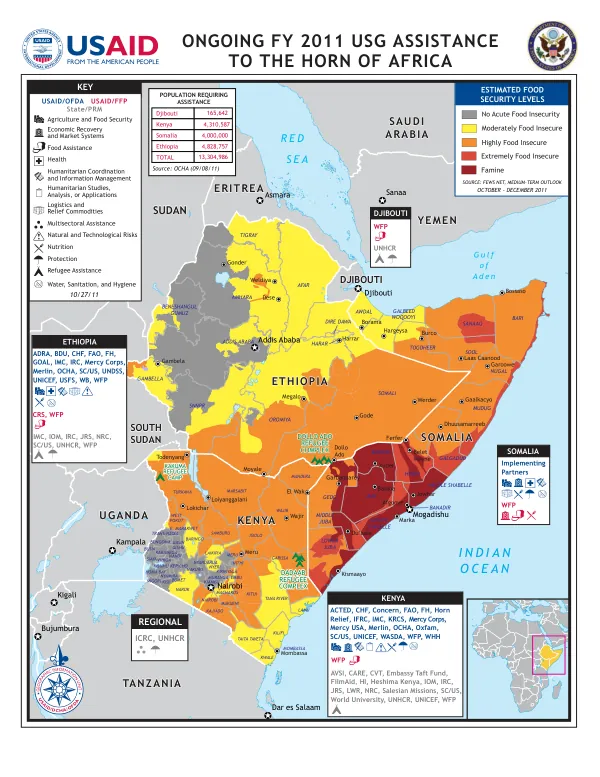
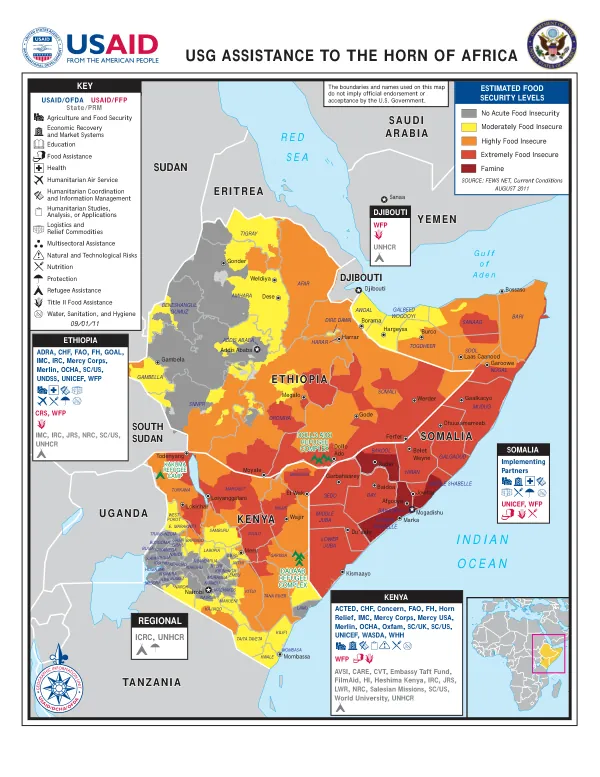
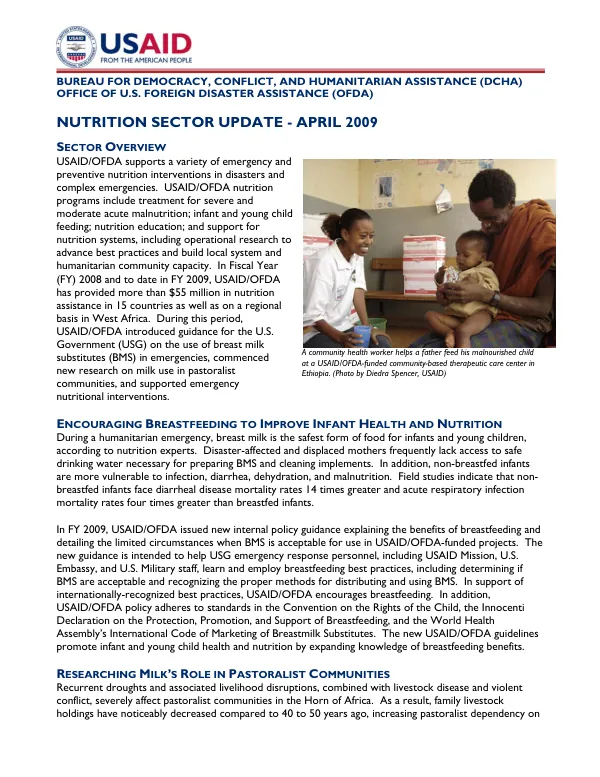
Foreign Disaster Assistance (OFDA) supports a variety of emergency and preventive nutrition interventions in disasters and complex emergencies. USAID/OFDA nutrition programs include treatment for severe and moderate acute malnutrition; infant and young child feeding; nutrition education; and support for nutrition systems, including operational research to advance best practices and build local system and humanitarian community capacity. In Fiscal Year (FY) 2008 and to date in FY 2009, USAID/OFDA has provided more than $55 million in nutrition assistance in 15 countries as well as on a regional basis in West Africa. Breastfeeding is the safest form of food for infants and young children during a humanitarian emergency, according to nutrition experts. Disaster-affected and displaced mothers frequently lack access to safe drinking water necessary for preparing breast milk substitutes (BMS) and cleaning implements. Non-breastfed infants are more vulnerable to infection, diarrhea, dehydration, and malnutrition. Field studies indicate that non-breastfed infants face diarrheal disease mortality rates 14 times greater and acute respiratory infection mortality rates four times greater than breastfed infants. In FY 2009, USAID/OFDA issued new internal policy guidance explaining the benefits of breastfeeding and detailing the limited circumstances when BMS is acceptable for use in USAID/OFDA-funded projects. The new guidance is intended to help USG emergency response personnel learn and employ breastfeeding best practices, including determining if BMS are acceptable and recognizing the proper methods for distributing and using BMS. USAID/OFDA encourages breastfeeding and adheres to standards in the Convention on the Rights of the Child, the Innocenti Declaration on the Protection, Promotion, and Support of Breastfeeding, and the World Health Assembly's International Code of Marketing of Breastmilk Substitutes. Recurrent droughts and associated livelihood disruptions, combined with livestock disease and violent conflict, severely affect pastoralist communities in the Horn of Africa. As a result, family livestock holdings have noticeably decreased compared to 40 to 50 years ago, increasing pastoralist dependency on cereals. The availability of milk is directly linked to child health and nutrition in pastoralist communities. USAID/OFDA supports emergency nutrition programs in affected pastoralist communities as an immediate humanitarian response. In addition, USAID/OFDA supports nutritional research activities to enhance understanding of the impact of pastoralist livelihood disruption on child health and nutrition. Chronic food insecurity in Ethiopia, resulting from consecutive seasons of failed rains, a rapidly growing population, increased inflation, endemic poverty, and limited government capacity, has necessitated USAID/OFDA nutrition interventions in FY 2008 and FY 2009. During the 2008 hunger season, the U.N. World Food Program identified malnutrition rates among adults and children above the emergency threshold, requiring additional targeted nutrition interventions. With USAID/OFDA support, the U.N. Children's Fund (UNICEF) implemented therapeutic feeding programs (TFPs) benefiting approximately 100,000 people affected by chronic food insecurity.