CDC
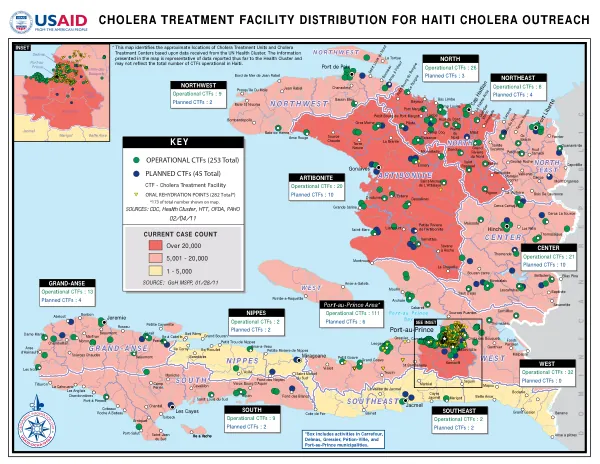
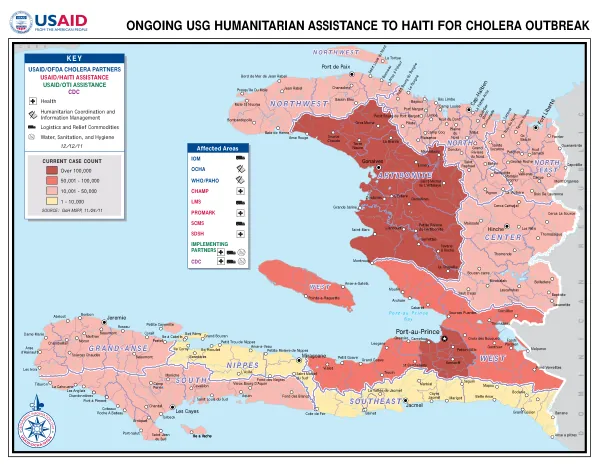
Ongoing USG Humanitarian Assistance to Haiti for Cholera Outbreak Map
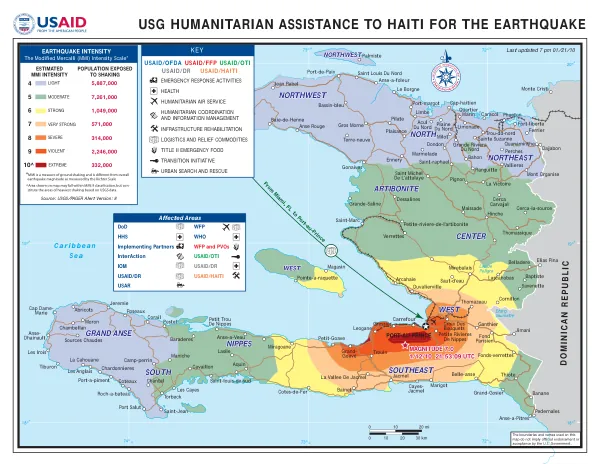
The earthquake that struck Haiti on January 12, 2010, had a magnitude of 7.0 and occurred at 21:53:09 UTC.
2011 · 2 pages
Sign in to readA free account is required to download.
Abstract
The epicenter was located in the Artibonite Department, approximately 16 kilometers southwest of the town of Léogâne. The earthquake caused widespread destruction and triggered a devastating tsunami that affected several coastal communities. The disaster resulted in significant displacement of the population, with an estimated 1.5 million people forced to leave their homes. The affected areas included the Port-au-Prince metropolitan area, as well as several surrounding departments, including the West, South, and Grand Anse. The earthquake also caused significant damage to infrastructure, including roads, bridges, and buildings. In response to the disaster, the United States Government (USG) provided ongoing humanitarian assistance to Haiti. The USG's humanitarian efforts focused on several key areas, including agriculture and food security, community stabilization, economic recovery and market systems, education, emergency food assistance, emergency response activities, enabling the Government of Haiti (GoH) to function, enhancing citizen participation in relief and recovery, health, humanitarian coordination and information management, infrastructure rehabilitation, livelihoods, logistics and relief commodities, natural and technological risks, nutrition, protection, shelter and settlements, title II emergency food assistance, urban search and rescue, and water, sanitation, and hygiene. The USG's humanitarian assistance was implemented through a range of partners, including non-governmental organizations (NGOs), international organizations, and local Haitian organizations. Some of the key implementing partners included ACF, Chemonics, DAI, UNHCR, CRS, IOM, UNFPA, UNICEF, World Vision, and GOAL. The USG also worked closely with the GoH to ensure that humanitarian assistance was coordinated and effective. The humanitarian response to the earthquake in Haiti was a complex and challenging effort that required the coordination of multiple stakeholders and the implementation of a range of activities. The USG's ongoing humanitarian assistance to Haiti has helped to address the immediate needs of affected populations and has also supported the long-term recovery and development of the country.