CARE
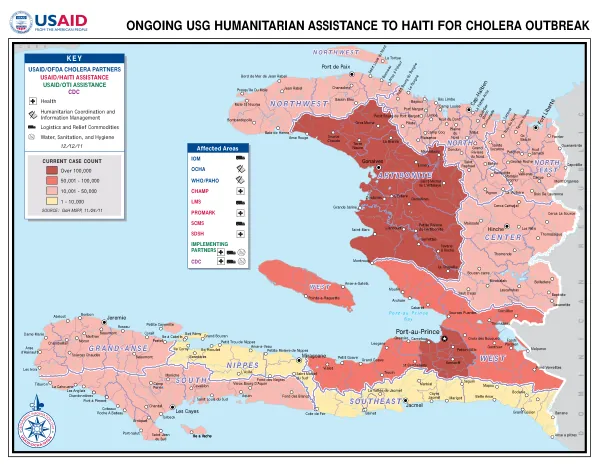
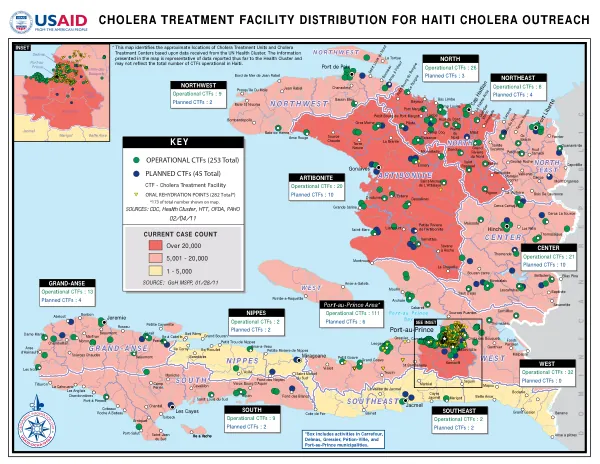
USAID/OFDA Haiti Program Map
The cholera outbreak in Haiti began in October 2010, with the first reported cases occurring in Artibonite Department.
2011 · 2 pages
Sign in to readA free account is required to download.
Abstract
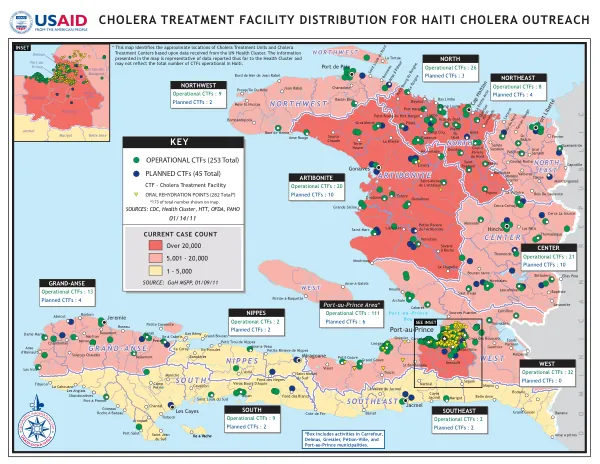
The outbreak spread rapidly, with cases reported in all 10 departments of the country. The Haitian government, in collaboration with international partners, established a cholera treatment facility (CTF) network to provide medical care to affected individuals. As of January 28, 2011, there were 253 operational CTFs and 45 planned CTFs in Haiti. The majority of these facilities were located in the West, North, and Center departments. The operational CTFs in the West department numbered 26, with 10 planned CTFs. In the North department, there were 21 operational CTFs and 10 planned CTFs. The Center department had 21 operational CTFs and 10 planned CTFs. The cholera treatment facility network was supported by various international organizations, including the United States Agency for International Development (USAID), the Office of Foreign Disaster Assistance (OFDA), the Pan American Health Organization (PAHO), and the Health Cluster. These organizations provided funding, personnel, and technical assistance to support the establishment and operation of the CTFs. The cholera outbreak in Haiti resulted in a significant increase in the number of cases reported. As of January 28, 2011, there were over 20,000 cases reported, with the majority occurring in the West department. The outbreak also led to a significant increase in the number of deaths reported, with over 1,000 reported as of January 28, 2011. The Haitian government, in collaboration with international partners, implemented various measures to control the outbreak, including the establishment of oral rehydration points (ORPs) and the distribution of water purification tablets. The ORPs were established in all 10 departments of the country, with a total of 282 ORPs operational as of January 28, 2011. The cholera outbreak in Haiti had a significant impact on the country's healthcare system, with many hospitals and healthcare facilities overwhelmed by the influx of patients. The outbreak also led to a significant increase in the number of people displaced, with many individuals forced to flee their homes due to the outbreak. The international community provided significant assistance to Haiti in response to the cholera outbreak, including funding, personnel, and technical assistance. The assistance was provided through various channels, including the Health Cluster, the Office of Foreign Disaster Assistance (OFDA), and the Pan American Health Organization (PAHO).
Related documents