IOM
USAID Haiti Earthquake Program Map 1/21/2010
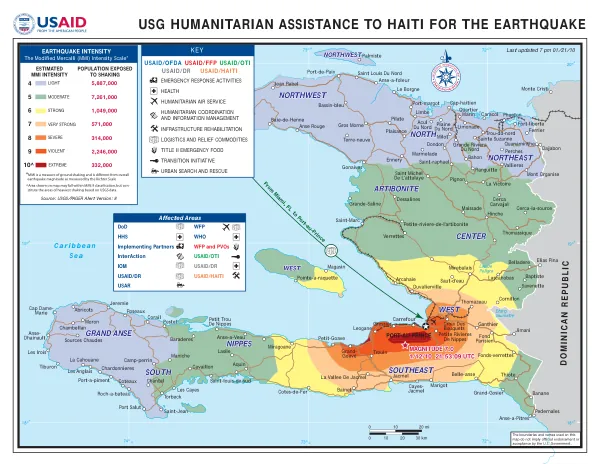
The earthquake that struck Haiti on January 12, 2010, had a magnitude of 7.0 and occurred at 21:53:09 UTC.
2010 · 2 pages
Sign in to readA free account is required to download.
Abstract
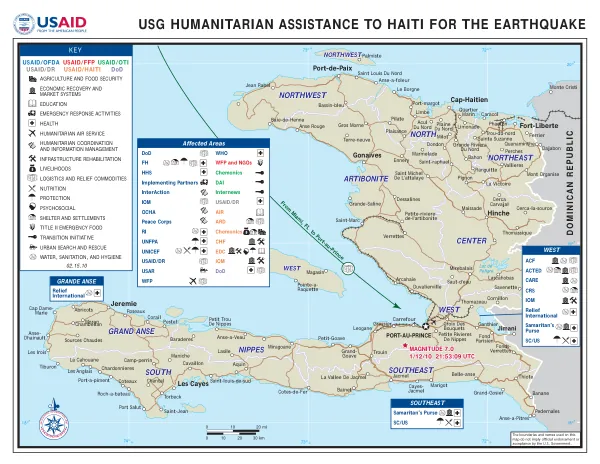
The epicenter was located near the town of Léogâne, approximately 16 miles west of Port-au-Prince. The earthquake's impact was felt across the island, with widespread destruction and loss of life reported in the capital city and surrounding areas. The Modified Mercalli (MMI) Intensity Scale was used to measure the earthquake's impact, with areas experiencing moderate to extreme shaking. The population exposed to shaking was estimated to be around 7.3 million people, with 5.9 million people living in areas with a moderate to extreme MMI intensity. The estimated population exposed to shaking in the Port-au-Prince metropolitan area was around 2.3 million people. The earthquake caused significant damage to infrastructure, including roads, buildings, and power transmission plants. The Toussaint Louverture International Airport was damaged, but it was later restored to full operation. The port of Port-au-Prince was severely damaged, with all three cranes destroyed, rendering it non-operational. The U.N. Stabilization Mission in Haiti (MINUSTAH) headquarters and other U.N. and government buildings, including the Presidential Palace, were also damaged or partially destroyed. Humanitarian assistance was provided by the U.S. Government, with the U.S. Agency for International Development (USAID) playing a key role in coordinating relief efforts. The U.S. Department of Defense (DoD) and the U.S. Department of Health and Human Services (HHS) also provided support. Implementing partners, including InterAction, the International Organization for Migration (IOM), and the World Food Programme (WFP), worked with USAID to provide emergency response activities, including health services, humanitarian air service, and logistics and relief commodities. The earthquake's impact was felt across the island, with widespread destruction and loss of life reported in the capital city and surrounding areas. The estimated death toll was around 220,000 people, with many more injured or displaced. The earthquake also caused significant economic losses, with estimates suggesting that the damage was in the billions of dollars. The response to the earthquake was led by the Haitian government, with support from the international community. The U.N. Stabilization Mission in Haiti (MINUSTAH) played a key role in coordinating relief efforts, with support from other U.N. agencies, including the World Health Organization (WHO) and the U.N. Children's Fund (UNICEF). The U.S. Government provided significant support, with USAID playing a key role in coordinating relief efforts. The earthquake had a significant impact on the people of Haiti, with many left homeless or displaced. The response to the earthquake was complex, with multiple agencies and organizations working together to provide relief and support. The earthquake highlighted the need for disaster preparedness and response planning, as well as the importance of international cooperation in responding to humanitarian crises.
Related documents