USAID DEC
Oral and Dental Status of Lebanese and Syrian Refugees Living in Proximity to Deir Kanoun Ras El Ain Dump in Lebanon
Sign inWORLD HEALTH ORGANIZATION
Oral and Dental Status of Lebanese and Syrian Refugees Living in Proximity to Deir Kanoun Ras El Ain Dump in Lebanon
The study aimed to investigate the oral and dental health conditions of Lebanese and Syrian refugees living in proximity to Deir Kanoun Ras El Ain dump in Lebanon.
2019 · 8 pages
Sign in to readA free account is required to download.
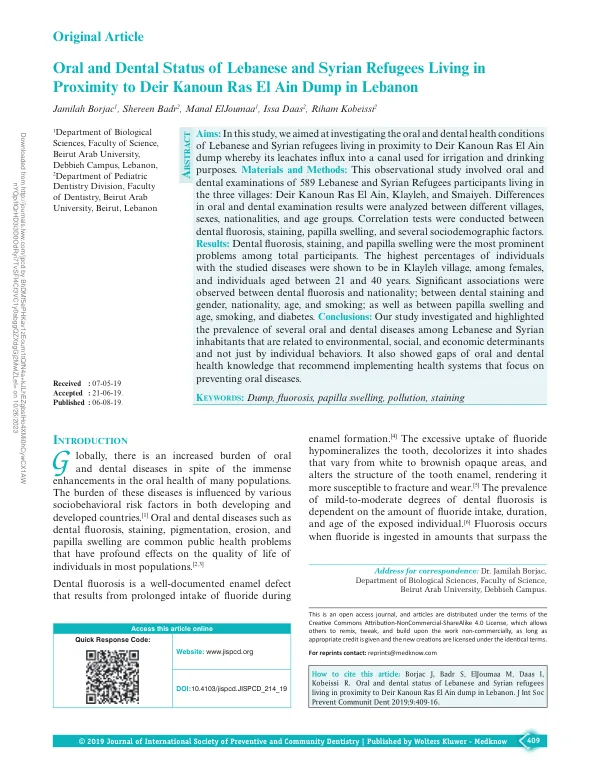
Abstract
The research was conducted in three villages: Deir Kanoun Ras El Ain, Klayleh, and Smaiyeh, located in south Lebanon along the Mediterranean coast. The study area has a total population of approximately 10,800 Lebanese inhabitants and 1,821 registered Syrian refugees. The study involved oral and dental examinations of 589 participants, including both Lebanese and Syrian refugees. The participants were between 10 and 80 years of age, and each signed an informed consent form before enrolling in the study. The study aimed to investigate the prevalence of dental fluorosis, staining, papilla swelling, and other oral and dental diseases among the participants. The results of the study showed that dental fluorosis, staining, and papilla swelling were the most prominent problems among the total participants. The highest percentages of individuals with these diseases were found in Klayleh village, among females, and individuals aged between 21 and 40 years. Significant associations were observed between dental fluorosis and nationality, between dental staining and gender, nationality, age, and smoking, and between papilla swelling and age, smoking, and diabetes. The study also highlighted the relationship between environmental pollution and oral and dental health conditions. The Deir Kanoun Ras El Ain dump is a major source of pollution in the area, and the leachates from the dump have been shown to contaminate the water used for irrigation and drinking purposes. The study suggests that the exposure to high amounts of fluoride, iron, and other chemicals in the water may contribute to the prevalence of dental fluorosis, staining, and papilla swelling among the participants. The study's findings have significant implications for oral and dental health policies in Lebanon. The results suggest that there is a need for implementing health systems that focus on preventing oral diseases, particularly in areas where environmental pollution is a major concern. The study also highlights the importance of conducting epidemiological studies to determine the oral health needs of the population and to inform the development of effective oral health policies. The study's results also suggest that there is a need for increasing awareness about the importance of oral and dental health among the population, particularly in areas where environmental pollution is a major concern. The study highlights the importance of educating the public about the risks associated with environmental pollution and the importance of taking steps to prevent oral and dental diseases.