USAID DEC
Orchid Bees in Oil Palm Plantations: Forest Reserves and Riparian Corridors Maintain Biodiversity
Sign inUNITED NATIONS
Orchid Bees in Oil Palm Plantations: Forest Reserves and Riparian Corridors Maintain Biodiversity
Orchid bees (Apidae, Euglossini) are important pollinators in the Amazon region.
2017 · 13 pages
Sign in to readA free account is required to download.
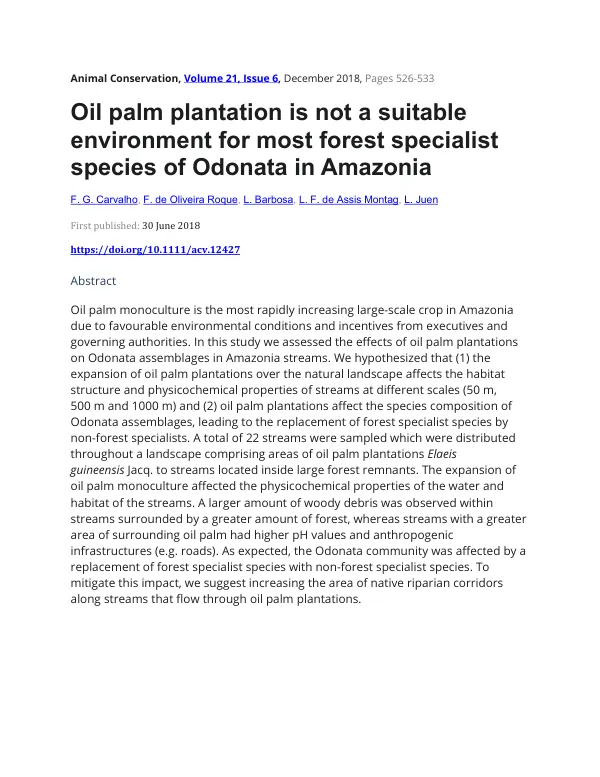
Abstract
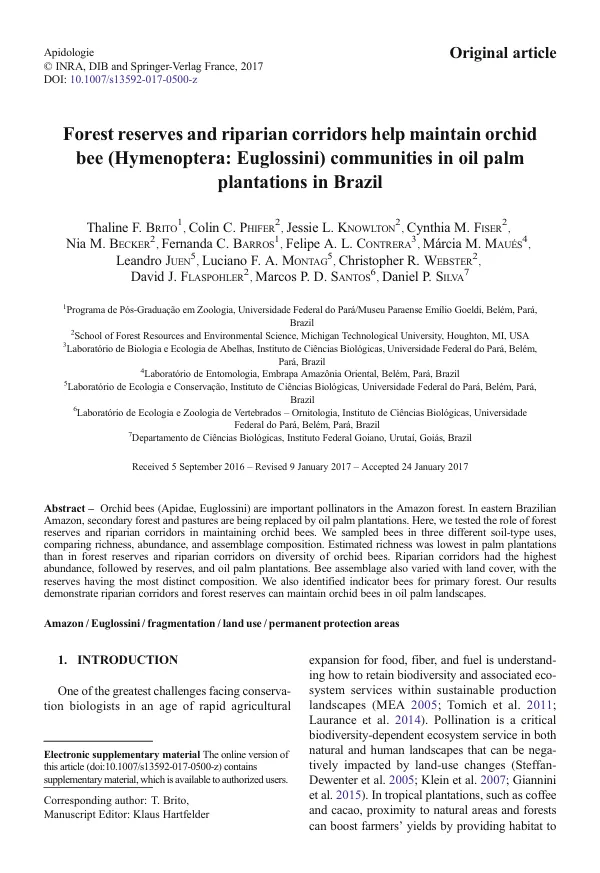
In eastern Brazil, secondary forest and pastures are being replaced by oil palm plantations. Forest reserves and riparian corridors play a crucial role in maintaining orchid bee communities in these landscapes. Research has shown that orchid bees are sensitive to oil palm plantations and habitat fragmentation. This sensitivity is due to their dependence on forest habitats and their inability to disperse through the matrix environment surrounding forest fragments. In the Neotropics, orchid bees are a diverse group, with nearly 250 species, and are known for their striking metallic colors and males' scent-collecting behaviors from blooming orchids and other flowers. In the Brazilian State of Pará, the most important agricultural frontier for oil palm, forest reserves and riparian corridors are required by law to be preserved. These refuges are believed to maintain biodiversity and maintain biodiversity corridors can connect fragmented populations. A study was conducted to examine the role of forest reserves and riparian corridors in conserving and maintaining orchid bee communities in oil palm plantations. The study was carried out in oil palm plantations, forest reserves, and APPs (permanent protection areas) at the Agropalma Industrial Complex in the municipality of Tailândia, in the southeast of the state of Pará, Brazil. The region's climate is hot and humid, with a dry season between June and November and a rainy season between December and May. The study found that orchid bee richness and abundance were greatest in forest reserves and lowest in oil palm plantations, with APPs containing intermediate levels of richness and abundance. Orchid bee sampling was conducted using scent traps, which are an effective method for sampling this group of bees. The study found that orchid bee assemblage composition varied with land cover, with forest reserves having the most distinct composition. Indicator bees for primary forest were also identified. The results of the study suggest that forest reserves and riparian corridors can maintain orchid bee communities in oil palm landscapes. The study's findings have implications for conservation efforts in the Neotropics. Forest reserves and riparian corridors can play a crucial role in maintaining biodiversity and maintaining biodiversity corridors can connect fragmented populations. The study highlights the importance of preserving these refuges and maintaining biodiversity corridors in oil palm landscapes. The study was conducted in the Brazilian State of Pará, which is the most important agricultural frontier for oil palm in the region. The region's climate is hot and humid, with a dry season between June and November and a rainy season between December and May. The study's findings have implications for conservation efforts in the Neotropics and highlight the importance of preserving forest reserves and riparian corridors in oil palm landscapes. The study's results suggest that forest reserves and riparian corridors can maintain orchid bee communities in oil palm landscapes. The study's findings have implications for conservation efforts in the Neotropics and highlight the importance of preserving these refuges and maintaining biodiversity corridors in oil palm landscapes. The study's results also suggest that orchid bee assemblage composition varies with land cover, with forest reserves having the most distinct composition. The study's findings have implications for conservation efforts in the Neotropics. Forest reserves and riparian corridors can play a crucial role in maintaining biodiversity and maintaining biodiversity corridors can connect fragmented populations. The study highlights the importance of preserving these refuges and maintaining biodiversity corridors in oil palm landscapes. The study's results also suggest that orchid bee assemblage composition varies with land cover, with forest reserves having the most distinct composition.
Related documents