CNFA, INC.
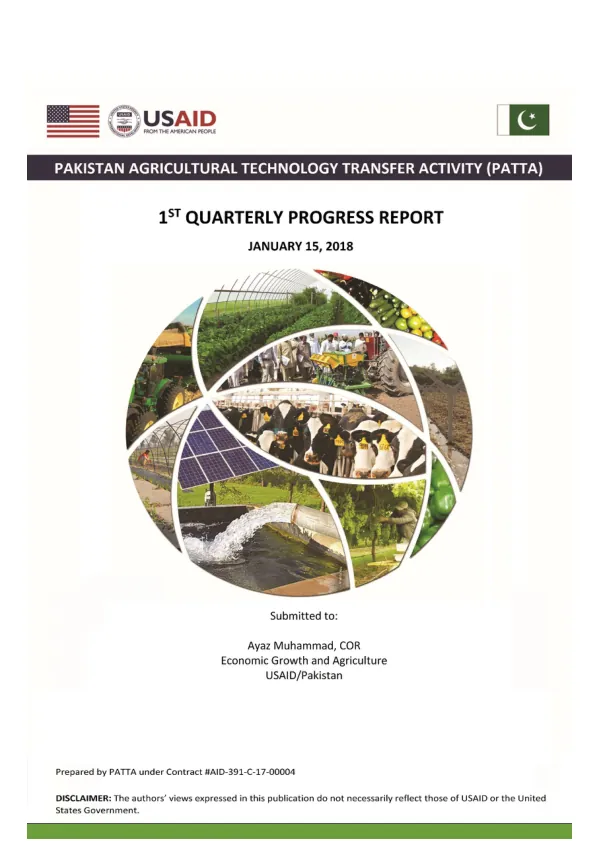
Pakistan Agricultural Technology Transfer Activity (PATTA) Safe Use of Pesticides
Pakistan Agricultural Technology Transfer Activity (PATTA) is a United States Agency for International Development (USAID) funded project designed to increase smallholder farmers' access to markets, alongside their overall development impact and cost-effectiveness.
2018 · 43 pages
Sign in to readA free account is required to download.
Abstract
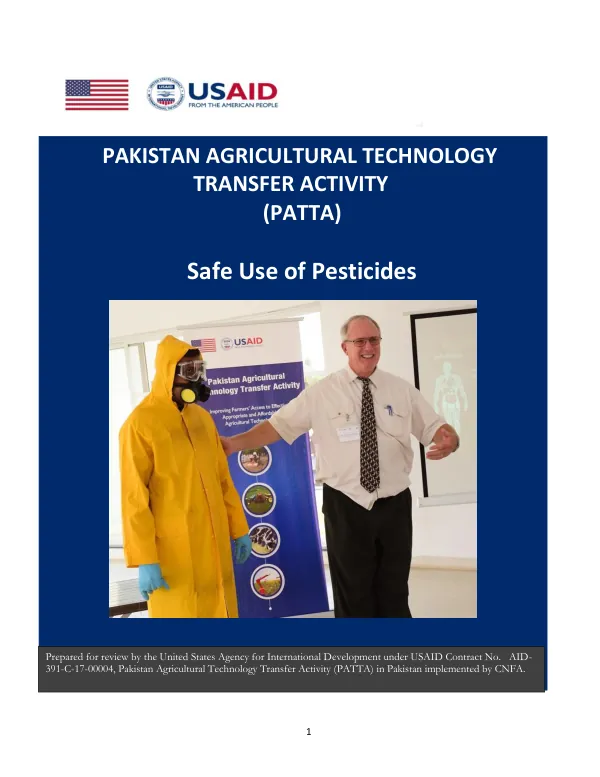
Smallholders farmers in Pakistan use outdated and less effective technologies, leading to stagnant or dwindling productivity and returns, particularly in the horticulture and livestock sub-sectors. Because improved technologies that are affordable and safe have not yet penetrated the vast smallholder market. PATTA will bring to scale private sector solutions to improve agricultural productivity in Pakistan through a four-year activity. PATTA will partner with agricultural technology companies to commercialize products and services with the potential to increase the productivity and competitiveness of smallholder farmers while mobilizing private sector investment in agricultural technology. The horticulture sector contributes to about 12% of Pakistan's GDP and provides employment and incomes to several actors along related value chains. An estimated 13.67% of Million Metric Tons (MMT) of horticultural products are grown annually, with post-harvest losses averaging about 25%. Only 4% of annual horticultural production is exported, garnering less than 50% of average world prices due to both inferior qualities of produce and sales in low-value markets. To meet domestic and export demand for horticultural products, including fruits and vegetables, chemical controls play a crucial role in ensuring crop productivity and quality. Pesticides are not safely used by small holder farmers and farm labor. The Government's primary focus is on regulation of manufacture, re-formulators, distribution, and importation of pesticides. Retail pesticide manufacturers complete pesticide safety training and are monitored by inspectors in the Agriculture Department. However, retail outlets pass little safety information to the farmer. Personal Protective Equipment (PPE) is not available at many retail outlets and cost is high for small stakeholder farmers. Biopesticides or low impact biological pest control alternatives are not generally available in the market. Farmers opt for a traditional mix of synthetic pyrethroids, organophosphates, organochlorines, carbamates, and neonicotinoids. Product labeling for use, precautionary information, and safety instruction is minimal. Capacity building is needed to improve pesticide safety in these sectors for farmers, farm workers, rural residents, consumers, and the environment. The analysis focuses on current pesticide use techniques and safe practices in collaboration with supply-side companies (SSPs) and farm service centers. This complements USAID environmental compliance regulations and the PATTA Pesticide Evaluation Report and Safe Use Action Plan (PPERSUAP). PATTA has conducted a series of workshops and demonstrations to increase awareness of best practices in safe use of pesticide. Safe pesticide use applications will help reduce human health hazards and environmental issues and support the area's natural biosphere. The horticulture sector faces challenges related to pesticide use, including excessive use of chemicals, immunity of pests to future treatments, and hazards to users and the environment. The use of pesticides is a significant challenge in Pakistan, with 85% of total use of chemical controls being insecticides. The majority of insecticides are used for cotton, followed by paddy, cereals, and sugar cane. Herbicide usage is significantly lower, accounting for only 10% of total use of chemical controls. The project aims to increase smallholder farmer access to affordable, effective, and safe agricultural technologies. The project will enable agricultural technology-related businesses to expand and adapt their products and services to meet smallholders' needs. The project aims to scale up the adoption and use of agricultural technologies, including precision agriculture, integrated soil fertility management, and improved plant and animal breeds. The project will also focus on improving pesticide safety, including the development of a pesticide evaluation report and safe use action plan. The plan aims to reduce human health hazards and environmental issues associated with pesticide use. The project will also provide training and capacity building for farmers, farm workers, and rural residents on safe pesticide use practices. The project will also focus on improving the quality of produce, reducing post-harvest losses, and improving the competitiveness of smallholder farmers. The project aims to achieve these results through partnerships with agricultural technology companies, supply-side companies, and farm service centers. The project will also focus on improving the capacity of smallholder farmers, including their access to affordable technologies, training, and technical assistance. The project aims to improve the productivity and competitiveness of smallholder farmers, enabling them to increase their incomes and improve their living standards. The project will also focus on improving the sustainability of agricultural practices, including the use of integrated pest management (IPM) and integrated soil fertility management. The project aims to reduce the use of chemical pesticides and promote the use of biopesticides and low-impact biological pest control alternatives. The project will also focus on improving the awareness of smallholder farmers, including their awareness of the risks associated with pesticide use and the benefits of safe pesticide use practices. The project aims to improve the awareness of smallholder farmers, enabling them to make informed decisions about the use of pesticides. The project