INTERNATIONAL CHILDREN'S FUND, INC.
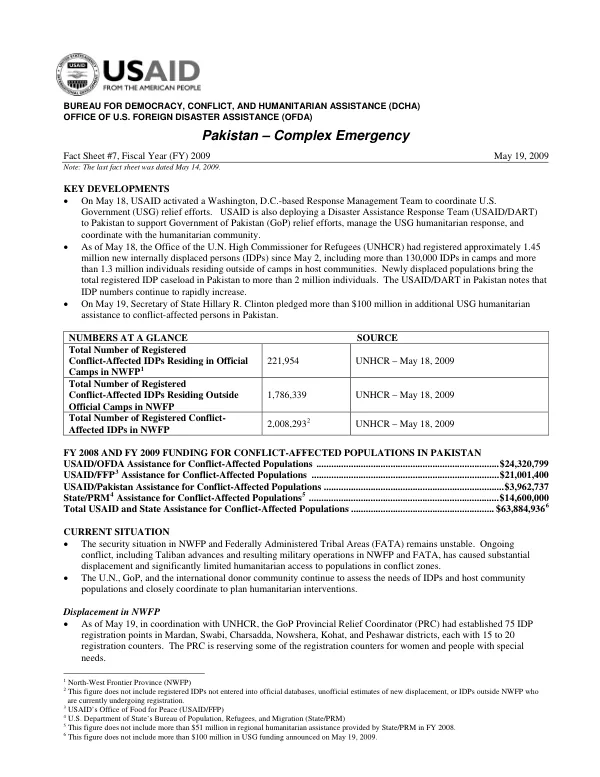
Pakistan Complex Emergency Fact Sheet #7
The security situation in NWFP and FATA remains unstable, with ongoing conflict causing displacement and limiting humanitarian access to populations in conflict zones.
2009 · 4 pages
Sign in to readA free account is required to download.
Abstract
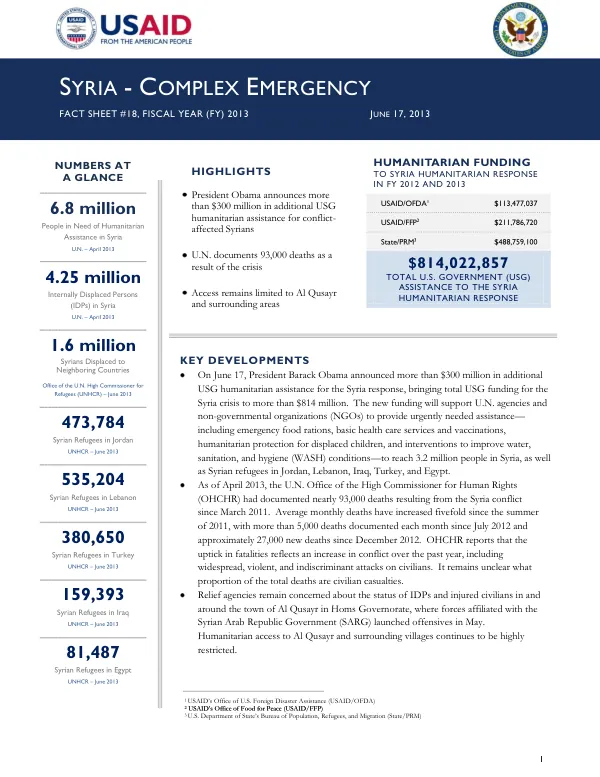
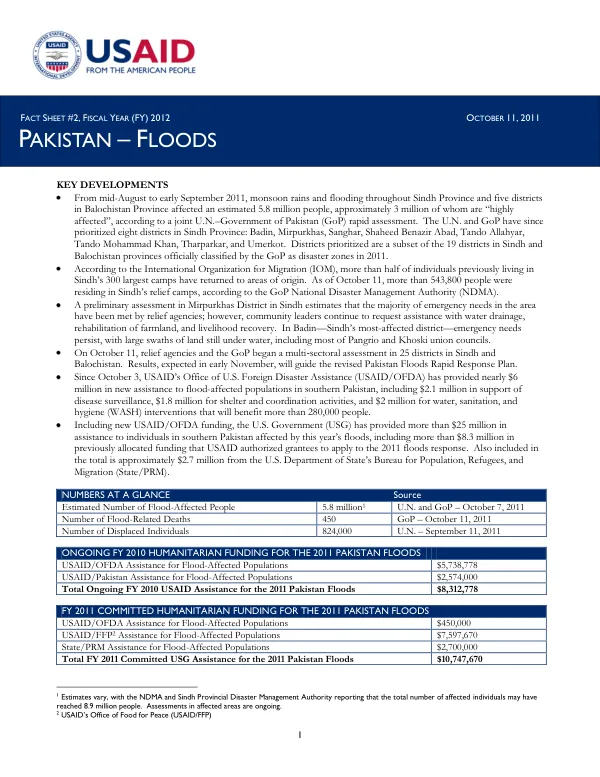
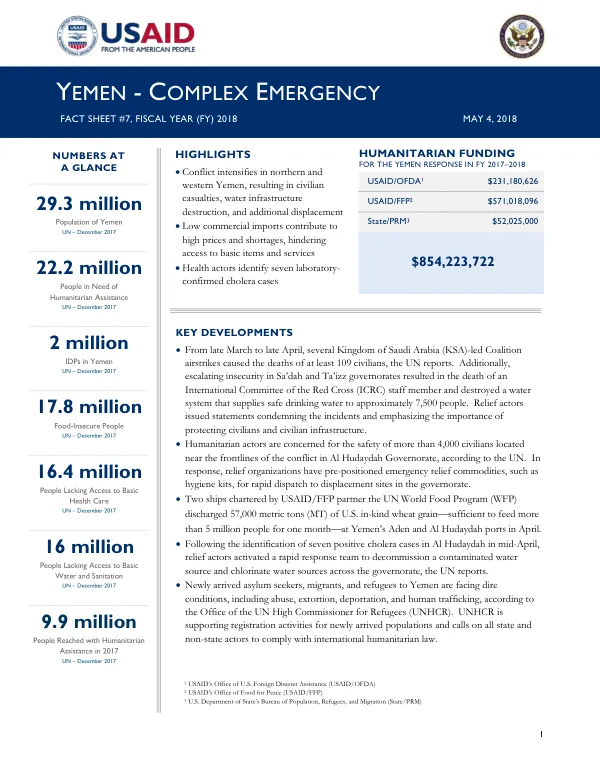
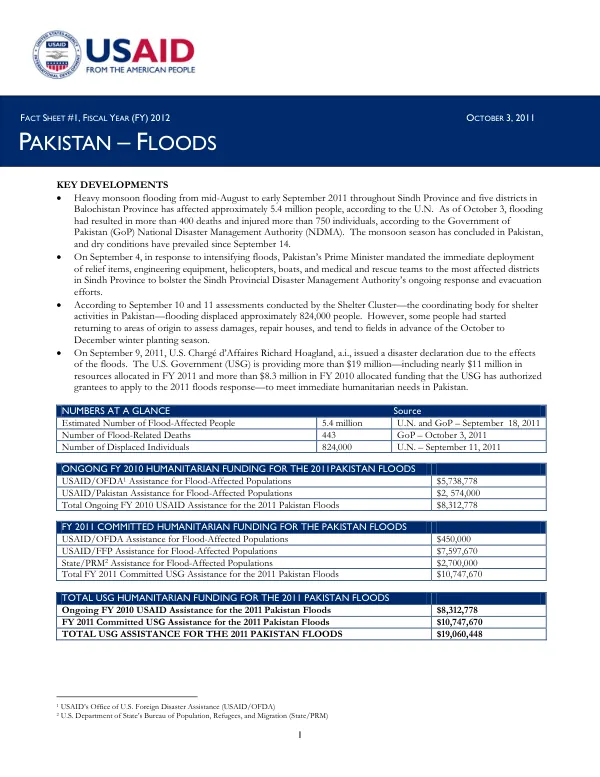
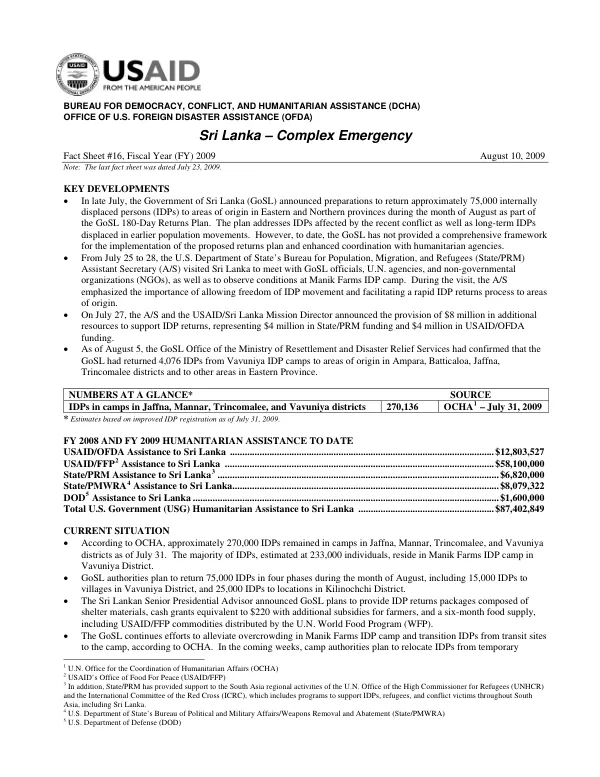
The U.N., Government of Pakistan, and international donor community closely coordinate to assess needs and implement humanitarian interventions. As of May 18, the Government of Pakistan's Relief Coordinator established 75 IDP registration points in NWFP, each with 15 to 20 registration counters. The Relief Coordinator is reserving some counters for women and people with special needs. The total registered IDP population in NWFP is over 2 million individuals, with more than 1.45 million registered between May 2 and May 18, and nearly 557,000 registered between August 2008 and May 2, 2009. IDPs are taking shelter in 23 camps in NWFP, with the majority residing outside camps in rental accommodations or with host families. The U.N. World Health Organization (WHO) reports that the general health situation in IDP camps and host communities remains stable, with WHO and partner organizations closely monitoring health conditions in IDP camps. The WHO has deployed a three-member team to Islamabad to support WHO's health activities in NWFP and mobile outreach for IDPs living in host communities. Since May 9, WHO has provided 20 emergency health kits to NWFP to supply basic health supplies for 120,000 individuals for approximately one month. The U.N. Food Program (WFP) has distributed approximately 10,000 metric tons of food assistance to more than 685,000 conflict-affected persons in Pakistan between May 1 and May 19. WFP has increased the number of humanitarian distribution points from 12 to 18 to provide emergency food assistance to populations residing in host communities. USAID/OFDA has provided more than $24.3 million in humanitarian assistance to conflict-affected populations in Pakistan and more than $4.9 million in response to earthquakes and floods. USAID/OFDA is supporting health, nutrition, humanitarian coordination and information management, risk reduction, shelter and settlements, water, sanitation, and hygiene interventions, as well as relief supplies and logistical support. USAID/FFP has provided 24,200 metric tons of P.L. 480 Title II emergency food assistance, valued at more than $21 million, to WFP emergency operations. USAID/Pakistan has provided more than $4 million in humanitarian assistance to displaced persons and conflict-affected populations, supporting relief commodities and livelihood recovery, education, agriculture, and food security, shelter and settlements, and water, sanitation, and hygiene. State/PRM has provided $14.6 million to UNHCR and the International Committee of the Red Cross (ICRC) to support relief commodities, health, protection, humanitarian coordination, shelter and settlements, and WASH activities. In FY 2008, State/PRM provided more than $51 million in humanitarian assistance to conflict-affected populations in Afghanistan, Pakistan, and Iran. The total USAID assistance in FY 2009 is $44.2 million, with a total USAID and State assistance of $58.8 million.
Related documents